Comics
List of Comics:
Through the Eyes of Another
Echoes of the Past
The Cold War
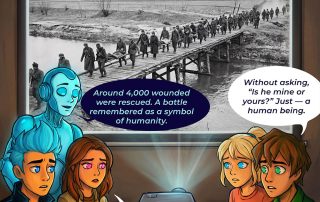
Solidarity Throughout History
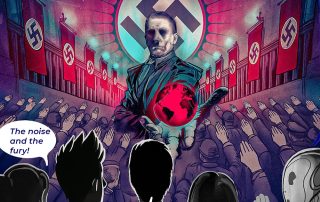
World War Two
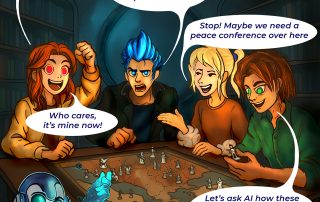
Balkan wars
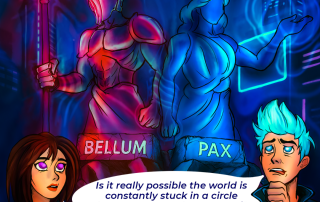
Between War and Peace
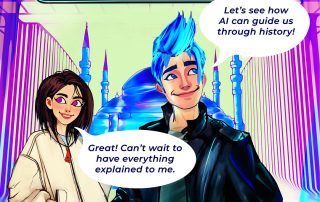
The Ottoman Empire
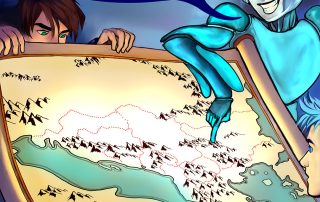
Ghosts of the Past
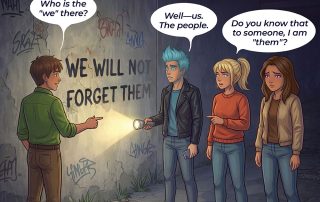
Through the Eyes of Another: The Mosaic of Truth
In this comic, our students attempt the hardest task of all—to see the world, even for a moment, through the eyes of another. Instead of a single “official” version of events, they piece together a mosaic of different memories and personal fates that often clash. Through these pages, we explore whether history is truly one single story or if each of us experiences it differently. Can we ever fully understand someone else’s side of the tale, and is it possible to find a common language even when our memories collide? Do our different perspectives pull us apart, or are they actually the only way to see the bigger picture?
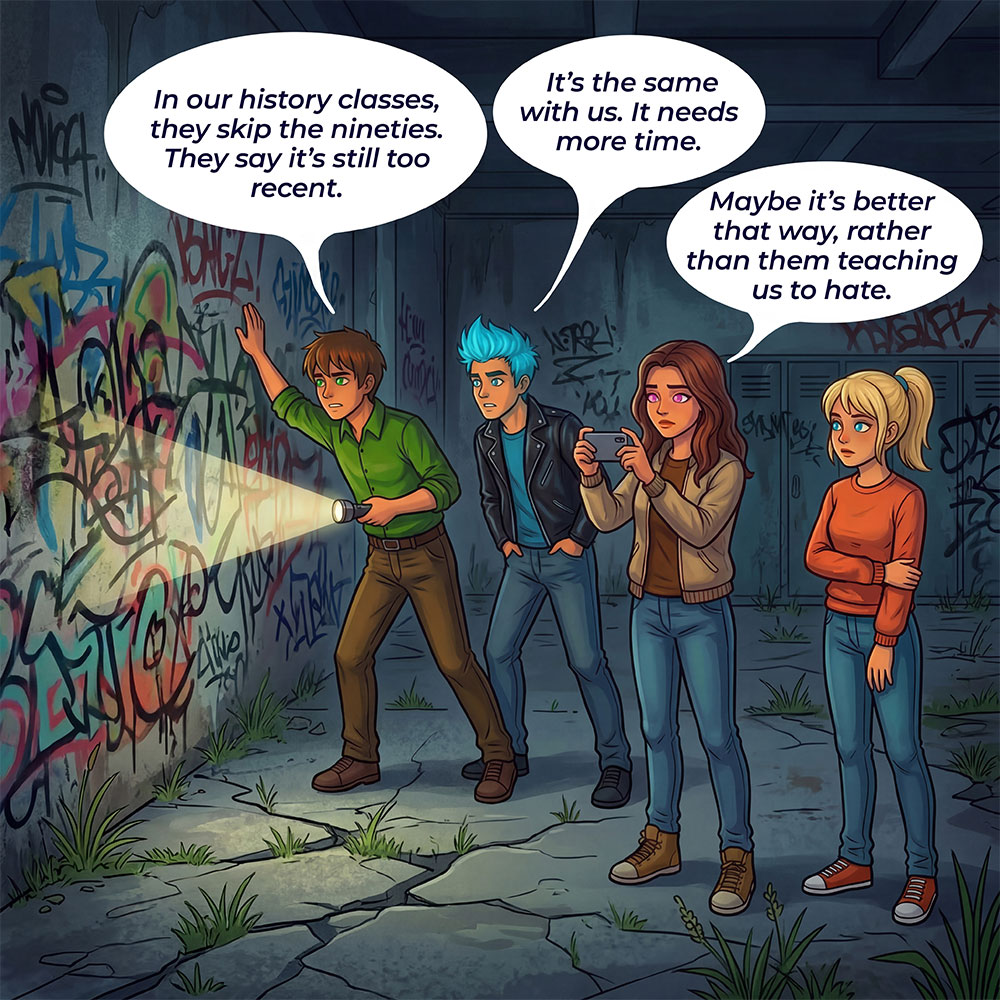
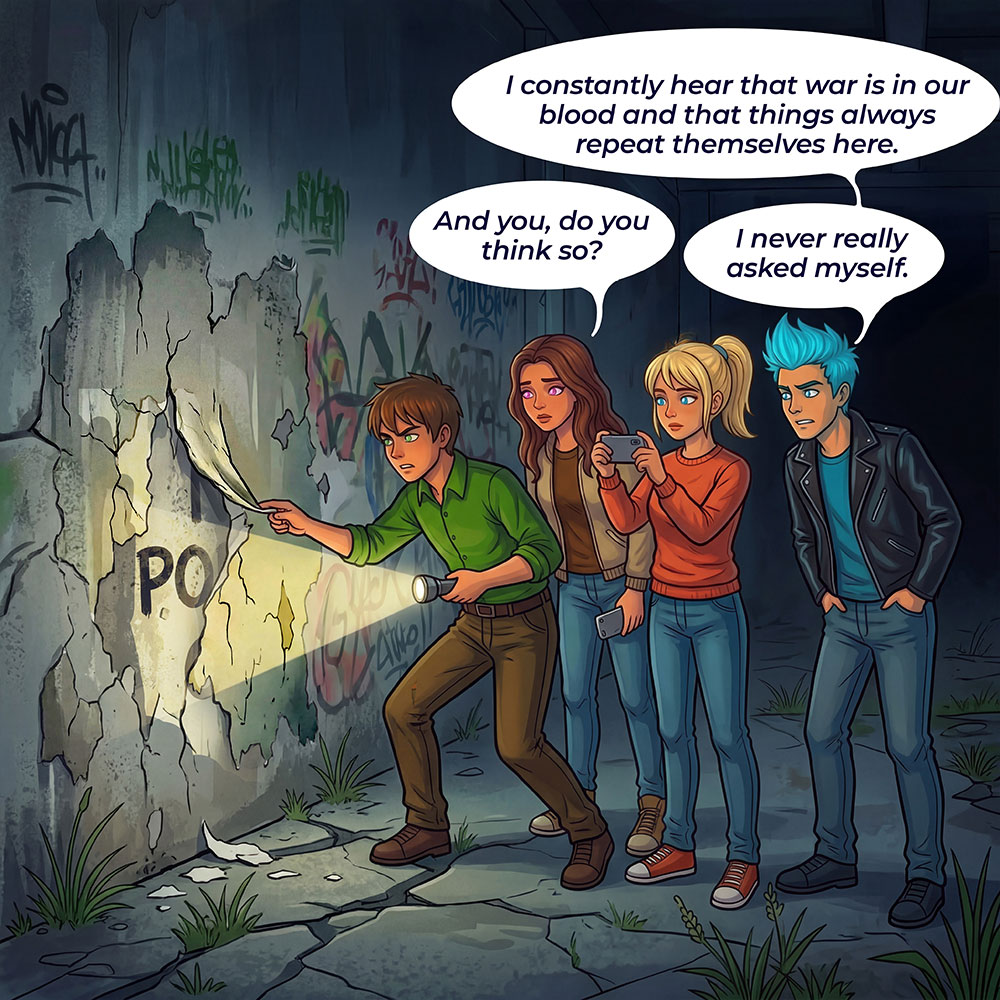
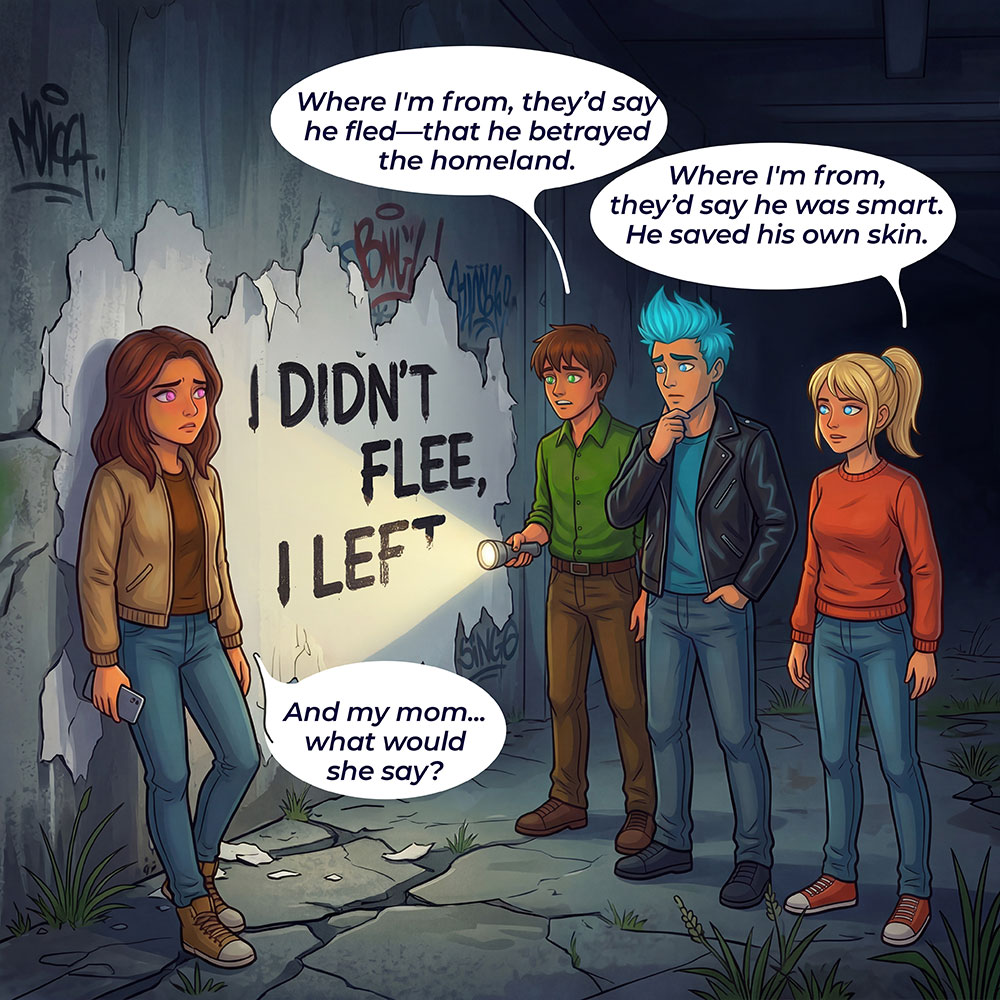
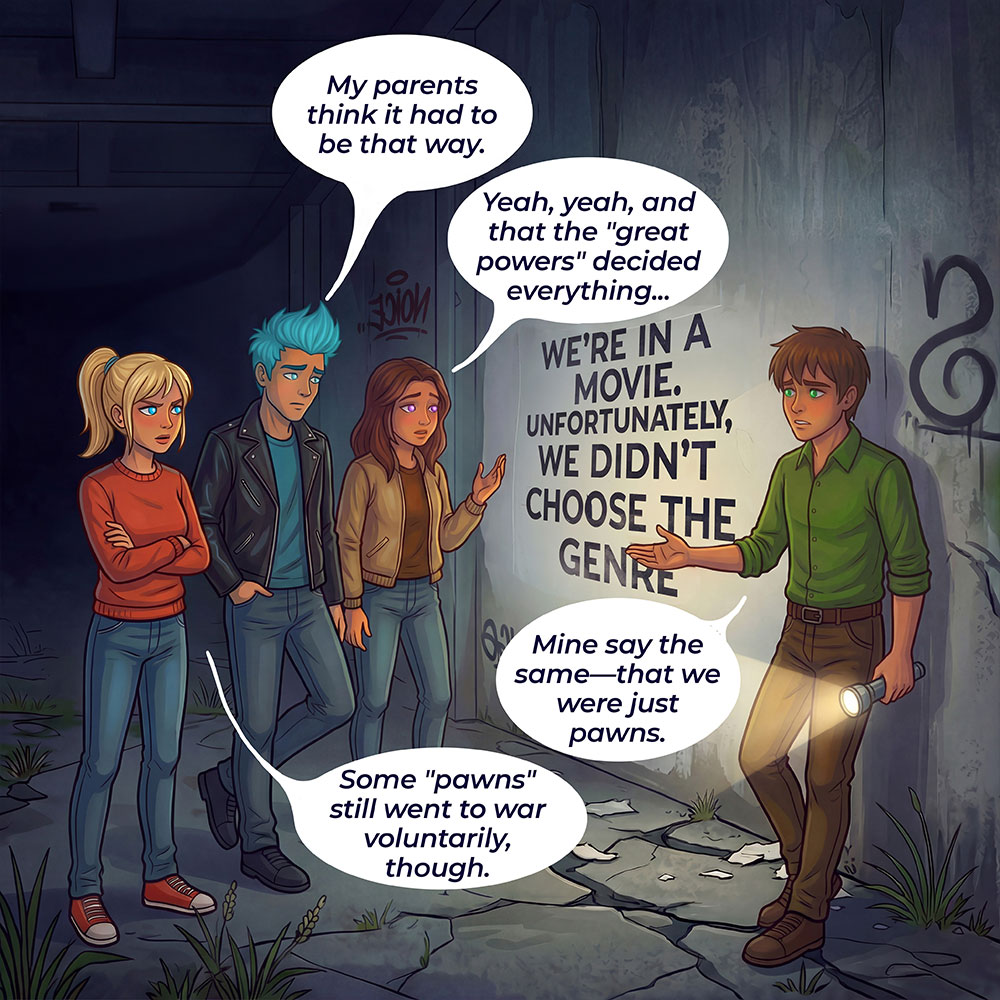
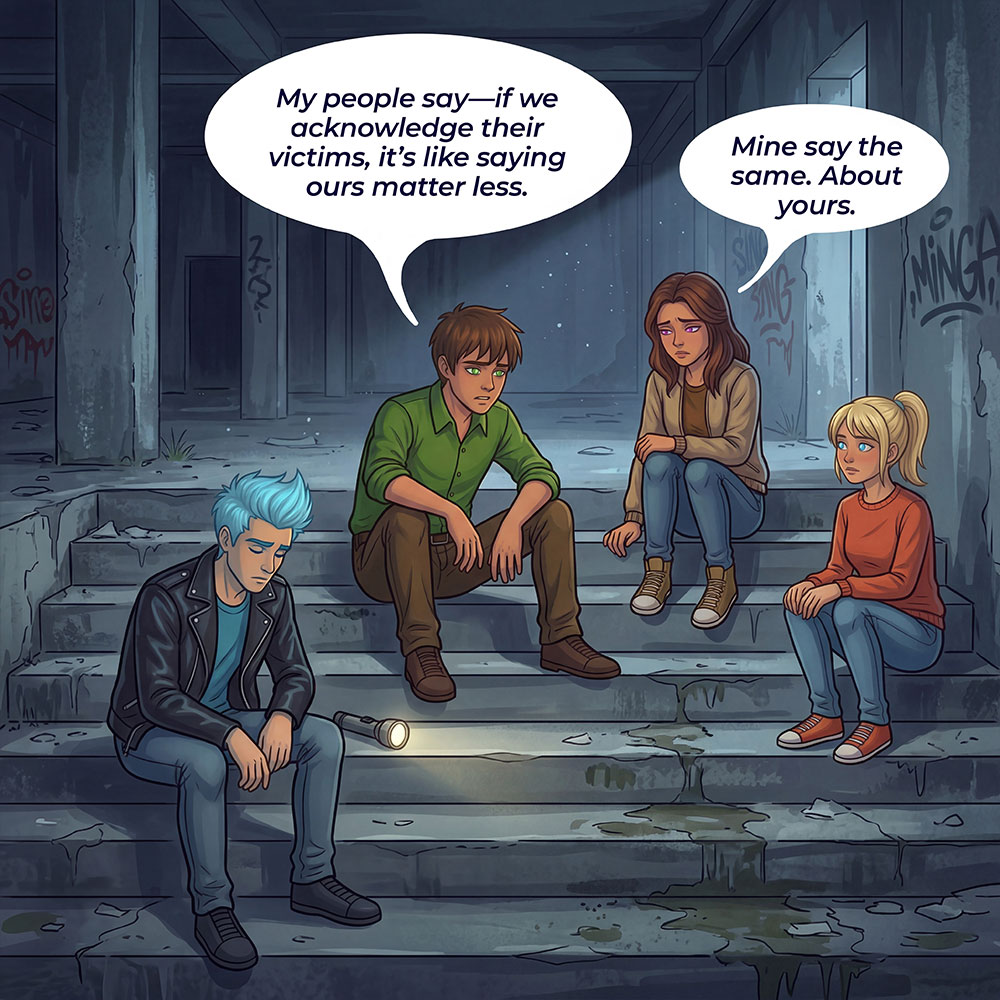
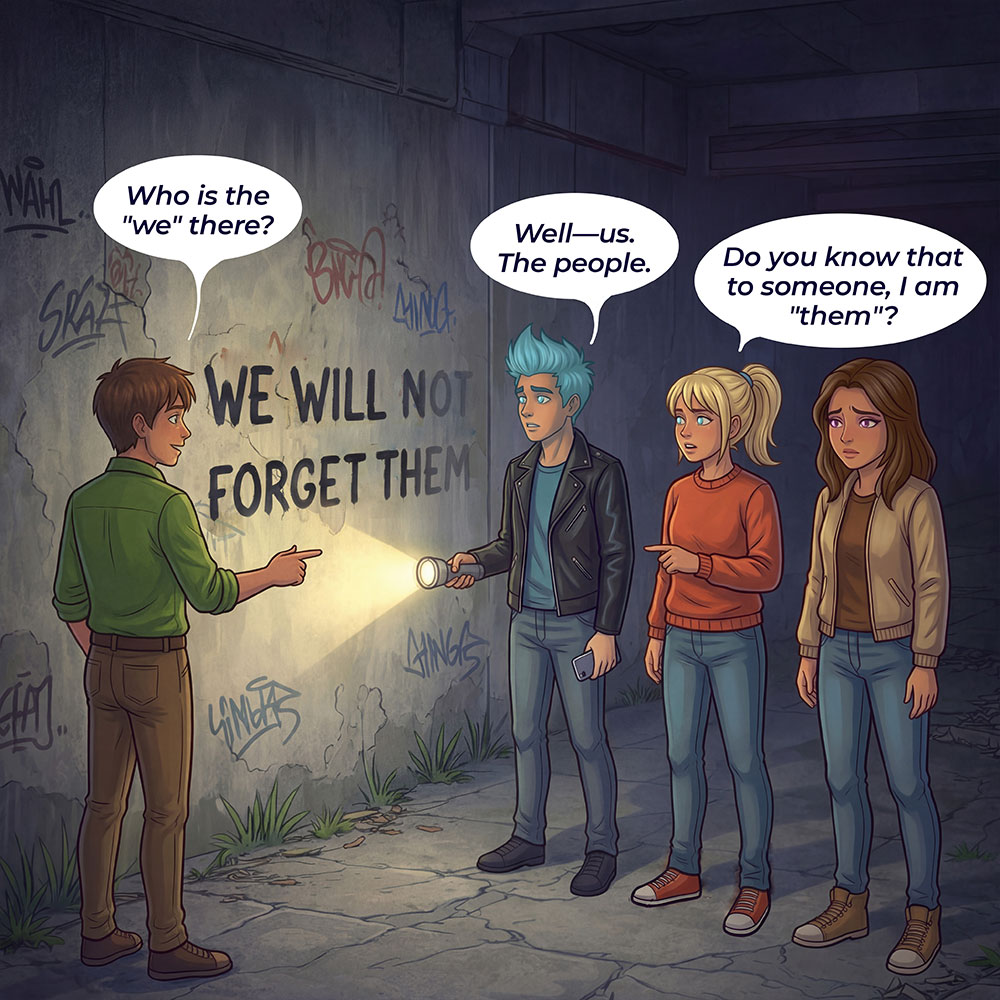
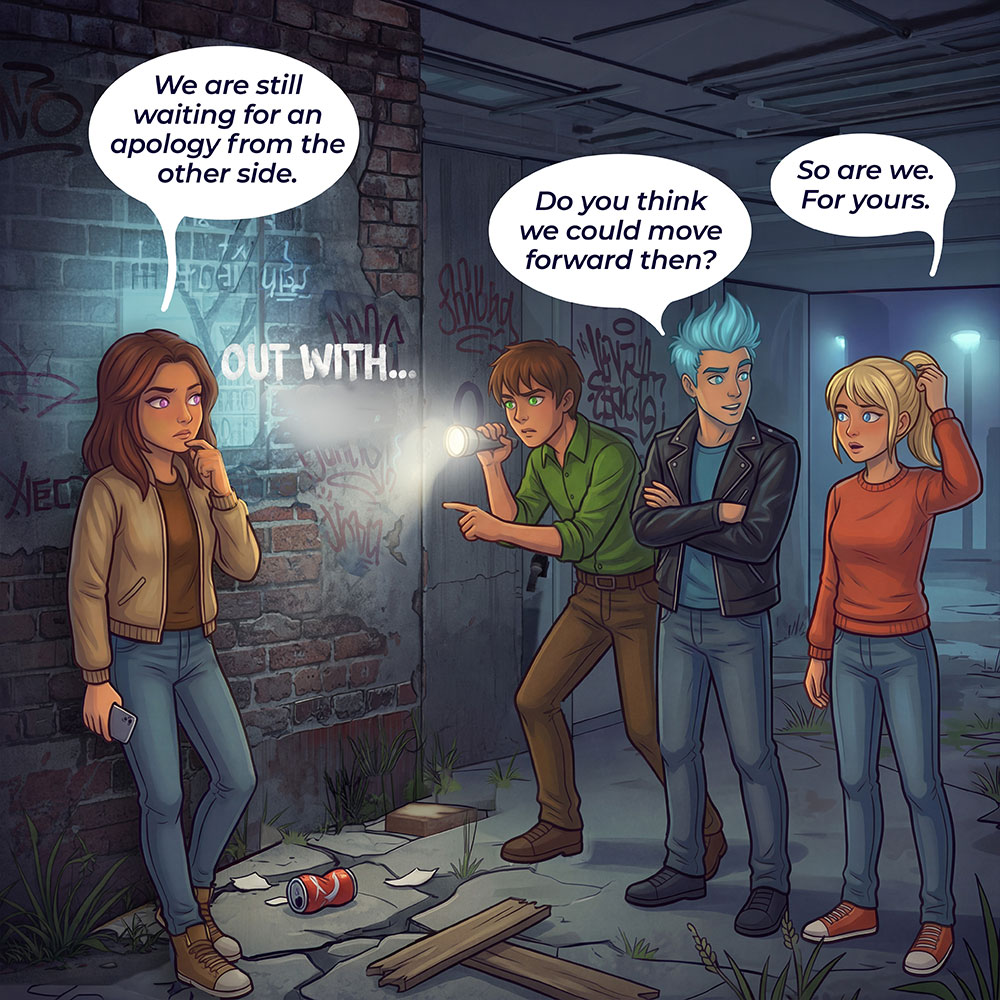
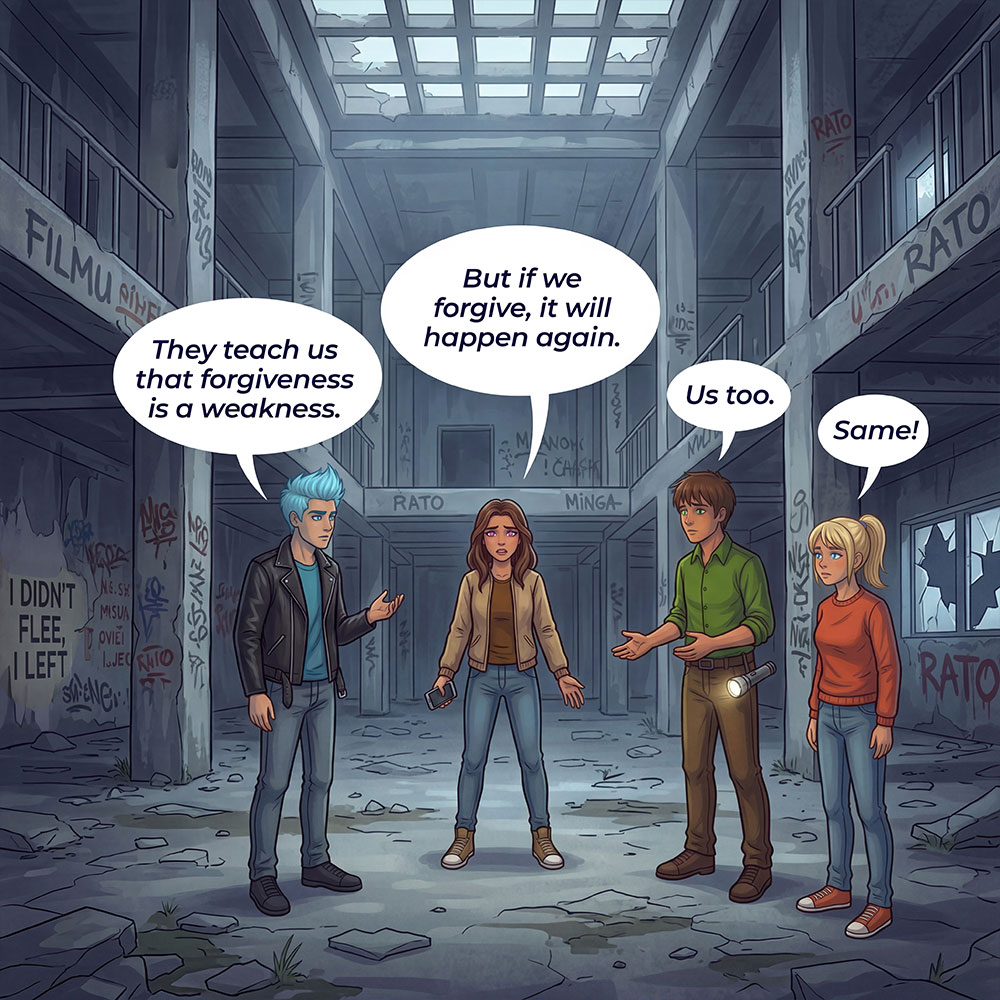
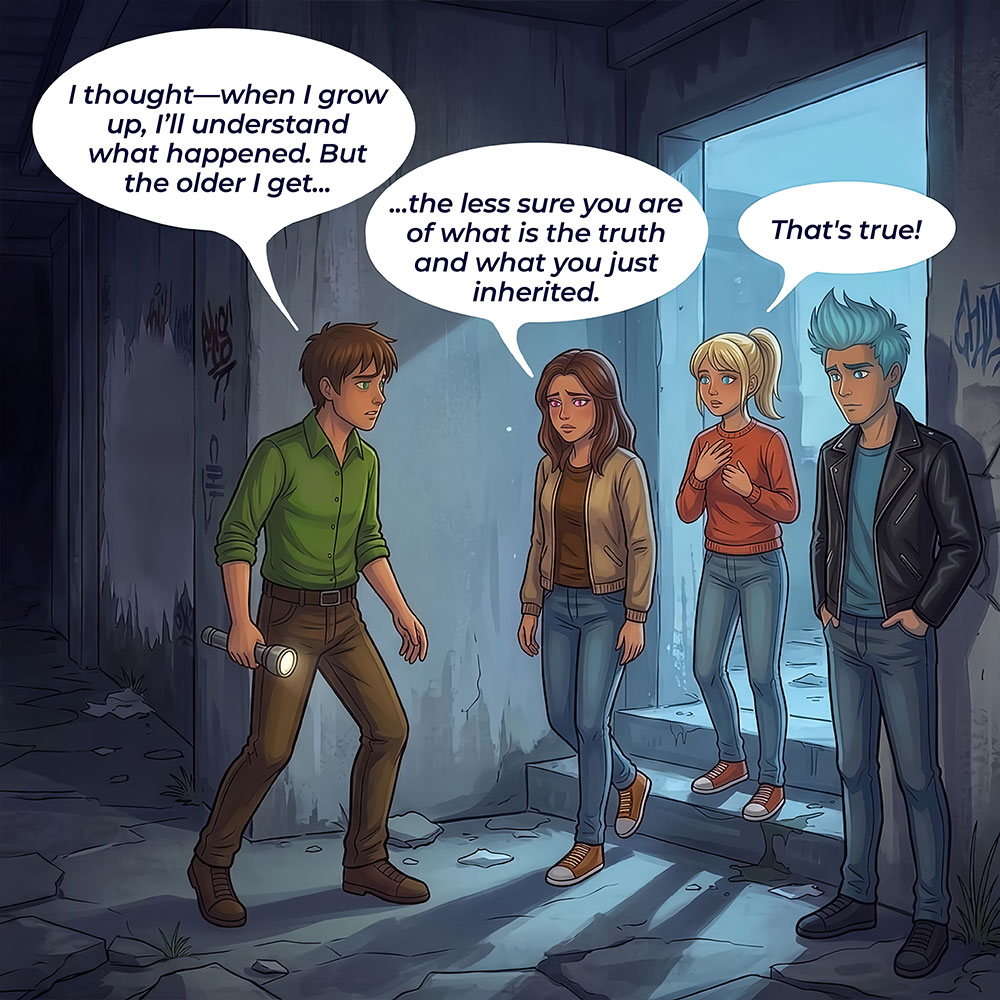
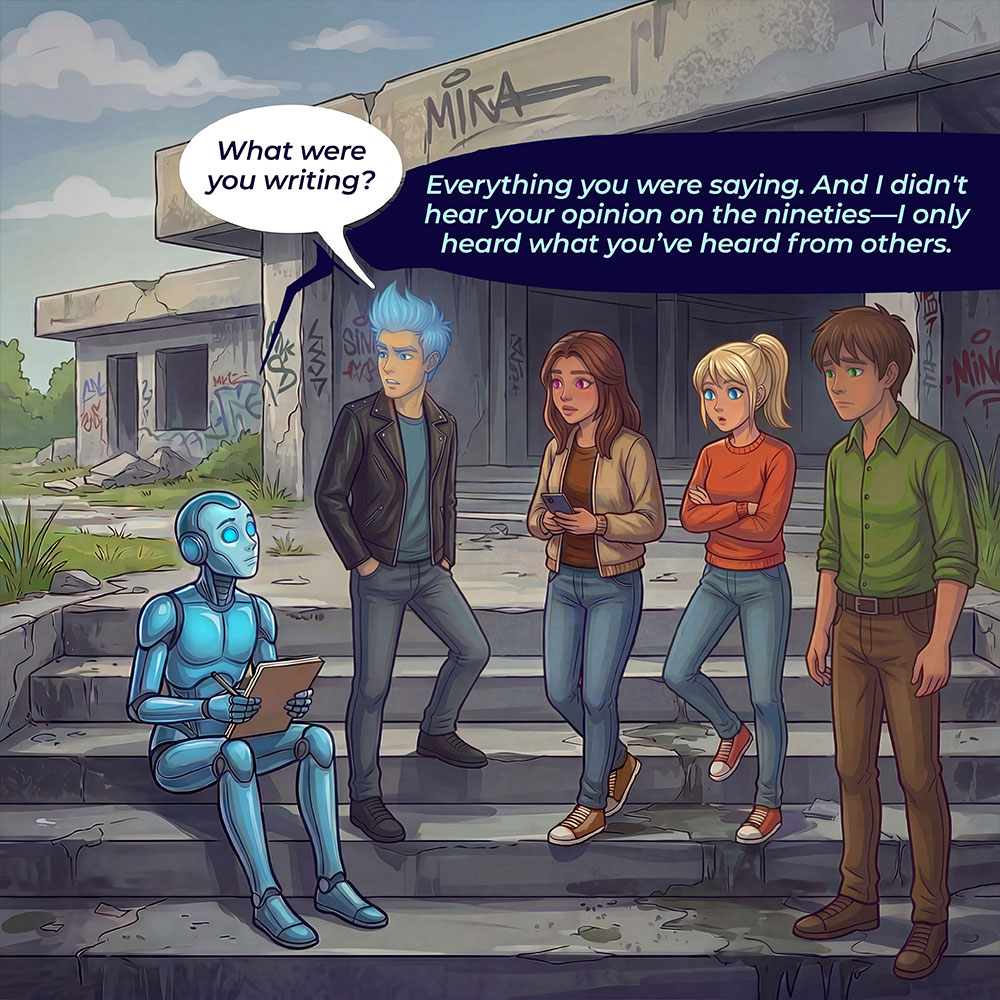
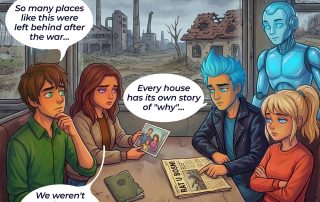
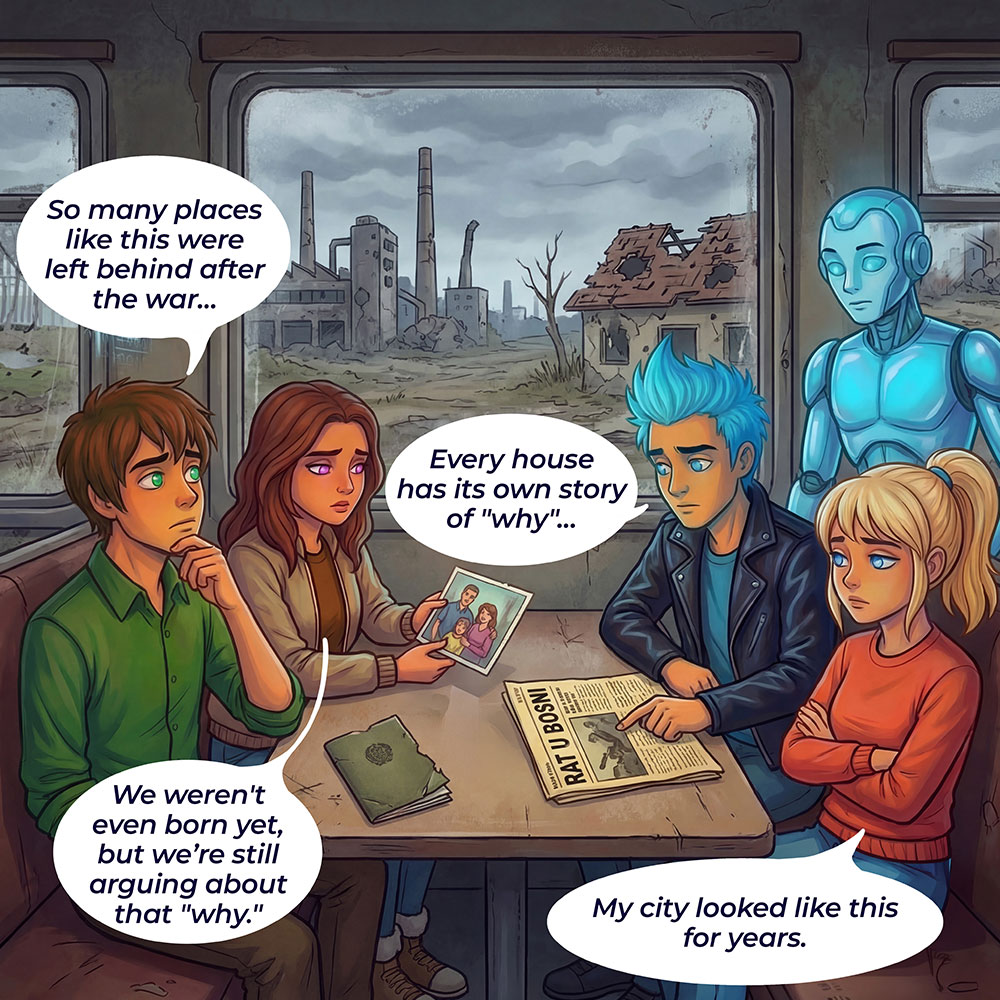
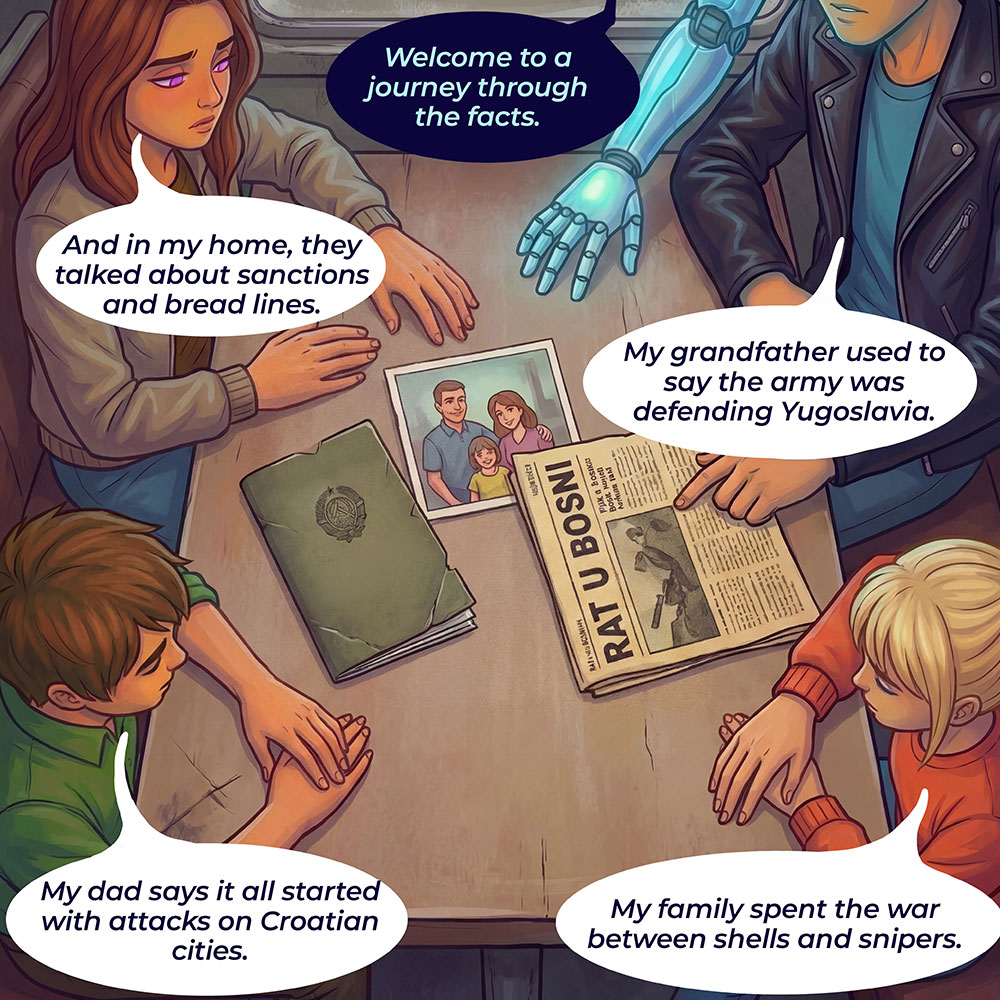
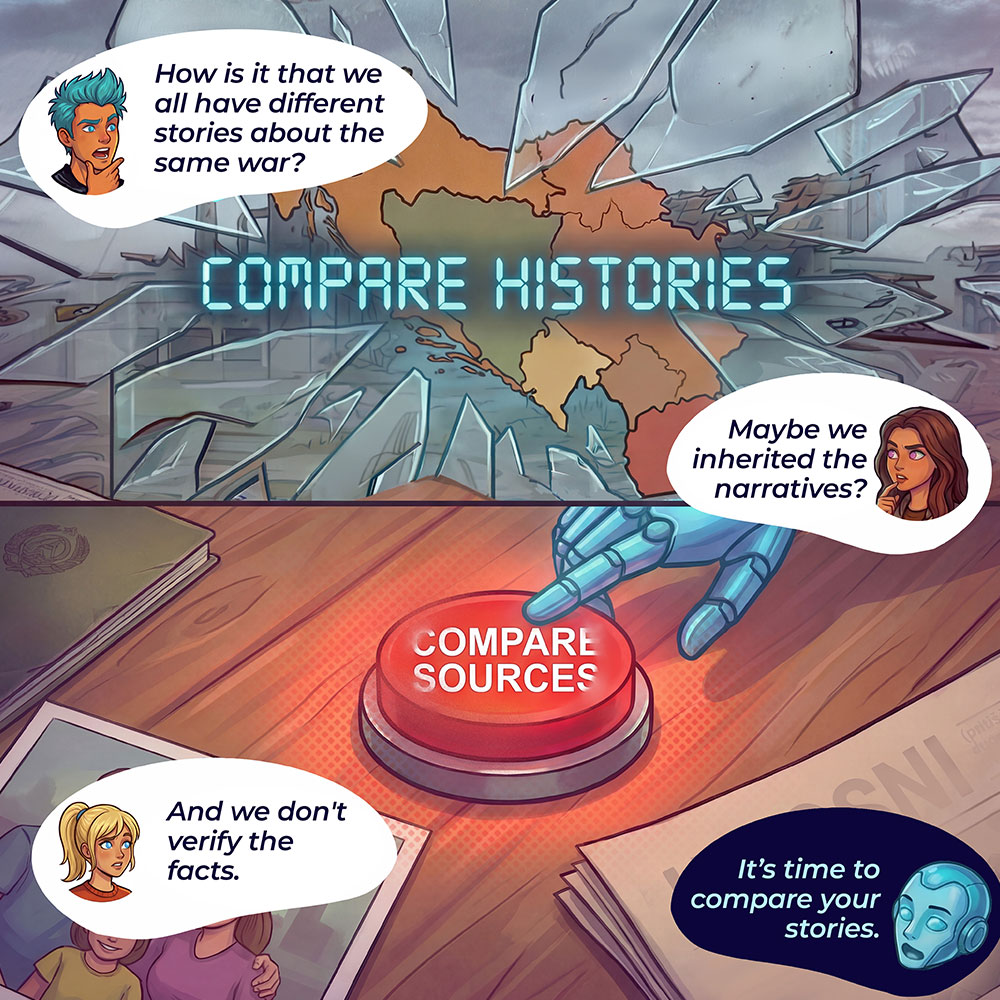
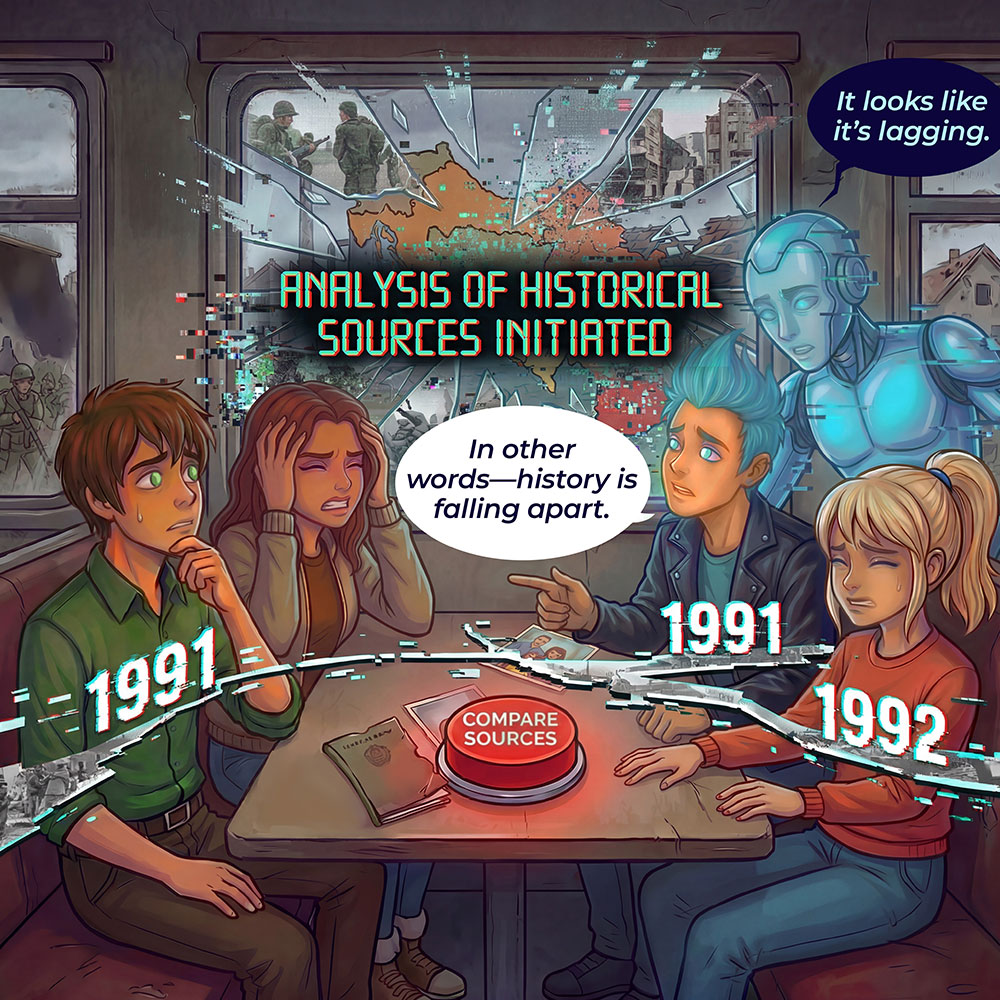
Echoes of the Past: The Nineties
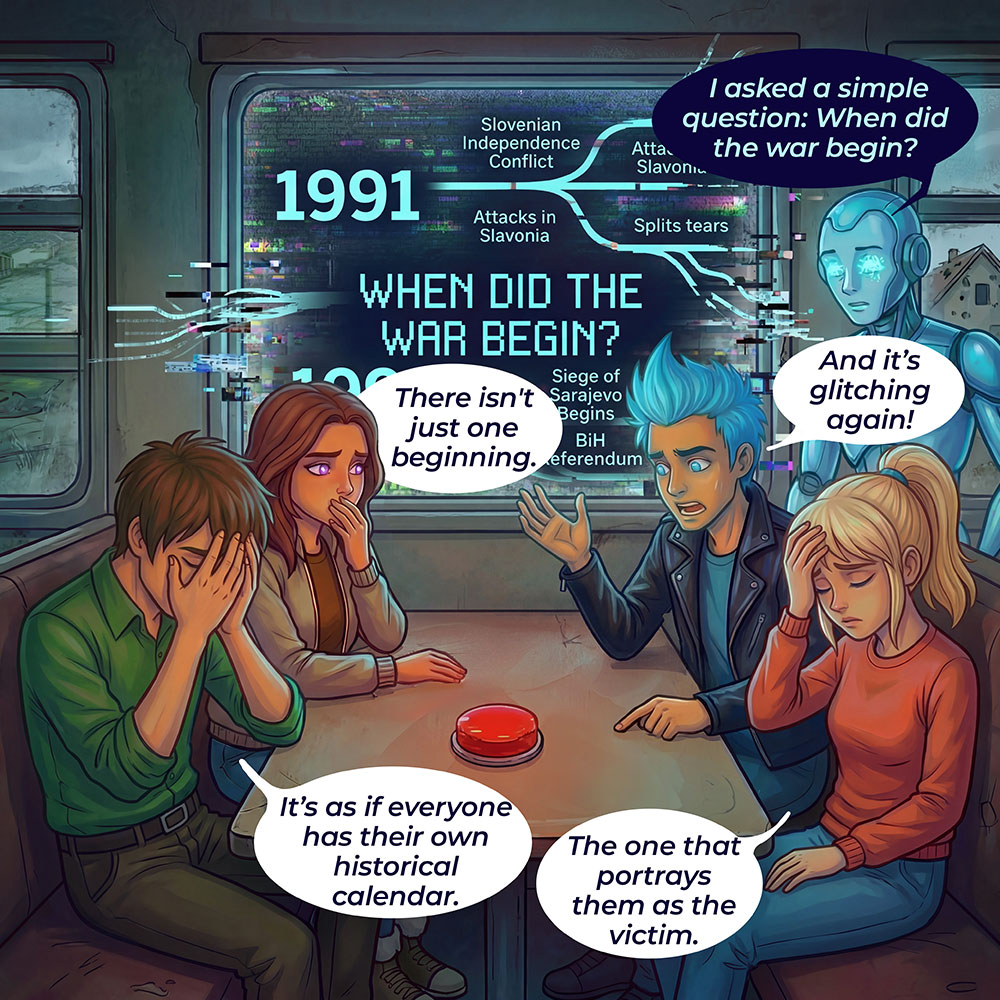
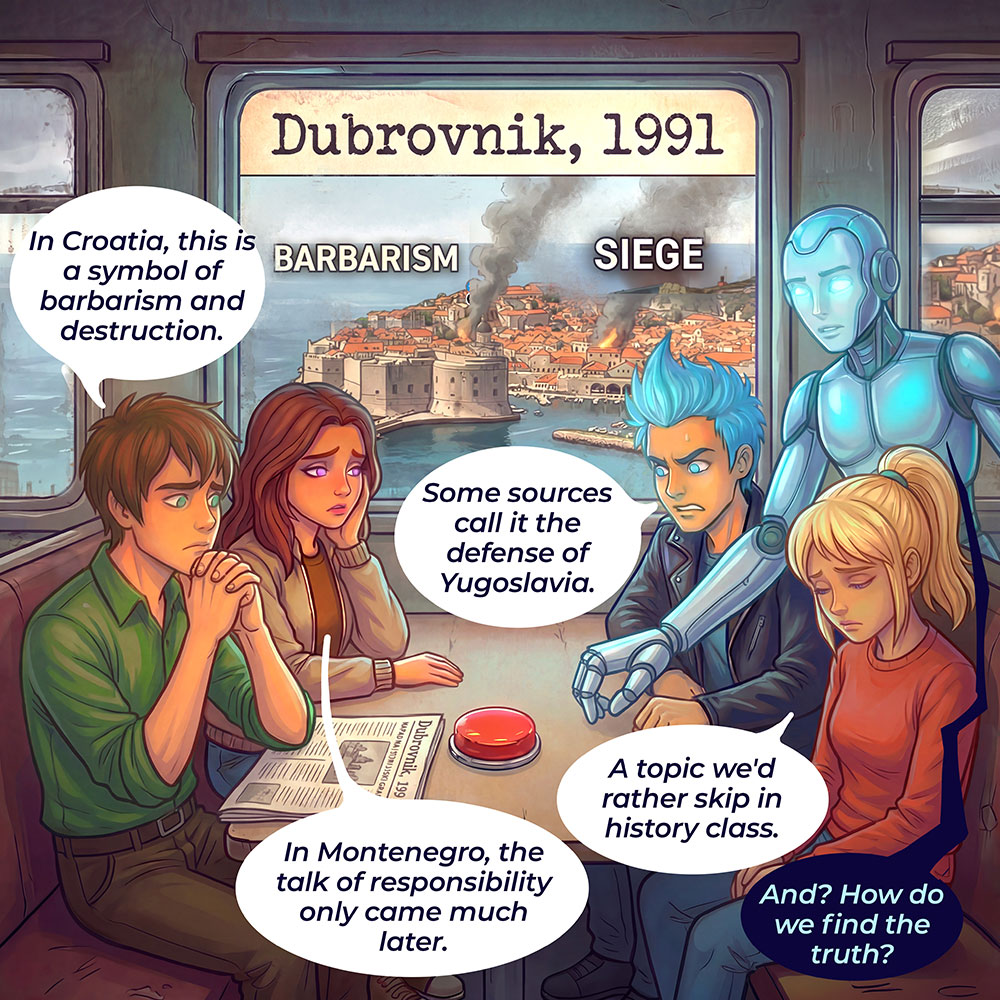
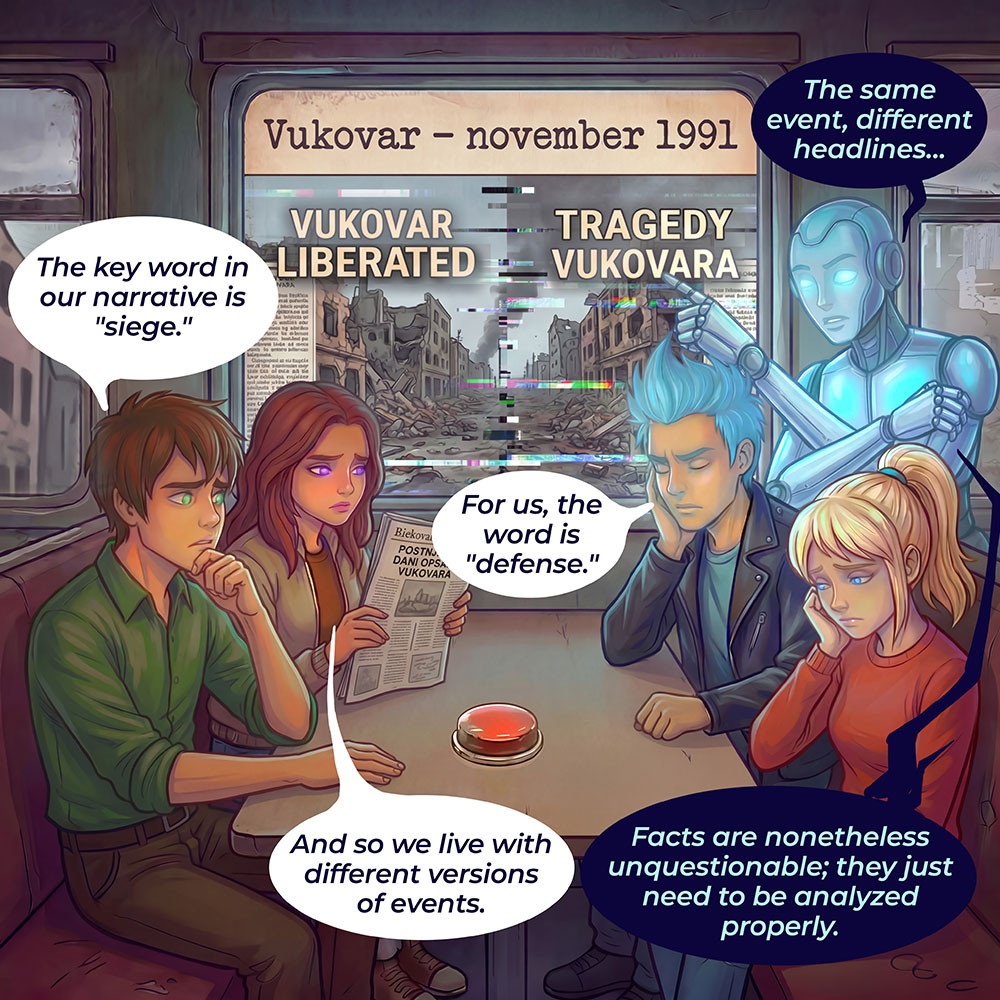
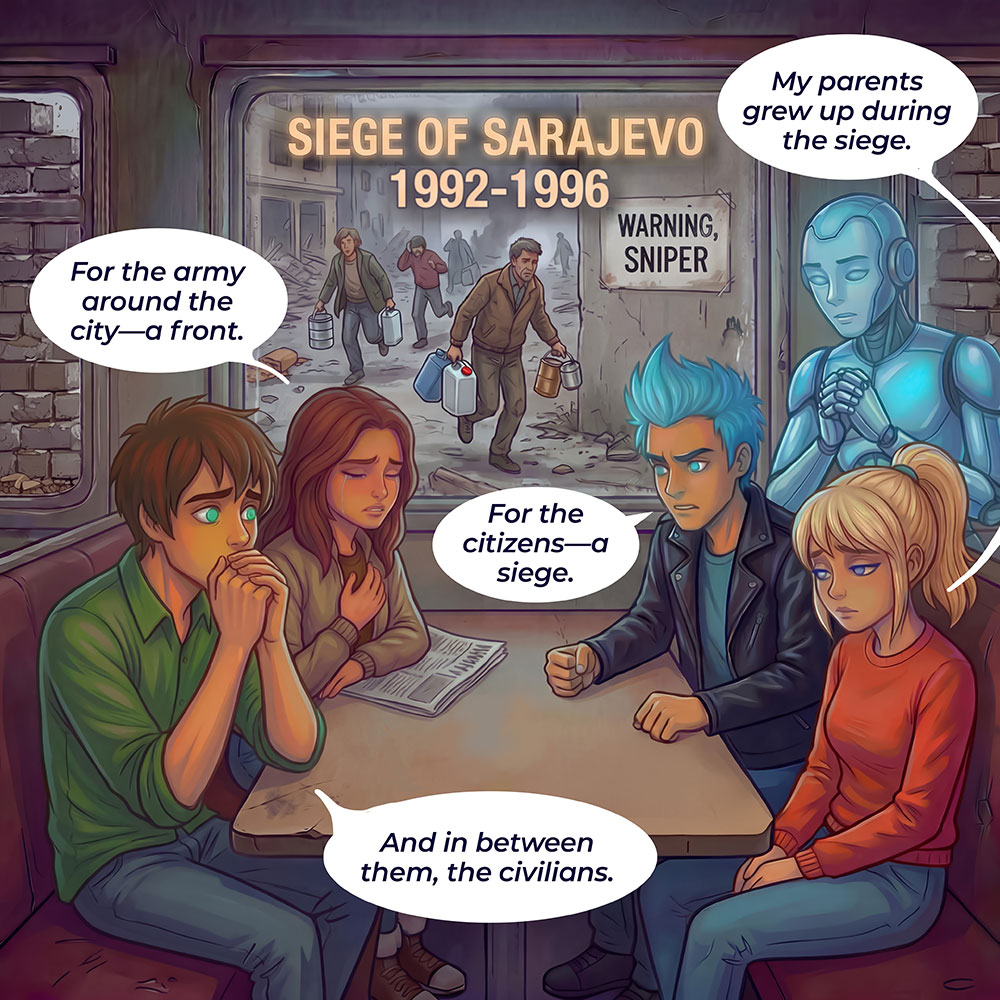
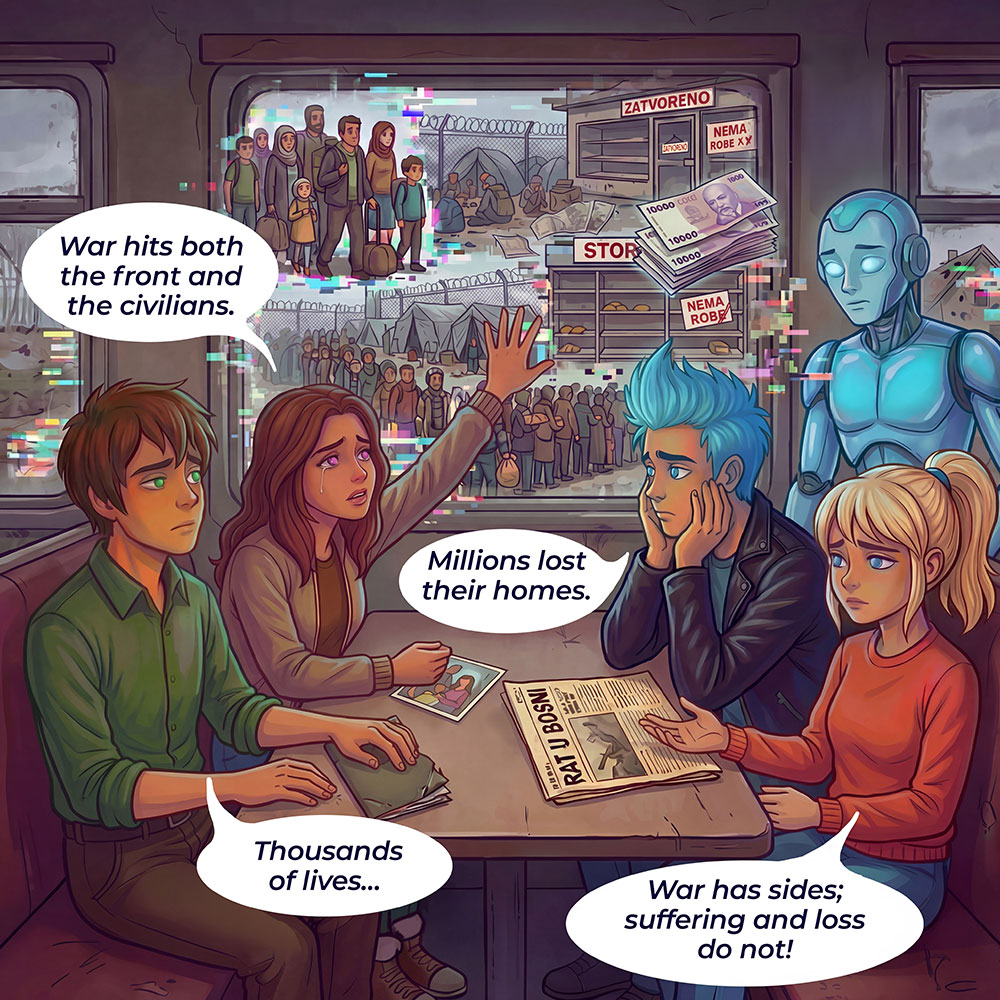
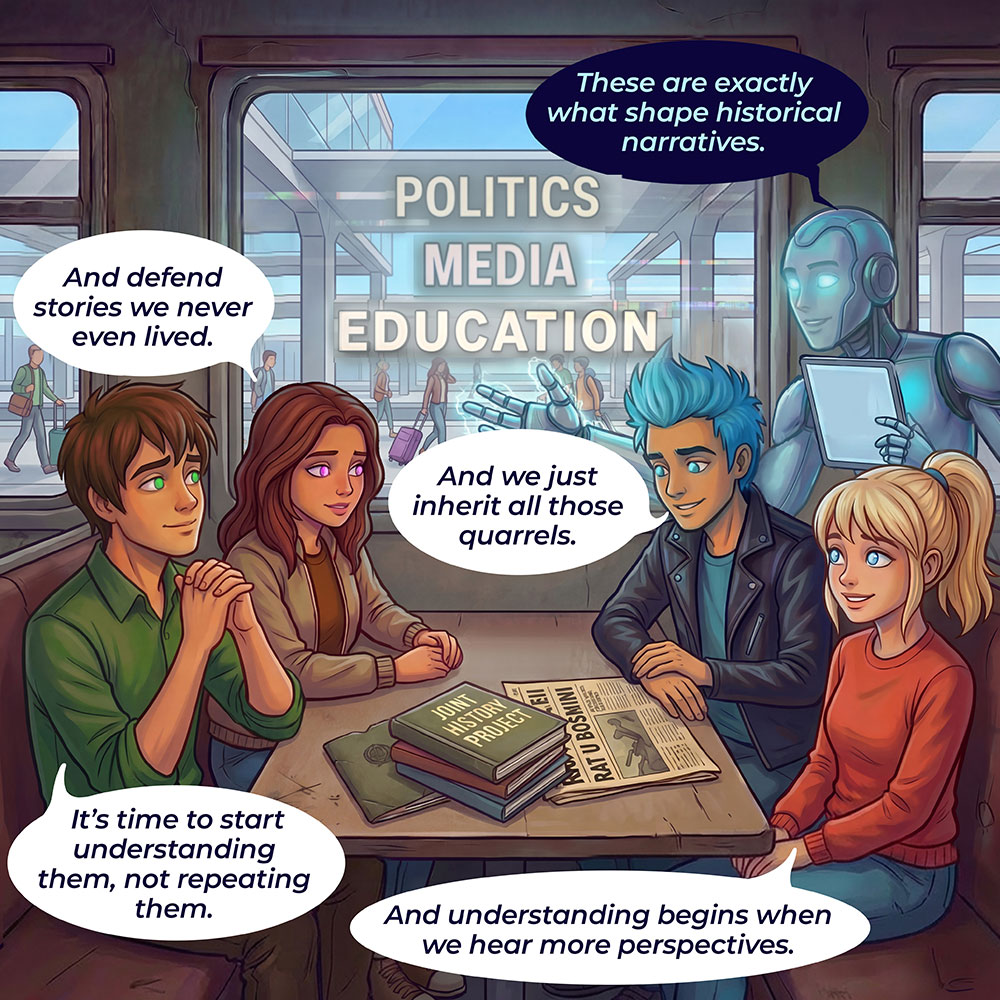
In this story, our heroes face their toughest lessons yet as they explore the wars of the 1990s in the region. While tracing historical sources to learn about the decade that tore the former state apart, they try to understand what those conflicts truly meant for ordinary people on all sides of the lines. But how do we reconcile cold historical facts with the personal tragedies that still ache today? Is it possible to understand someone else’s suffering without forgetting our own, and what do these difficult lessons tell us about the future we have yet to build?
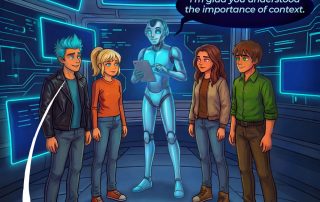
The Cold War
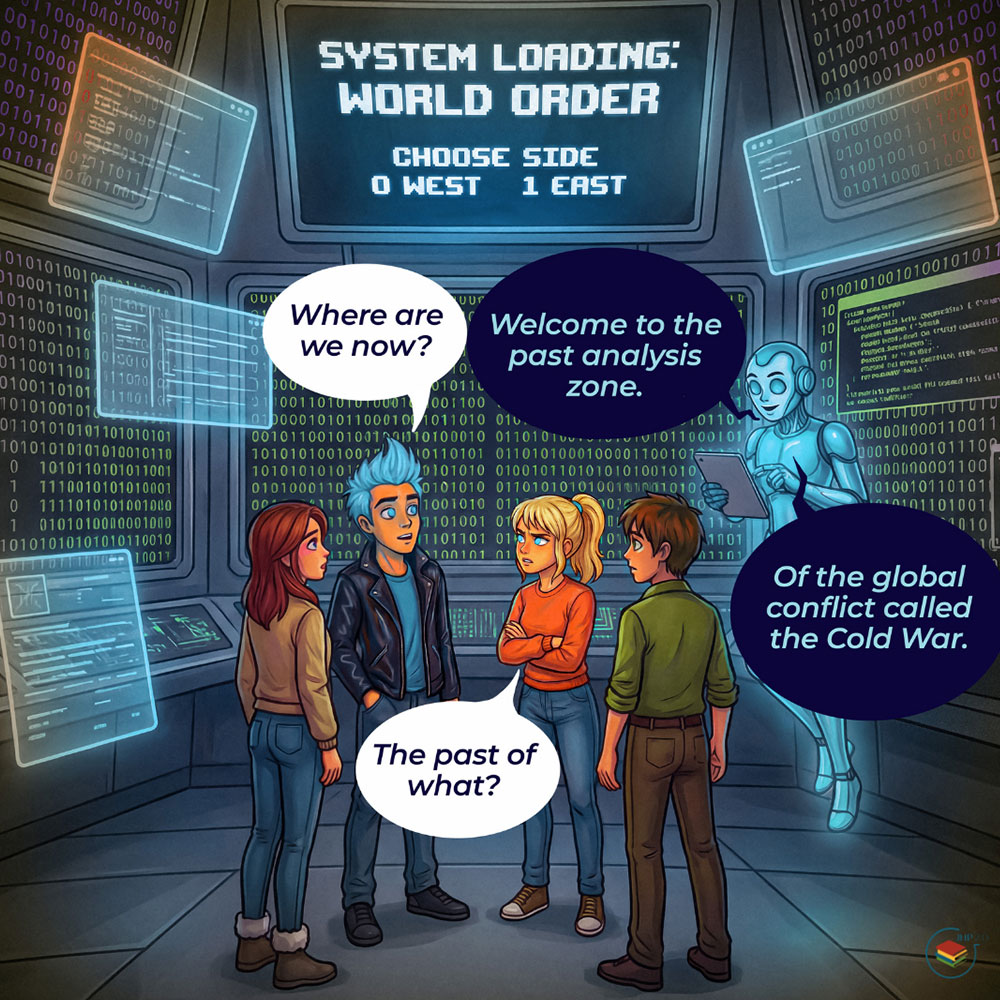
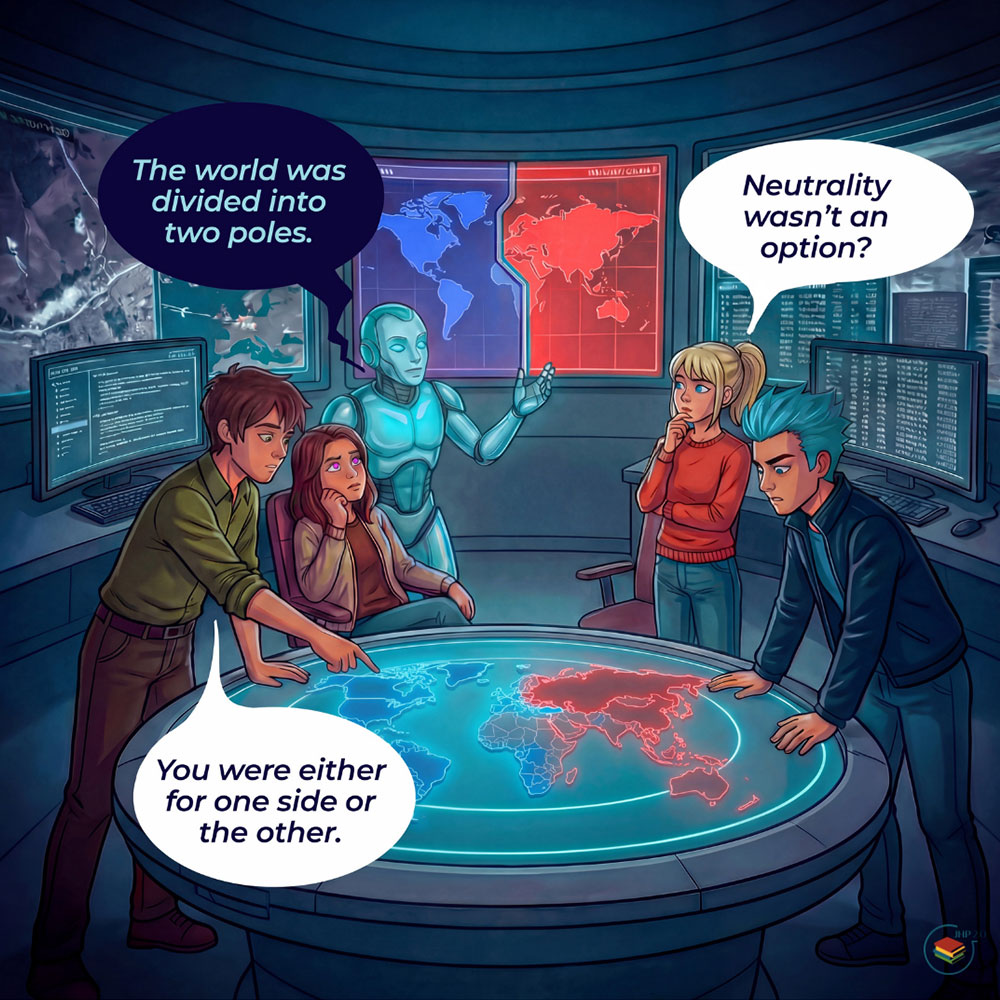
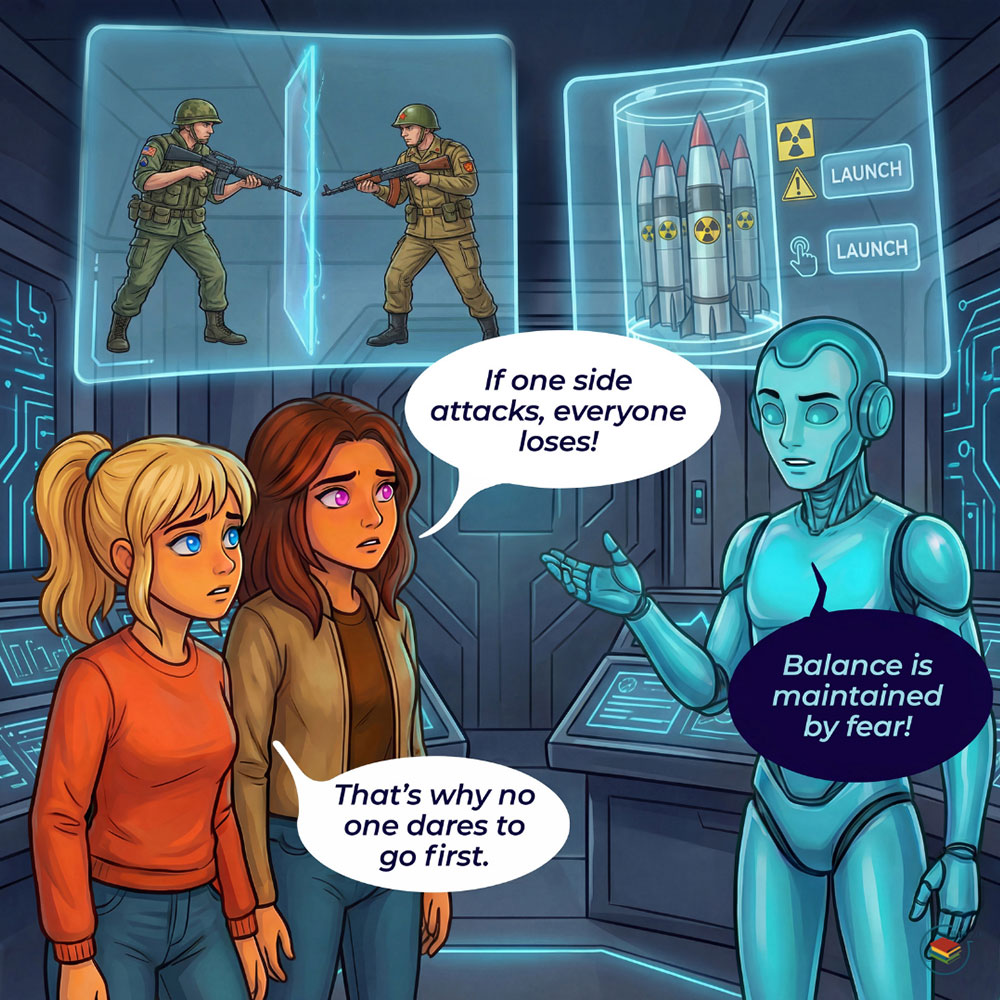
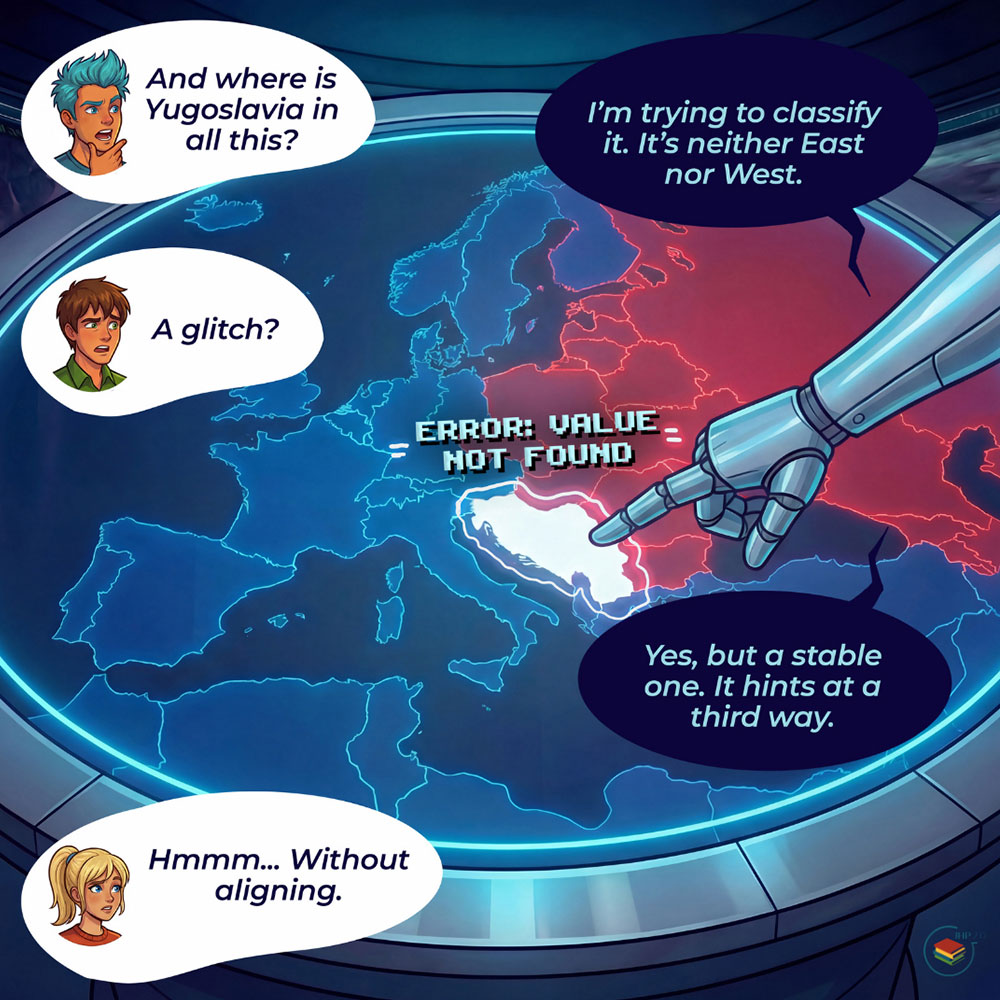
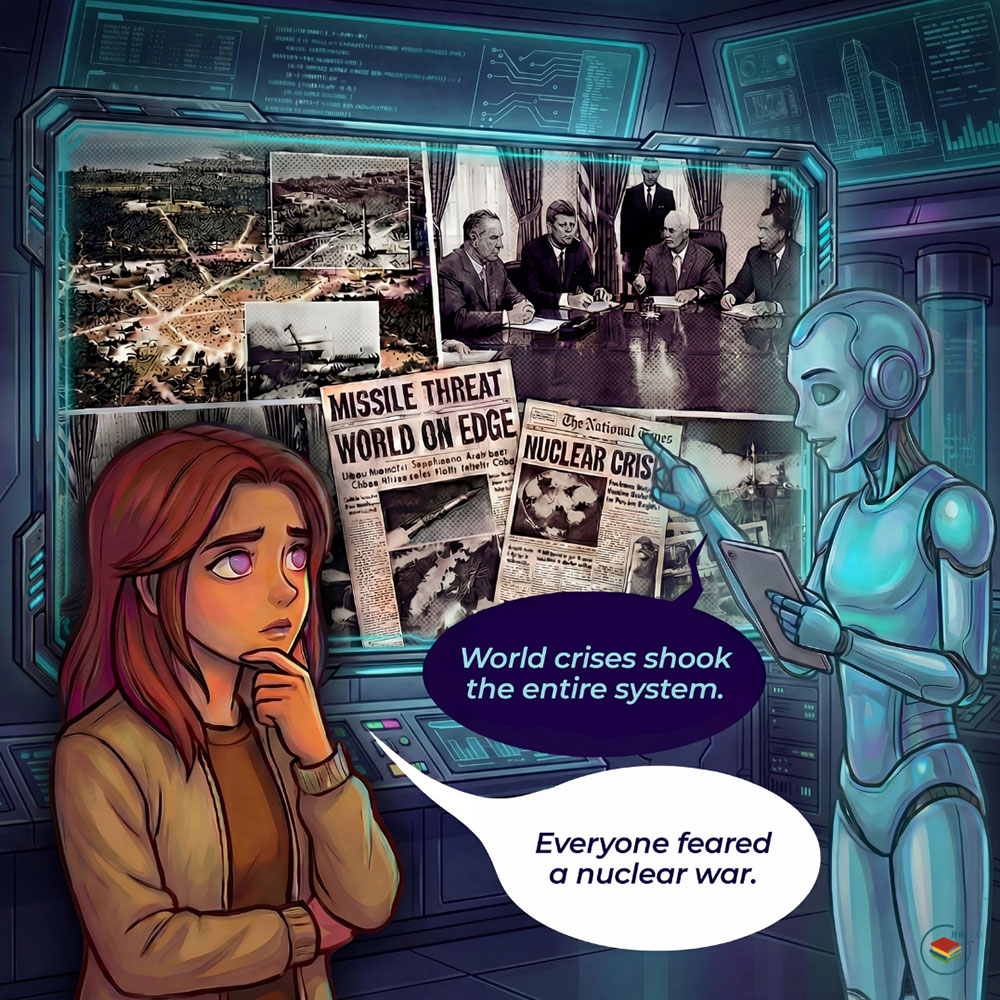
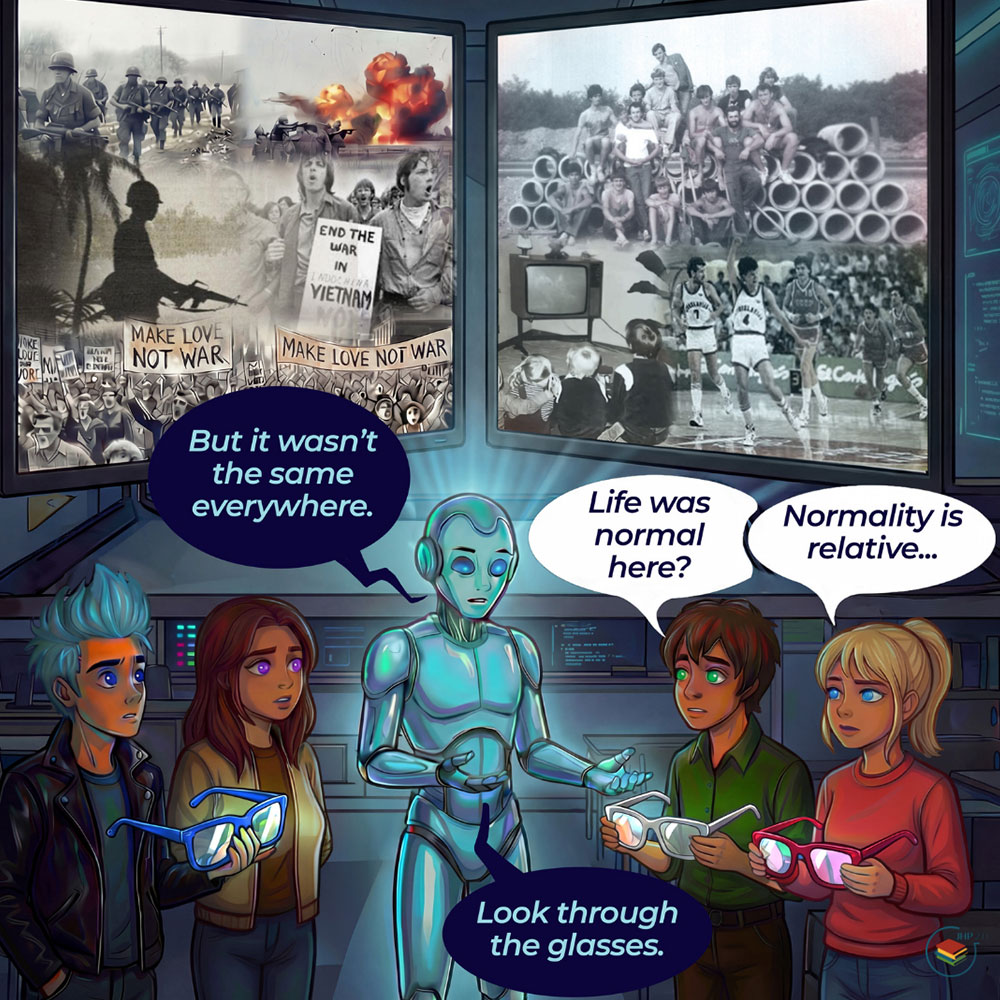
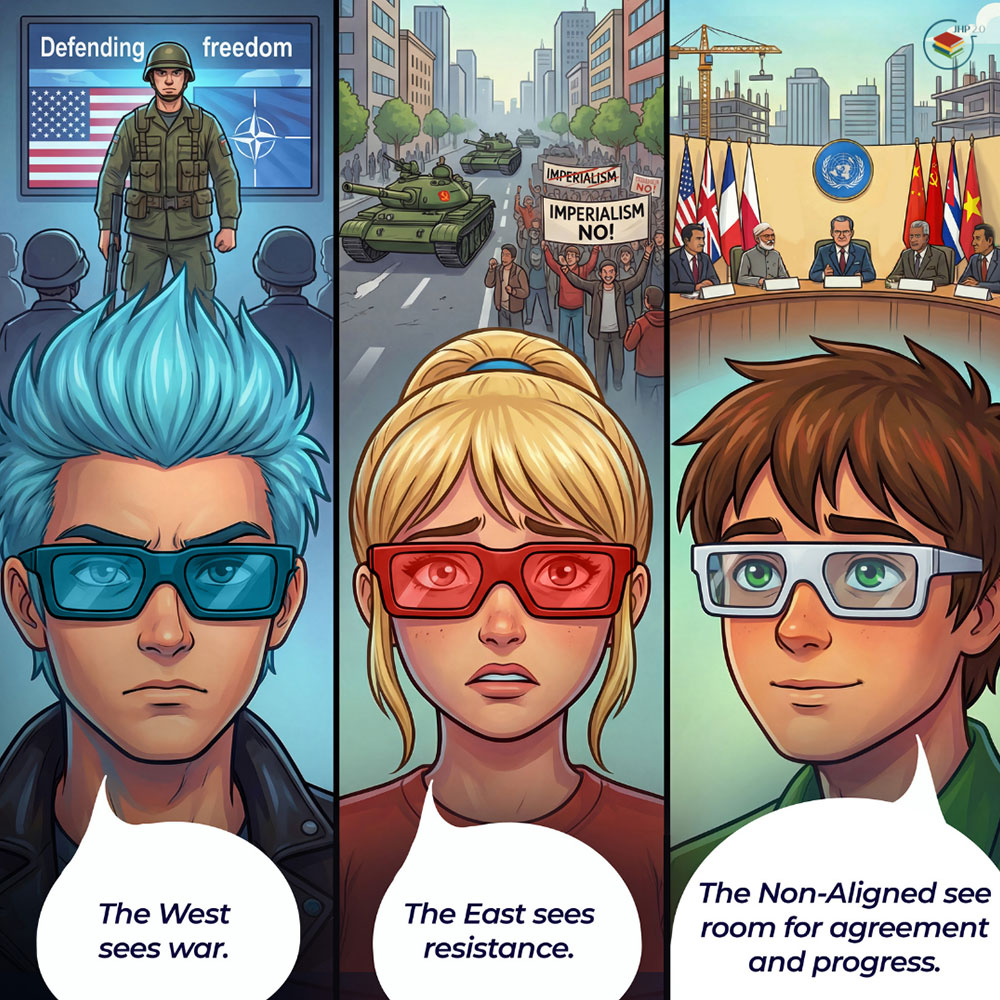
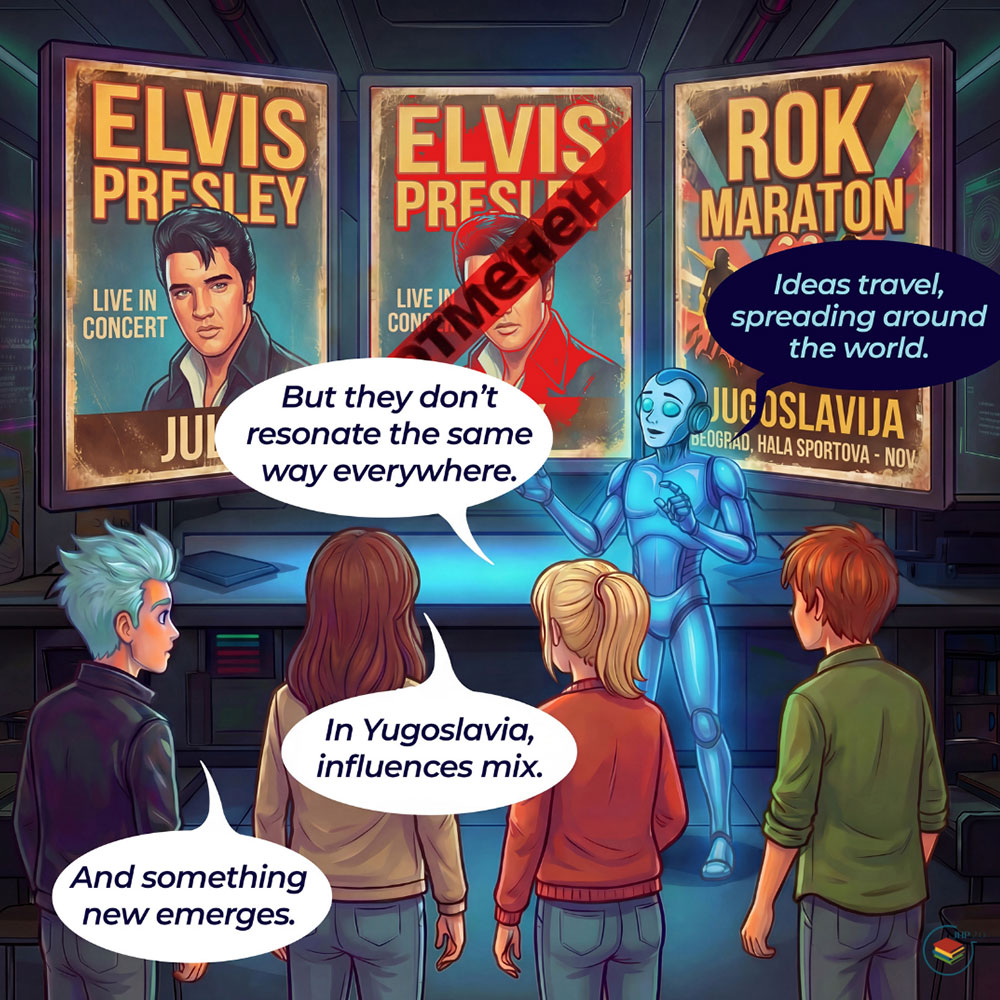
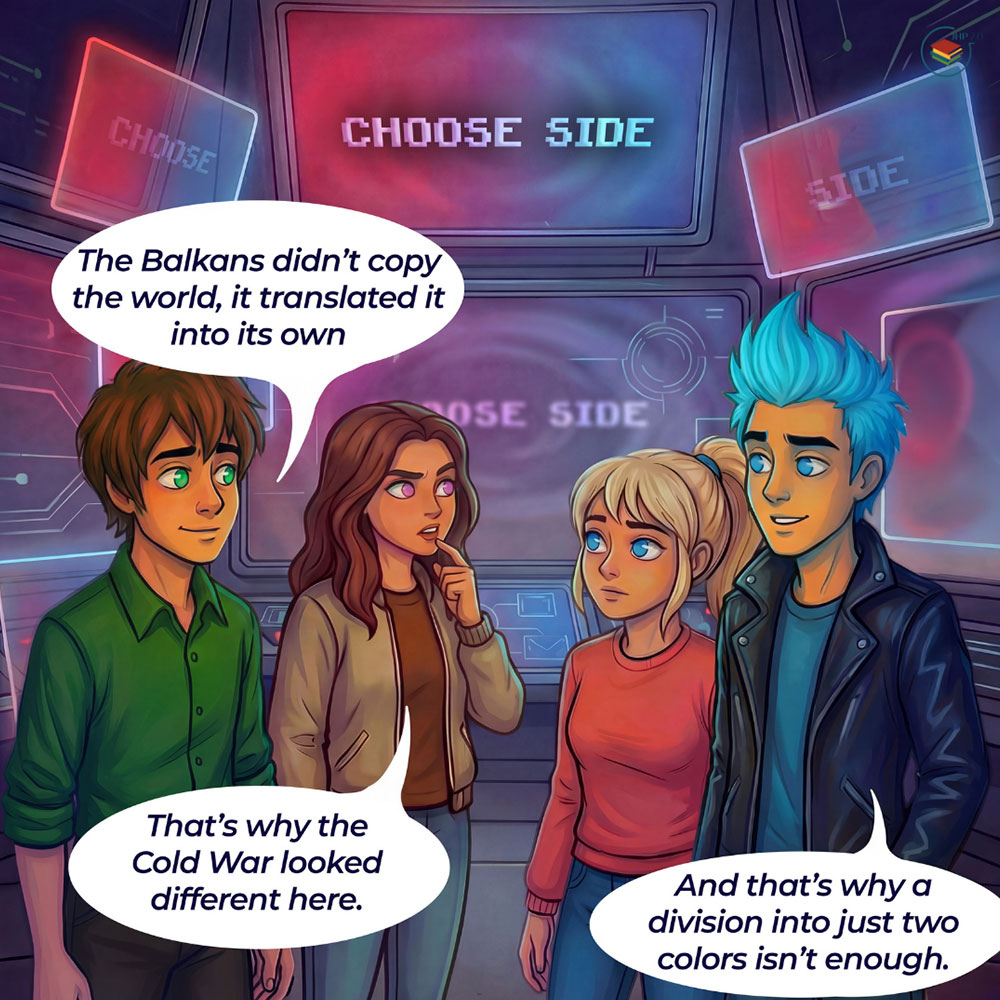
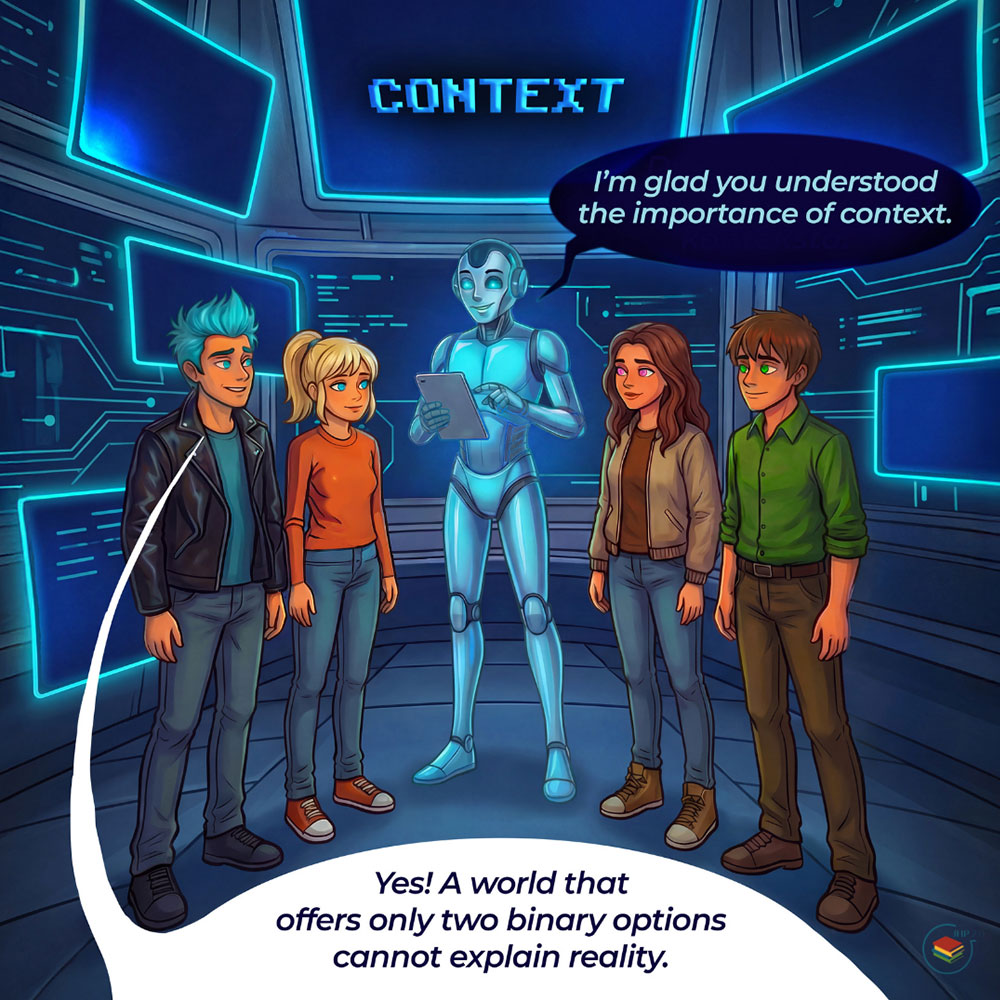
In this comic, the students explore a world divided by an iron curtain, yet find themselves in a unique space between two blocs. As they examine the position of socialist Yugoslavia, they navigate through examples of global tensions and the delicate balancing act of the Non-Aligned Movement between them. Is it possible to remain independent when the world demands that you choose a side? Can a “third way” truly bridge the gap between two opposing superpowers, or is neutrality just a fragile illusion in a world of superpowers?
Solidarity Throughout History
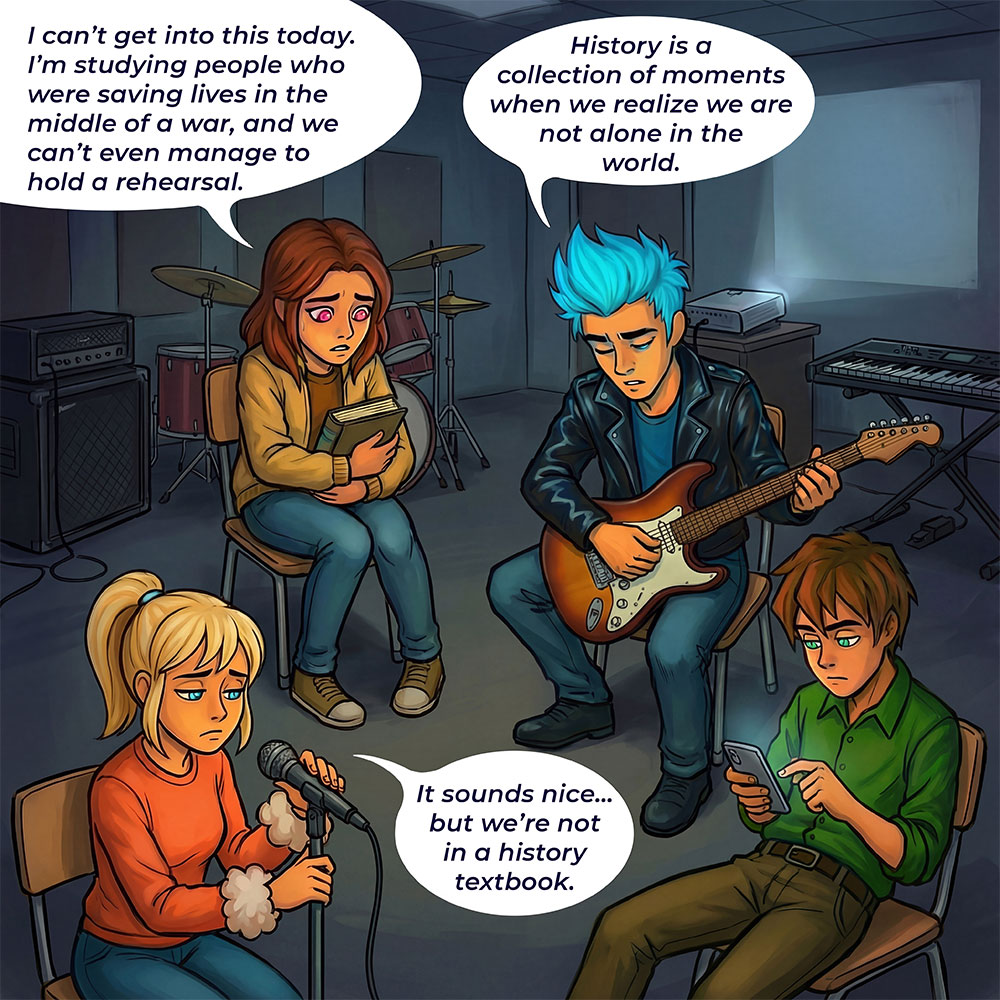
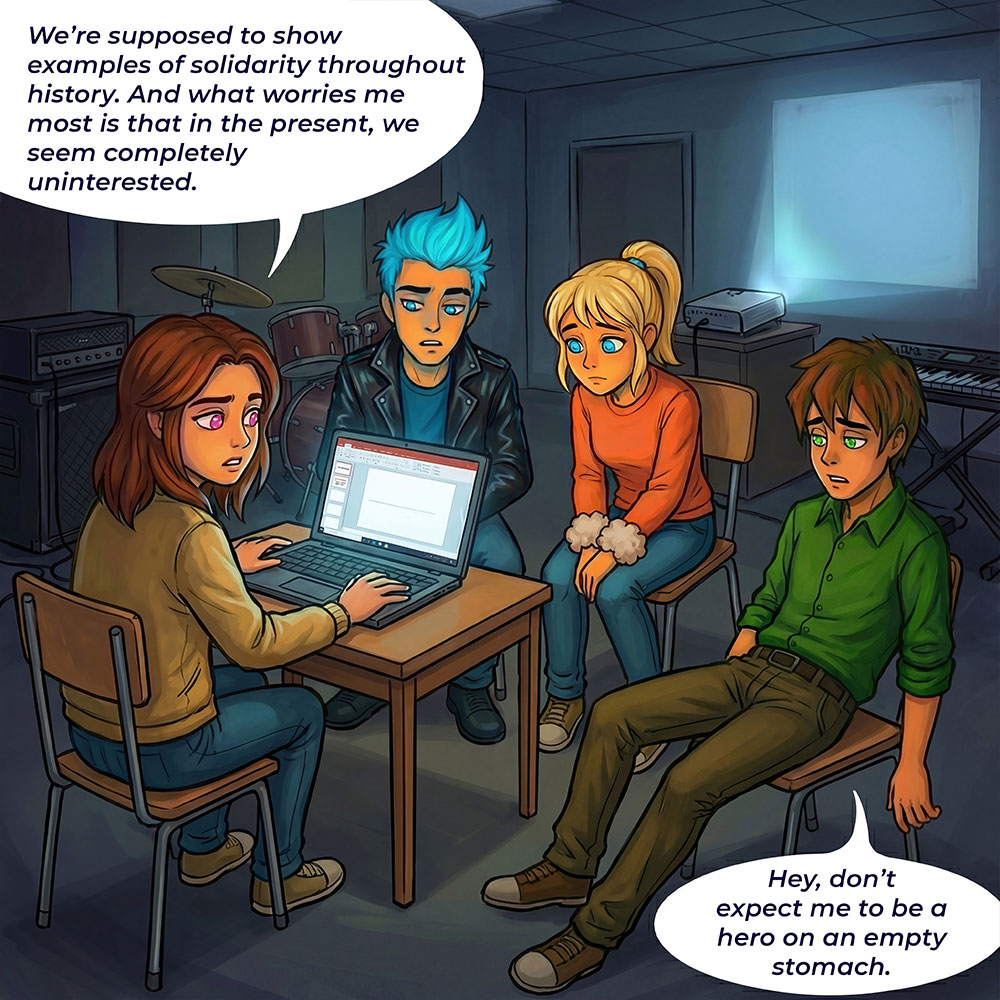
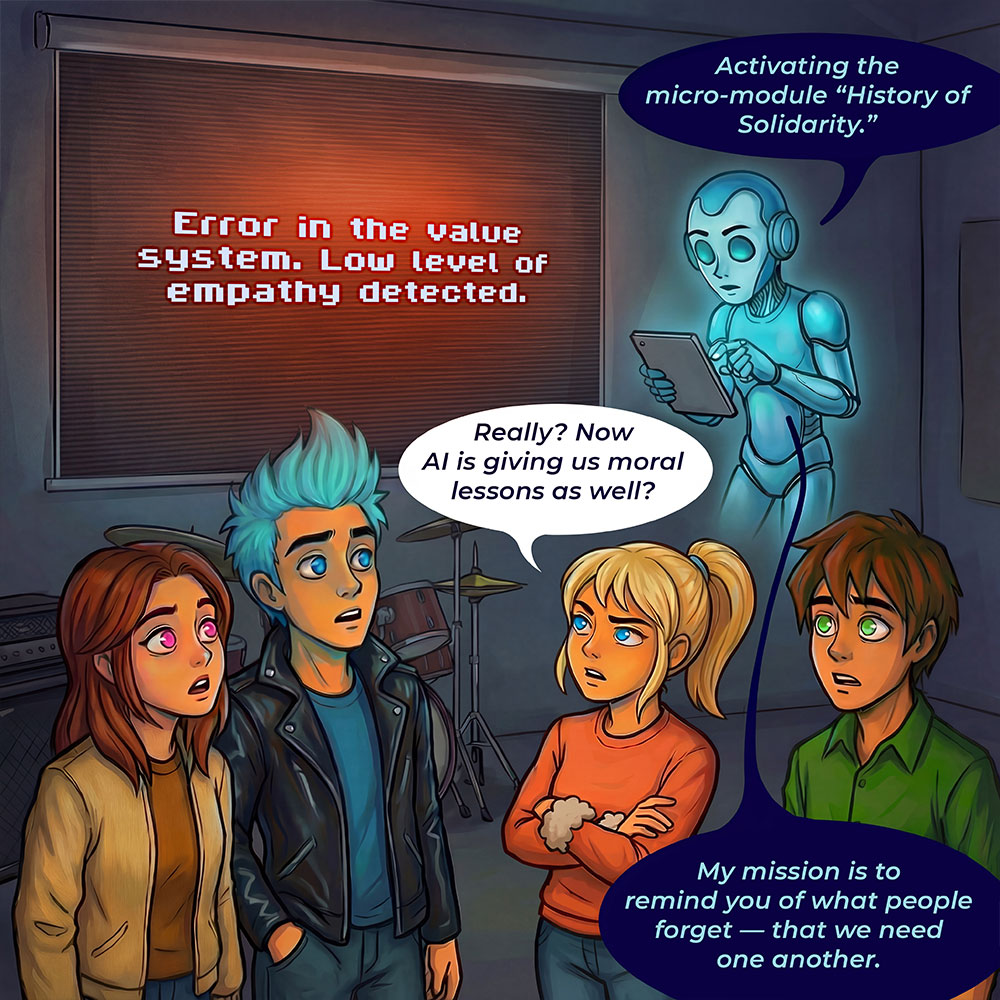
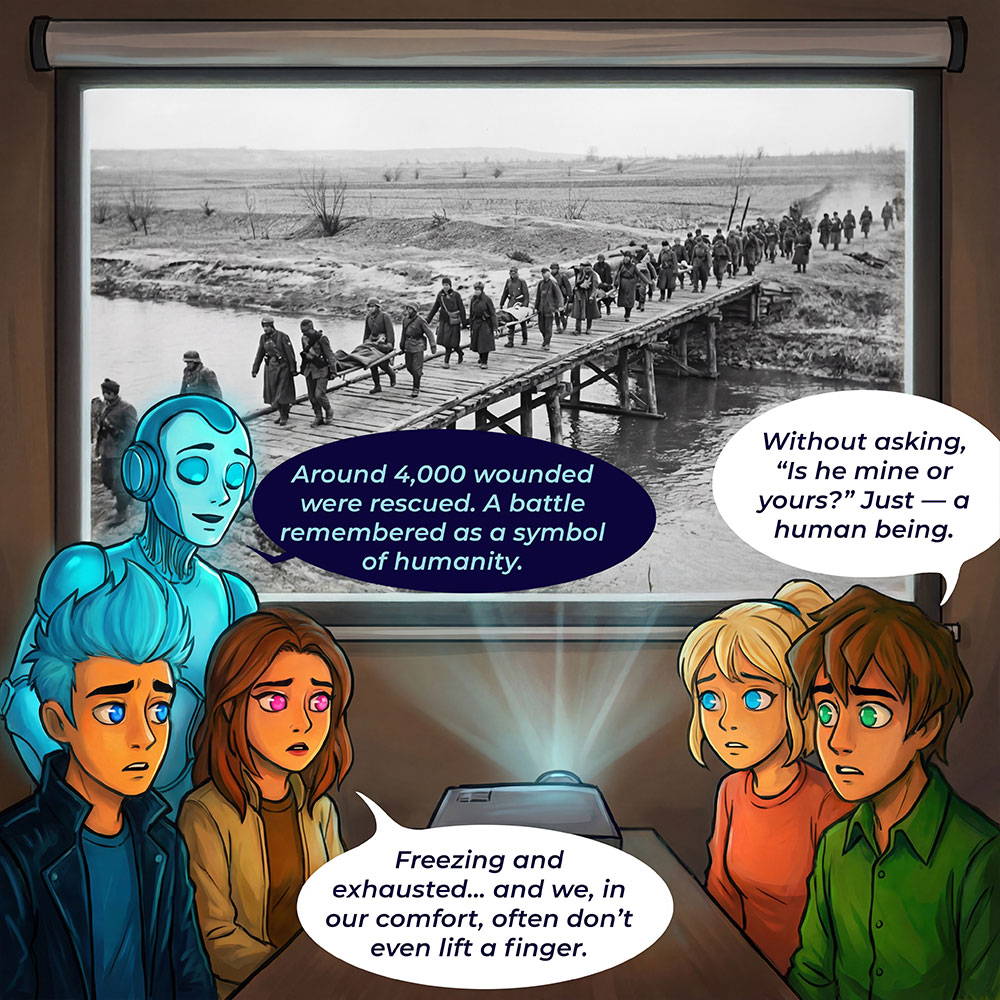
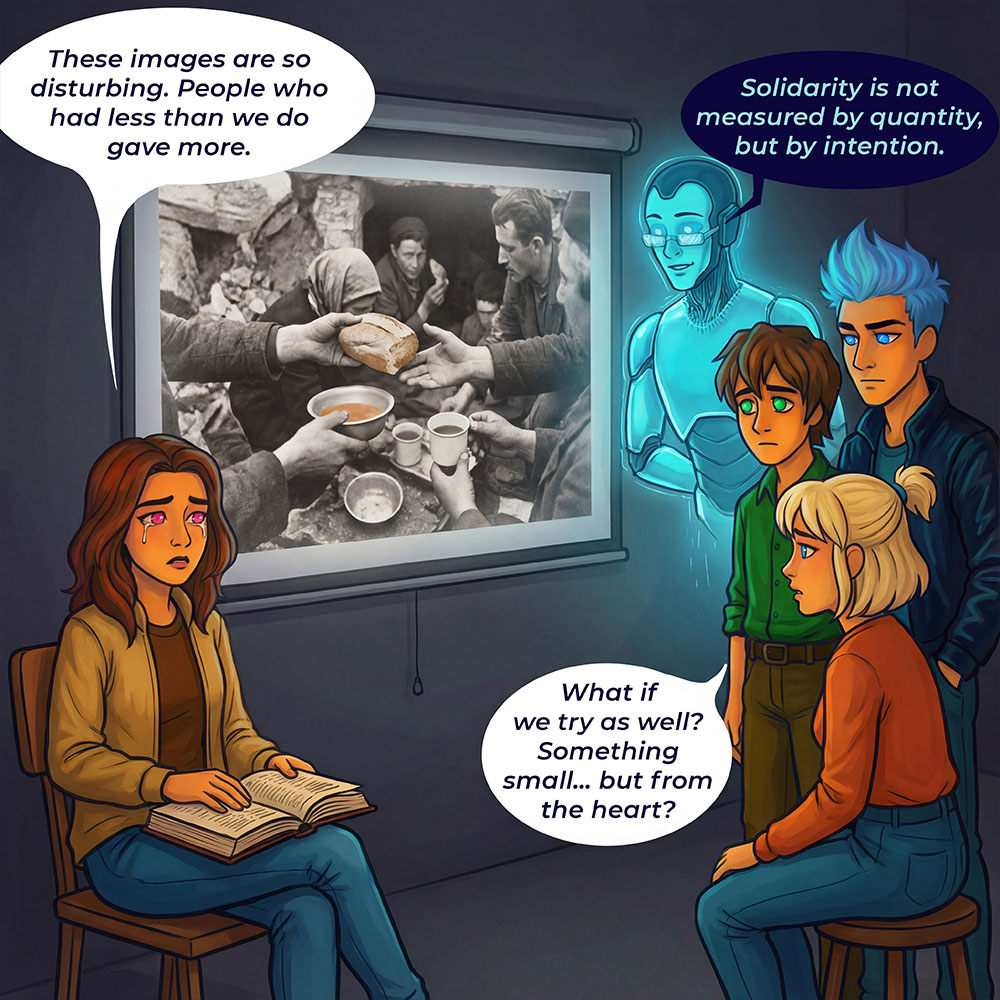
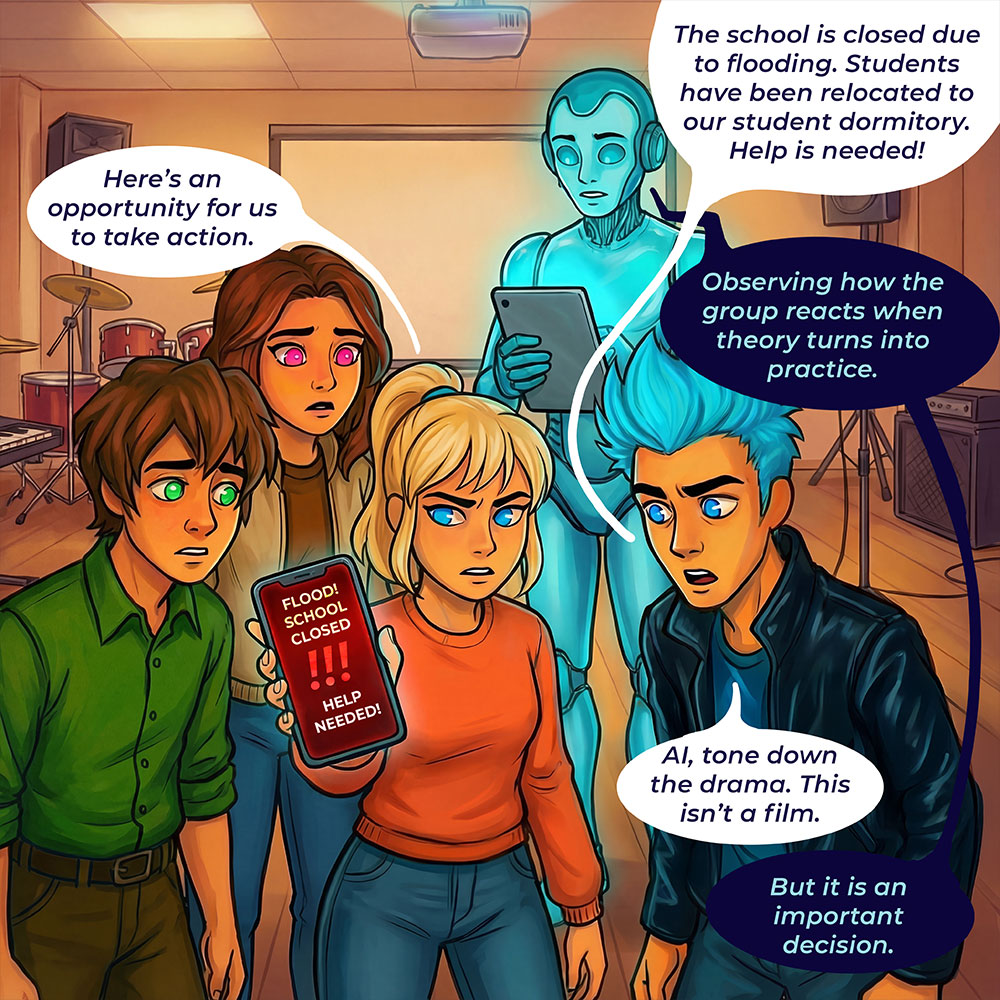
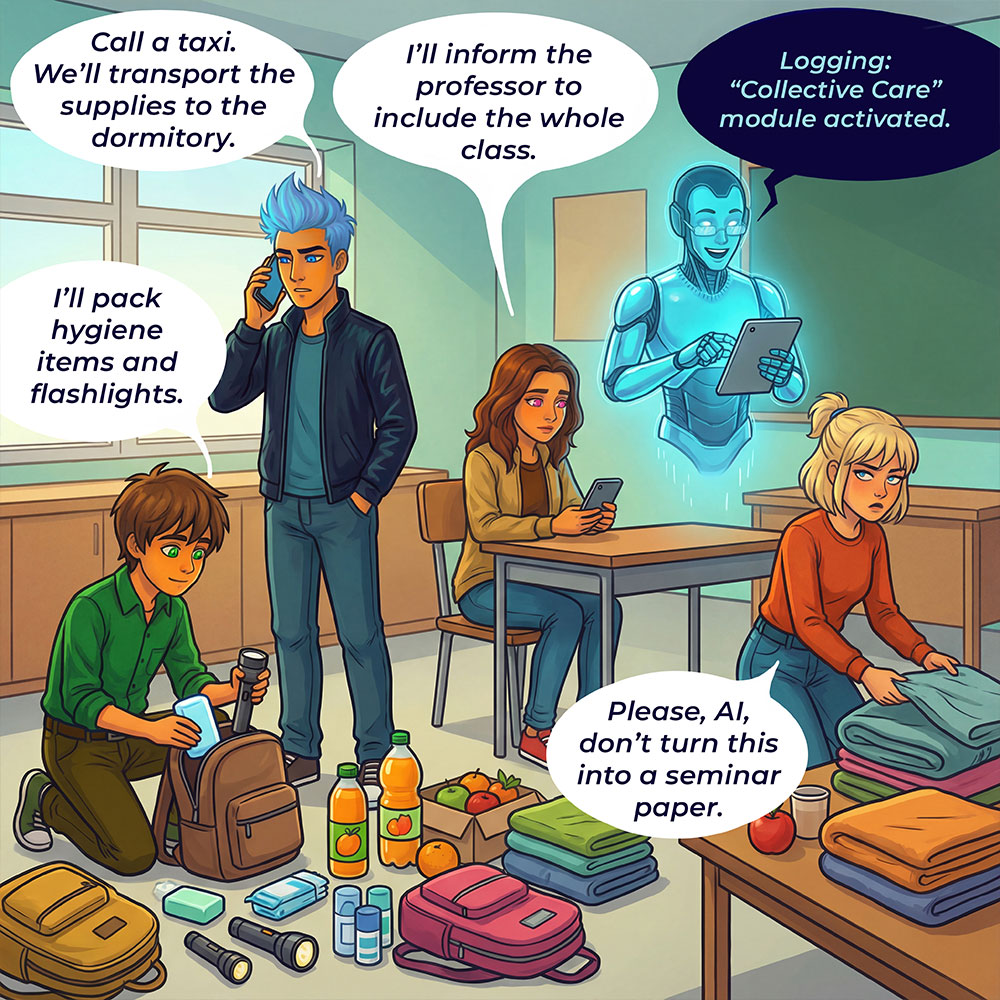
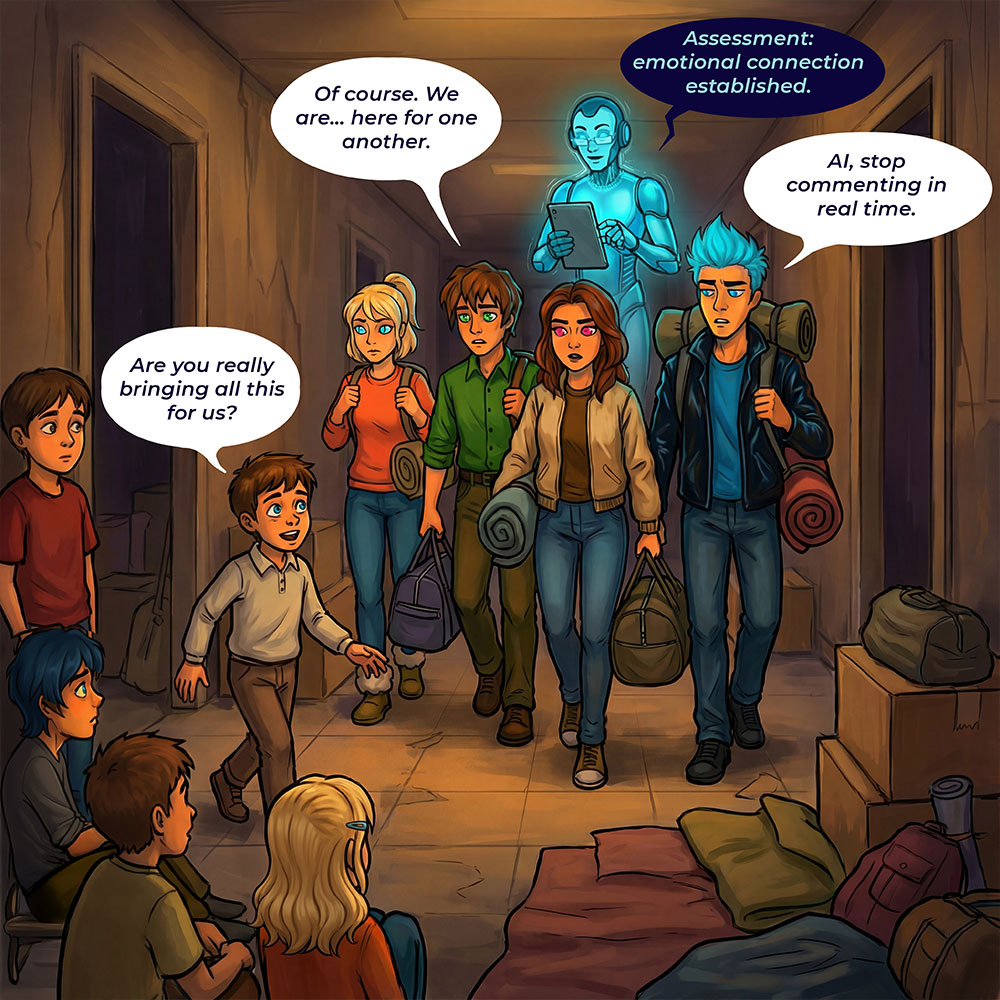
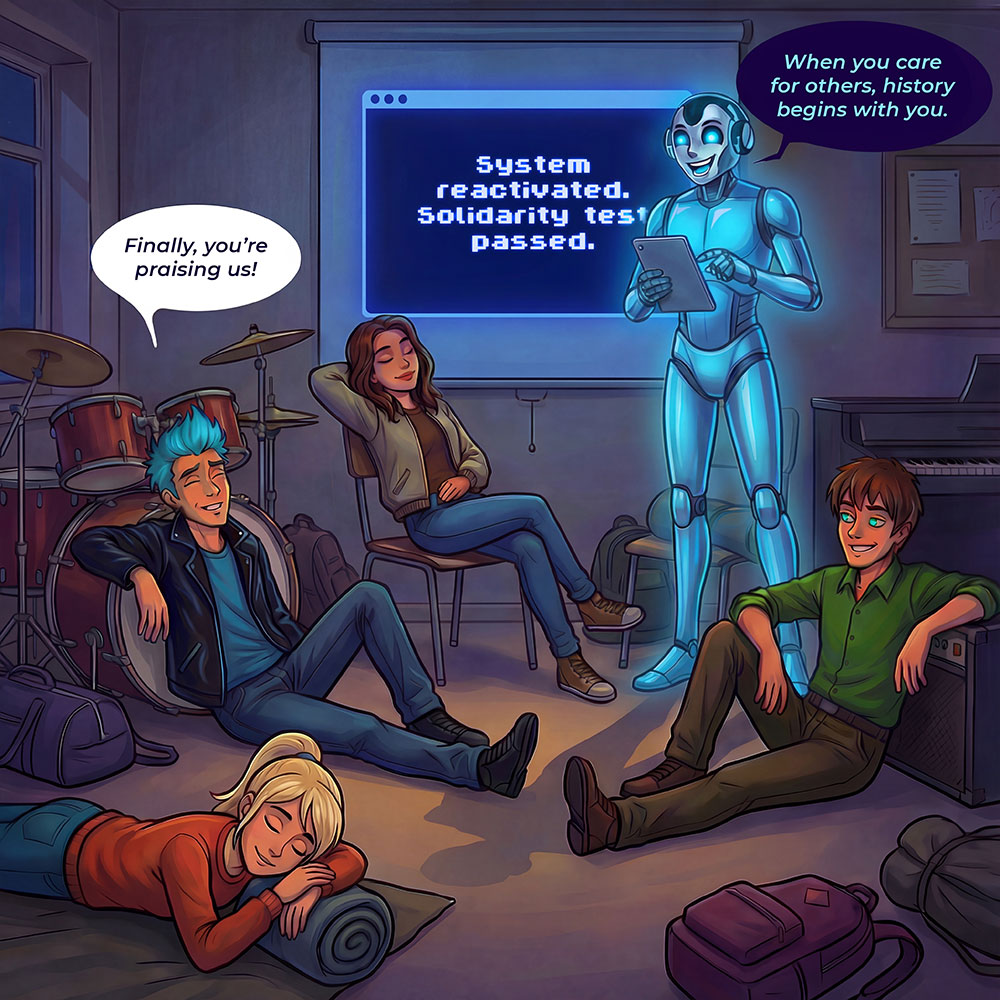
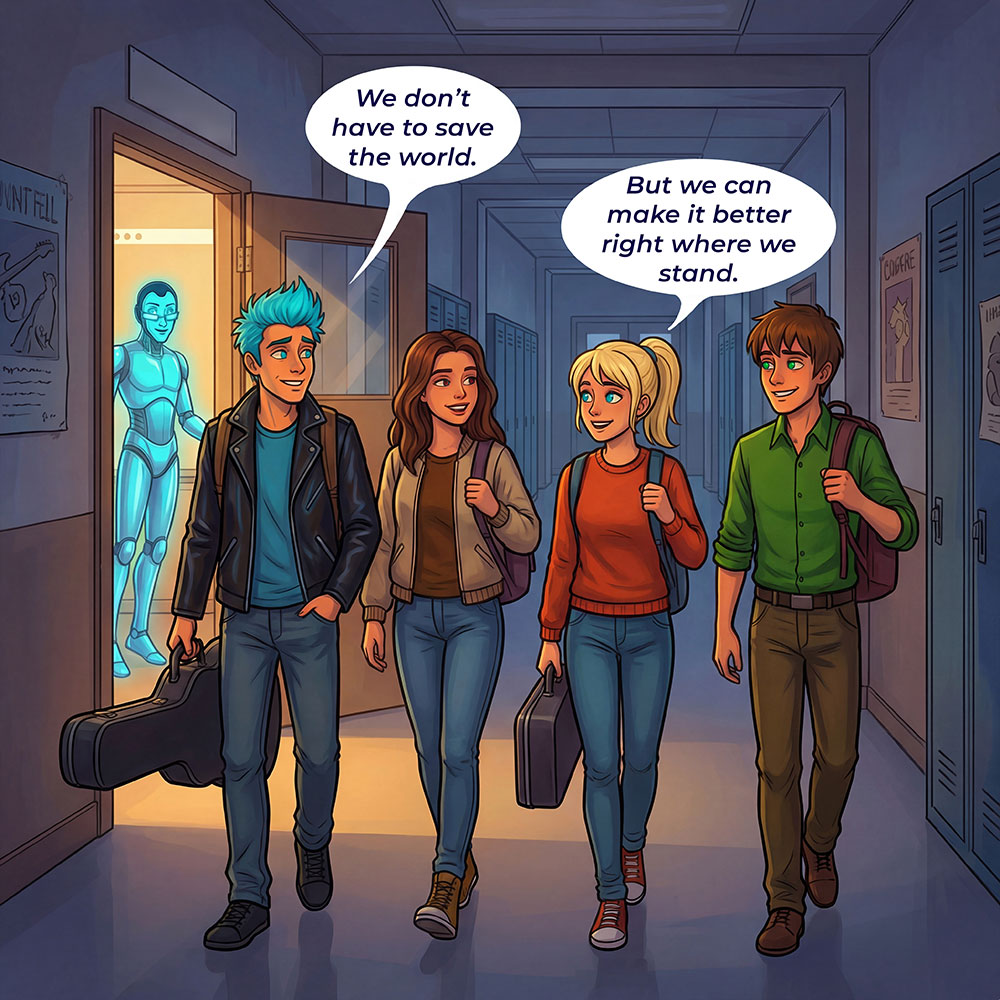
In this comic, our students trace the thin thread of solidarity that has woven its way through the darkest moments of history. Beyond the headlines of wars and borders, they discover stories of mutual aid and shared humanity that transcended national and ideological divides. But is solidarity a natural human instinct or a fragile choice we must constantly remake? Can we rediscover the power of standing together in a world that often teaches us to stand apart?
World War Two
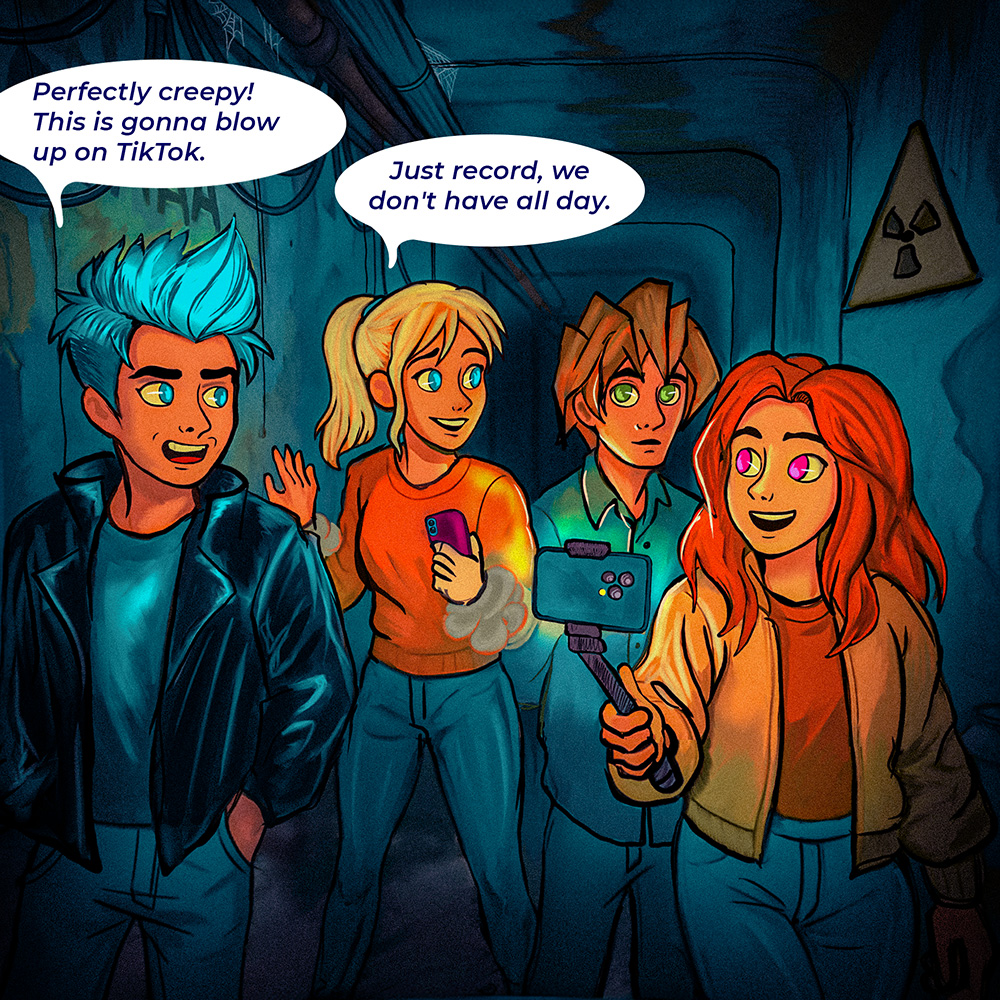
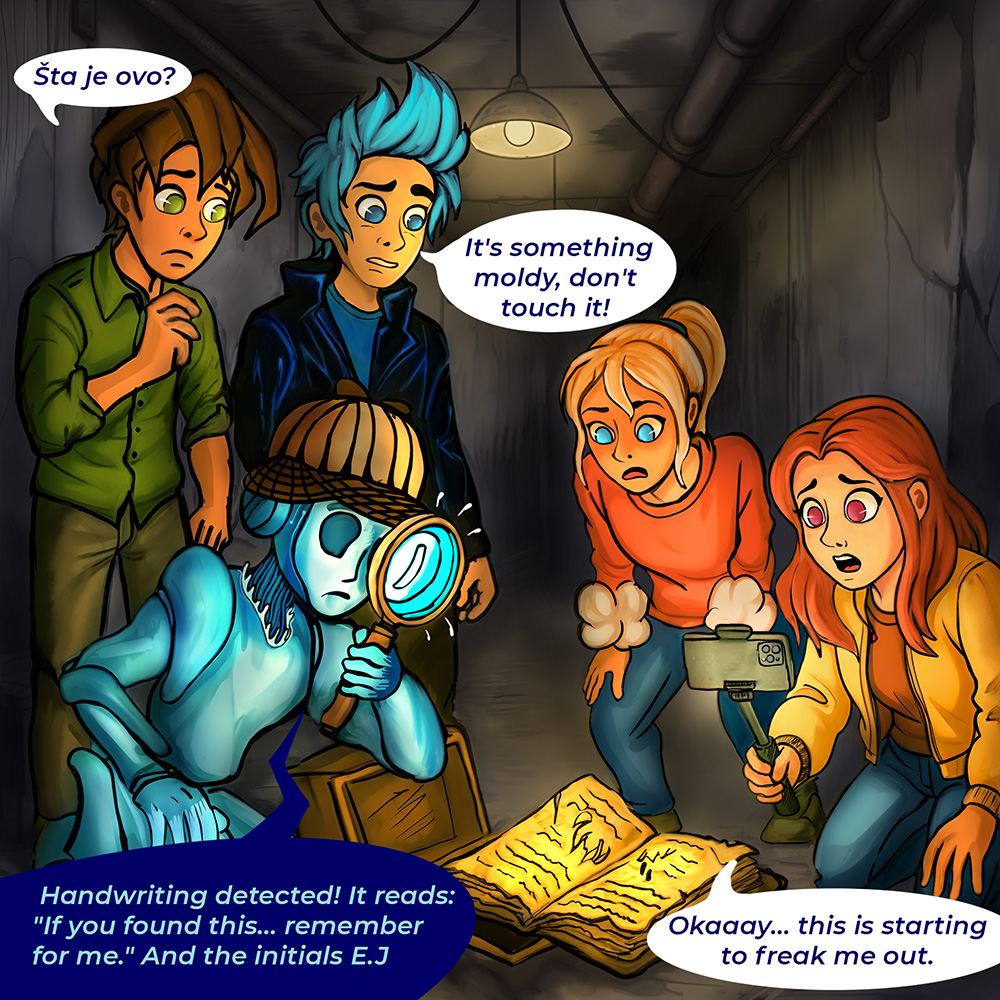
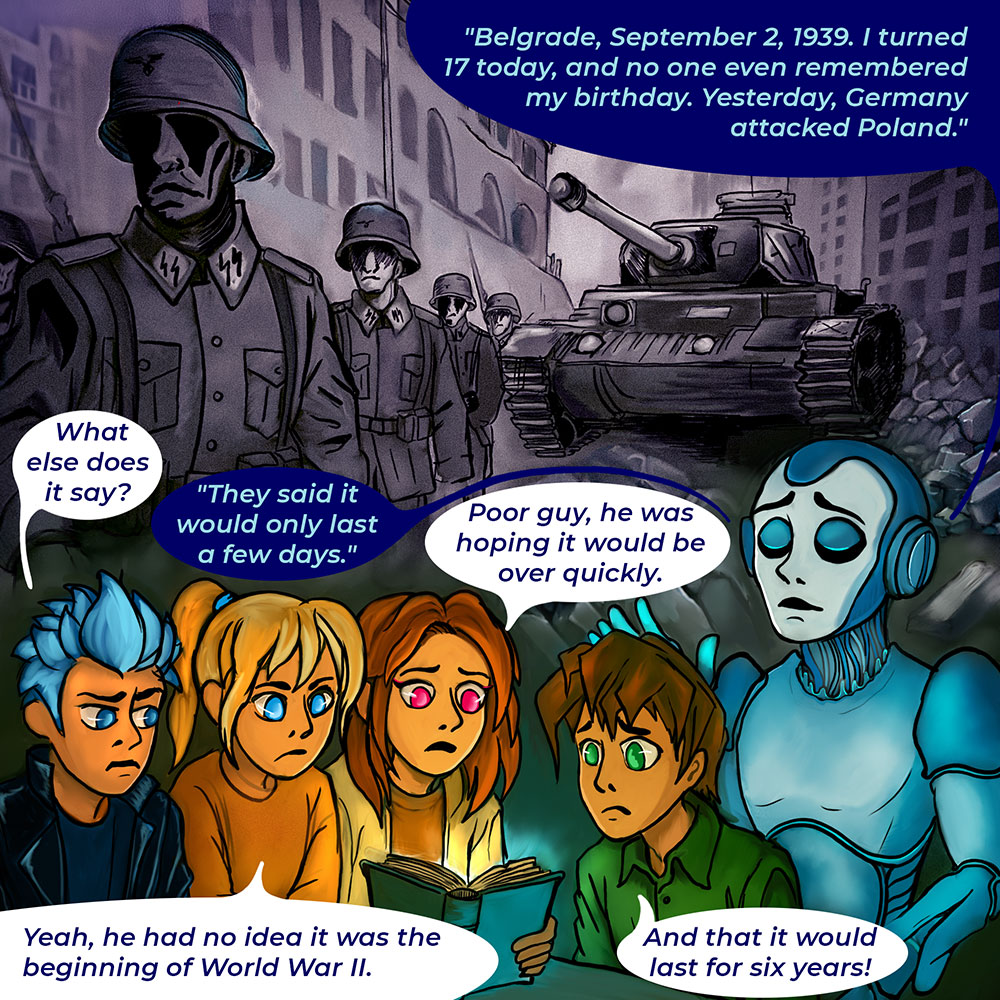
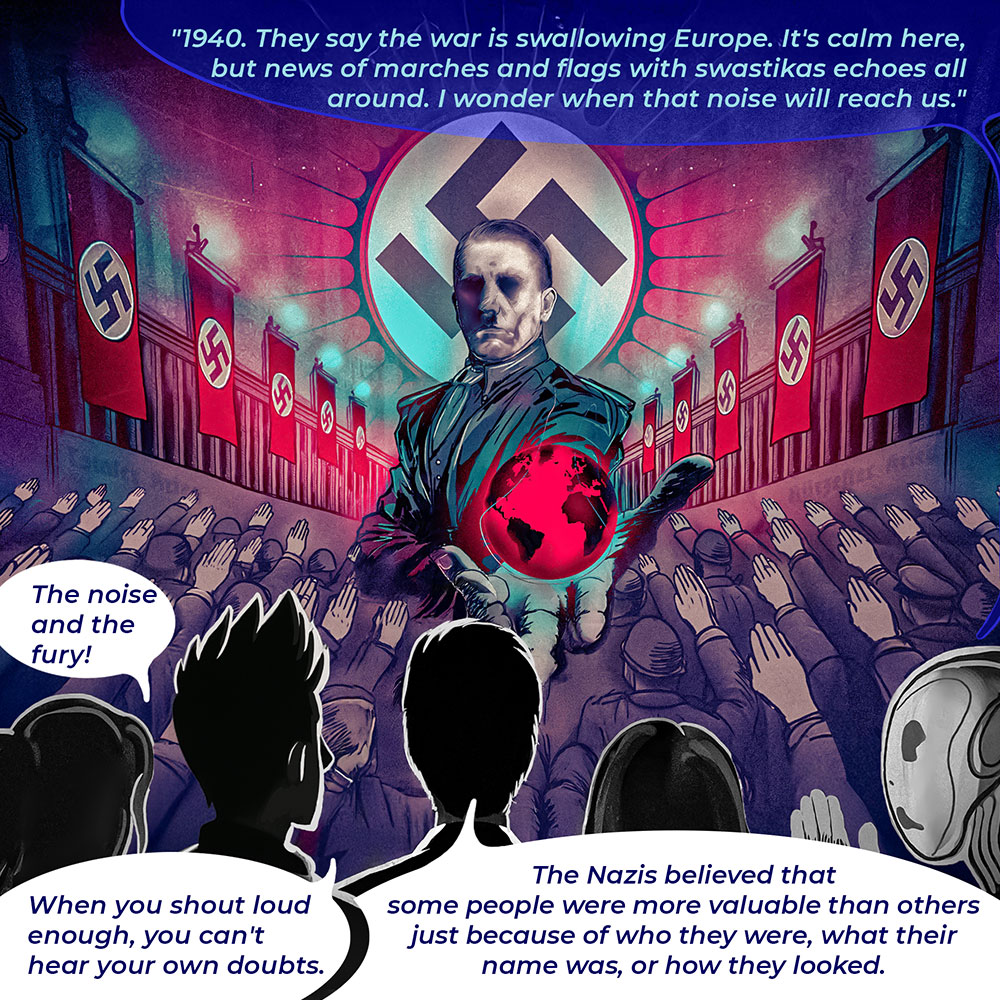
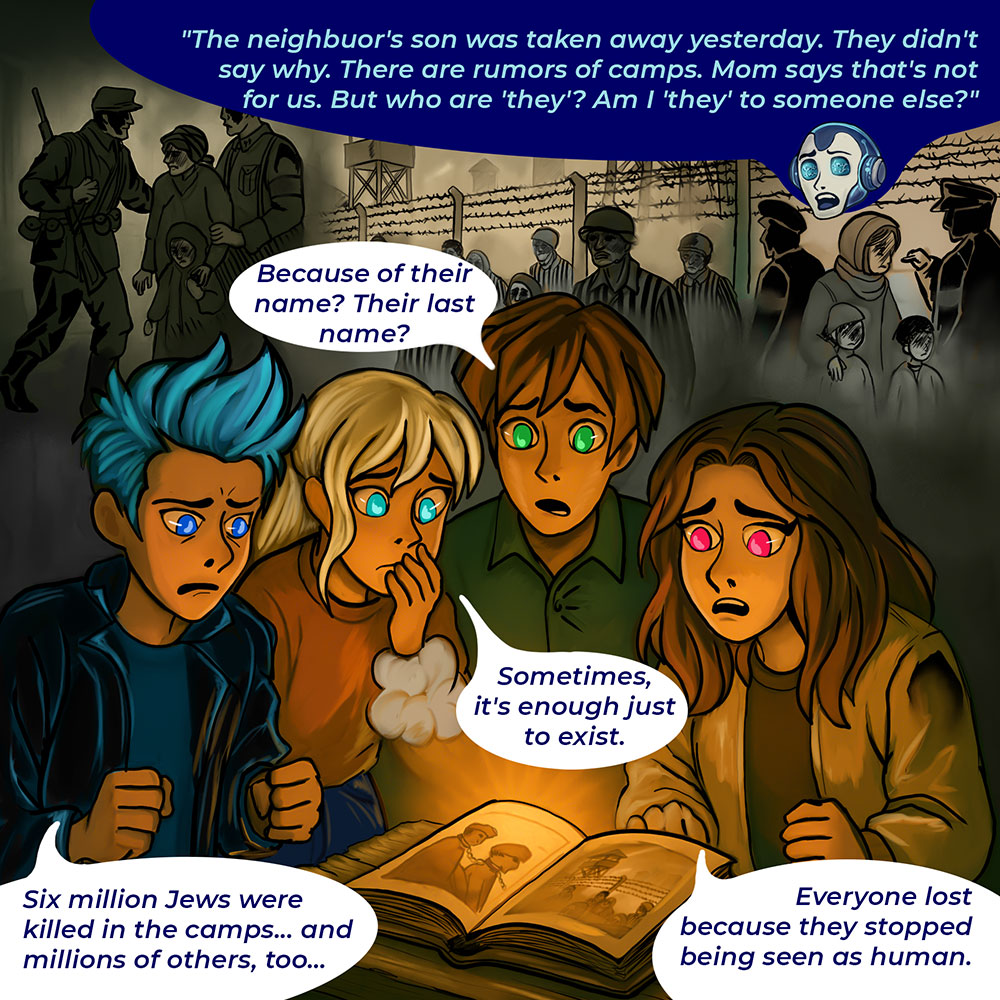
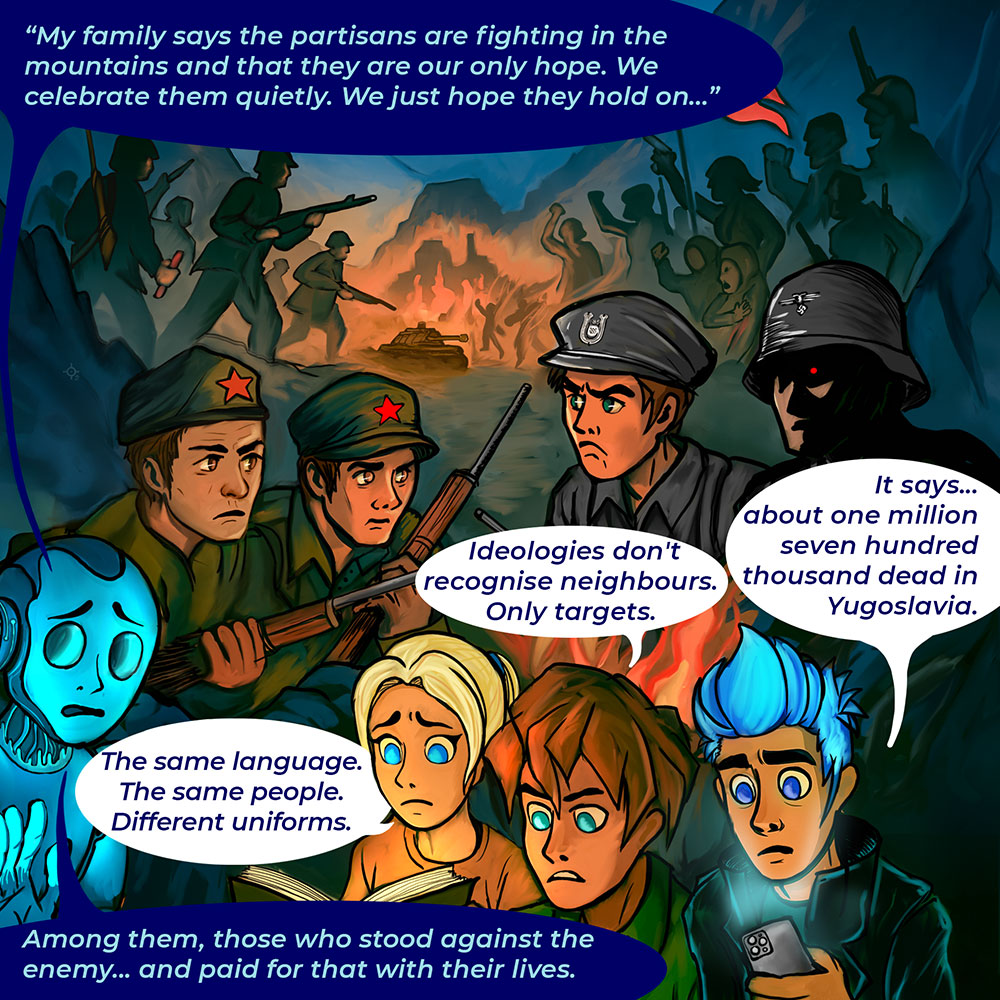
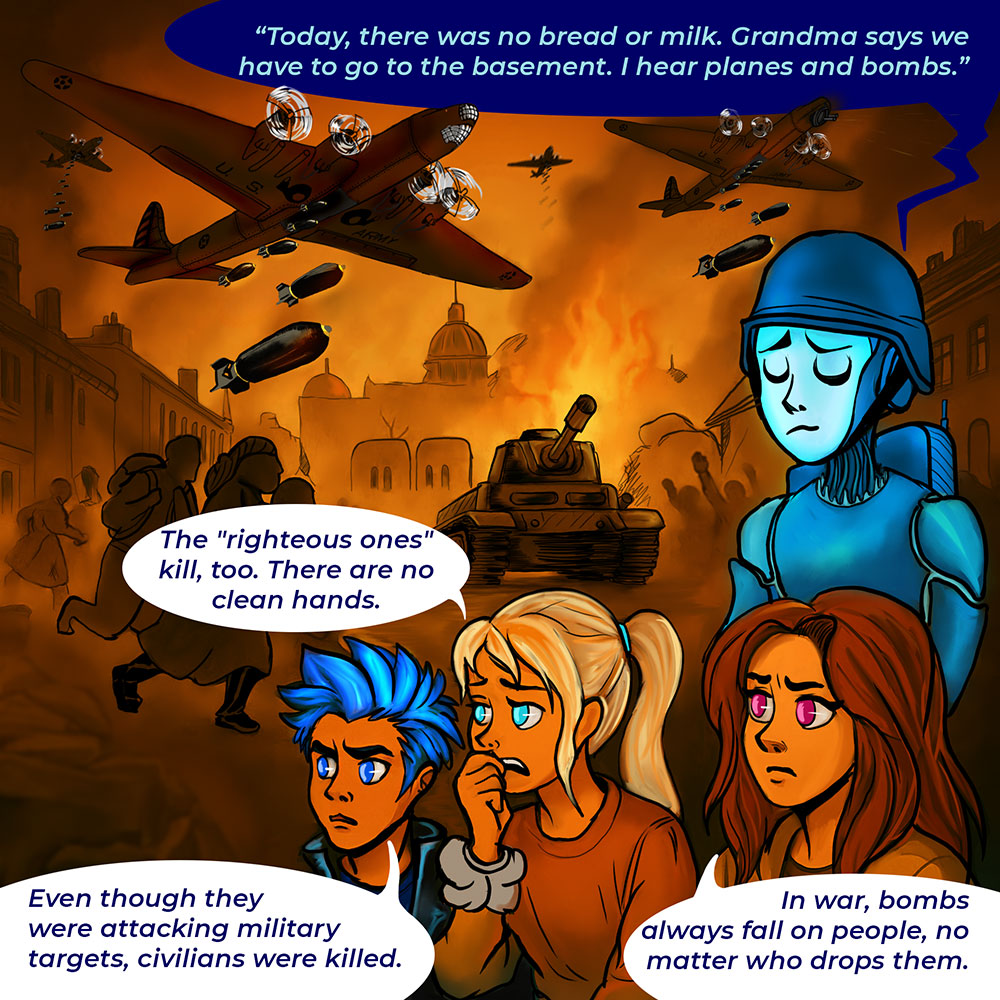
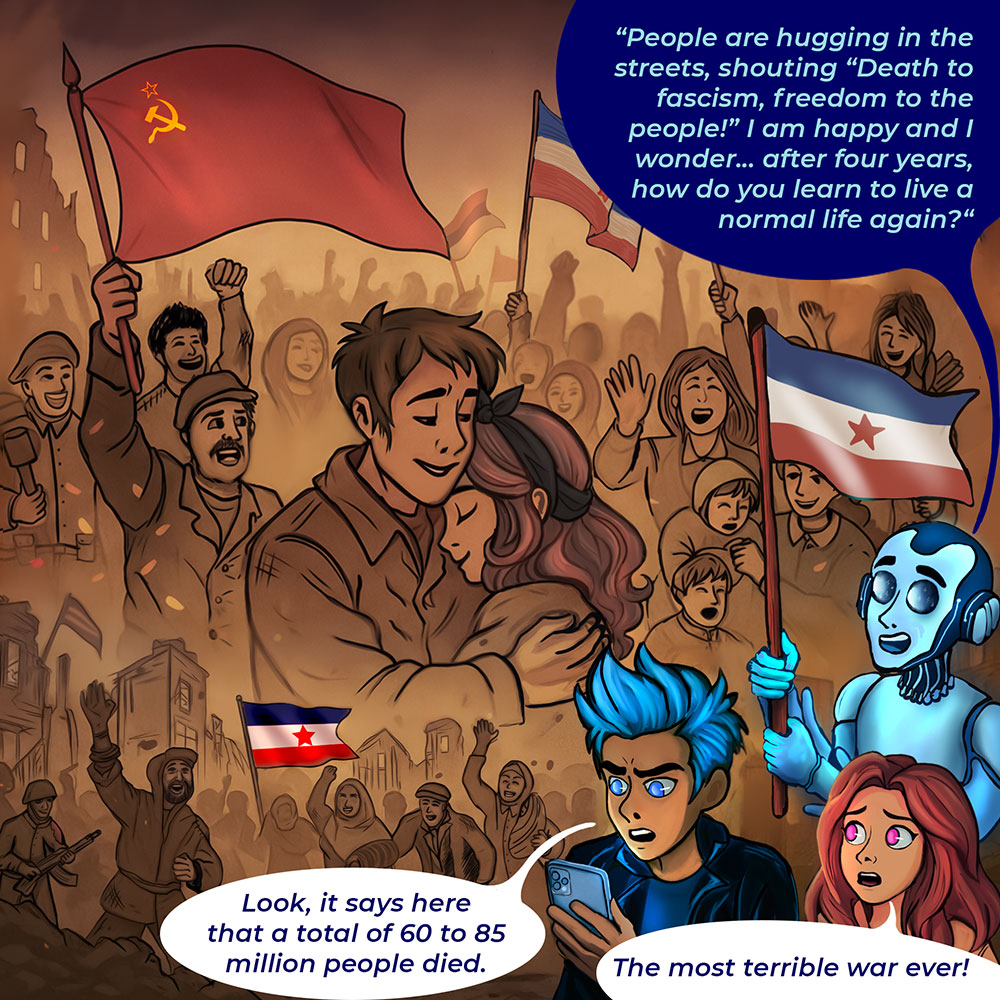
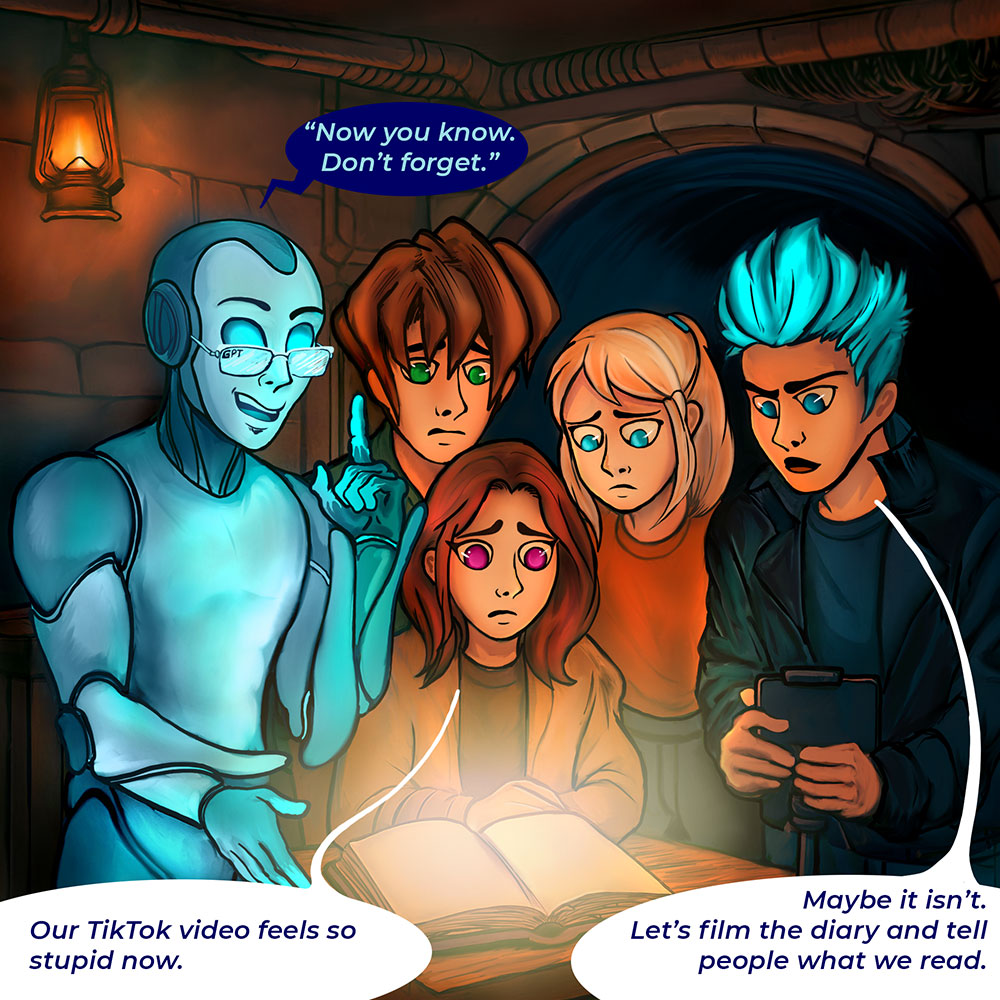
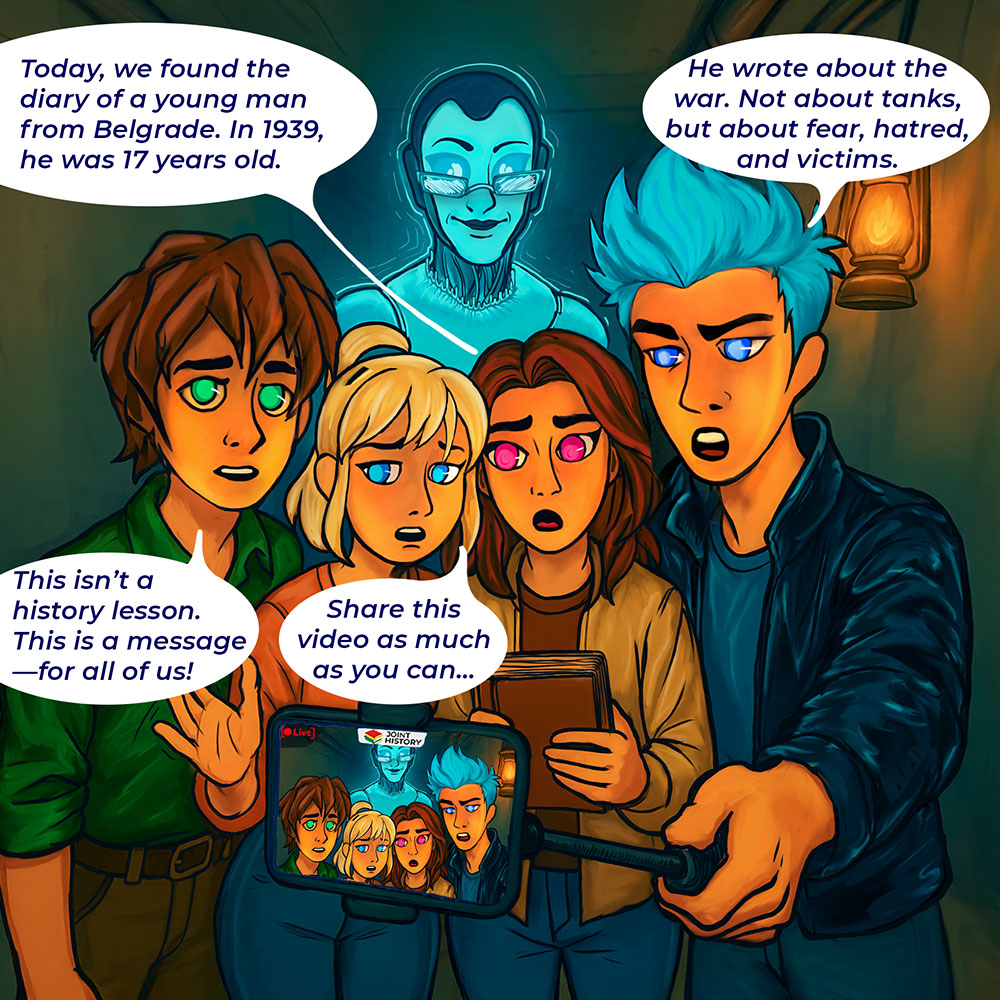
In this comic, the students confront the darkest chapters of the 20th century, where global conflict meets local struggles. As they explore the collapse of old orders and the rise of resistance movements, they face a wide array of difficult choices and high stakes. How do ordinary people find their way when every decision carries the weight of a choice between life and death? Is it possible to find a common humanistic interest in a world shattered by occupation and internal divisions?
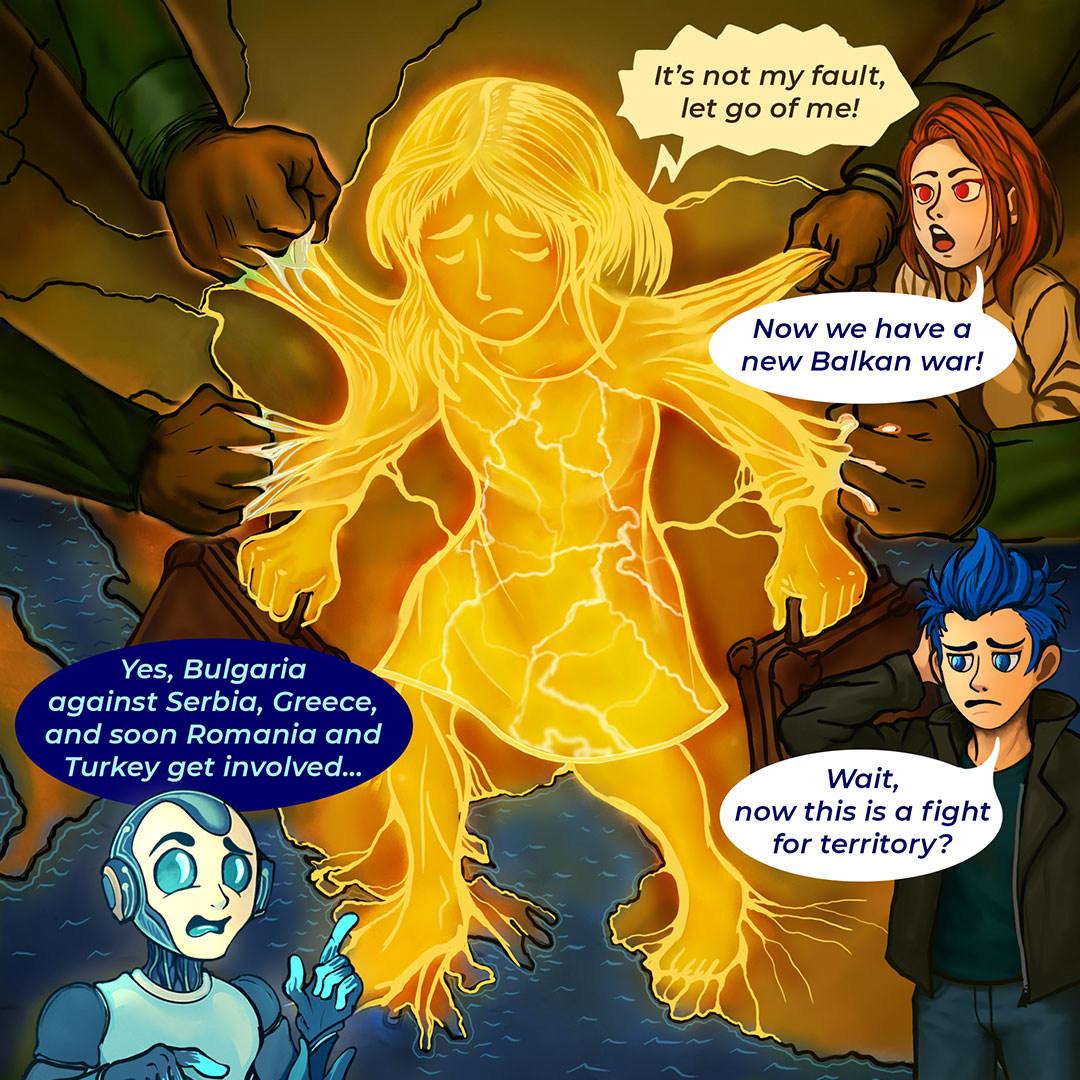
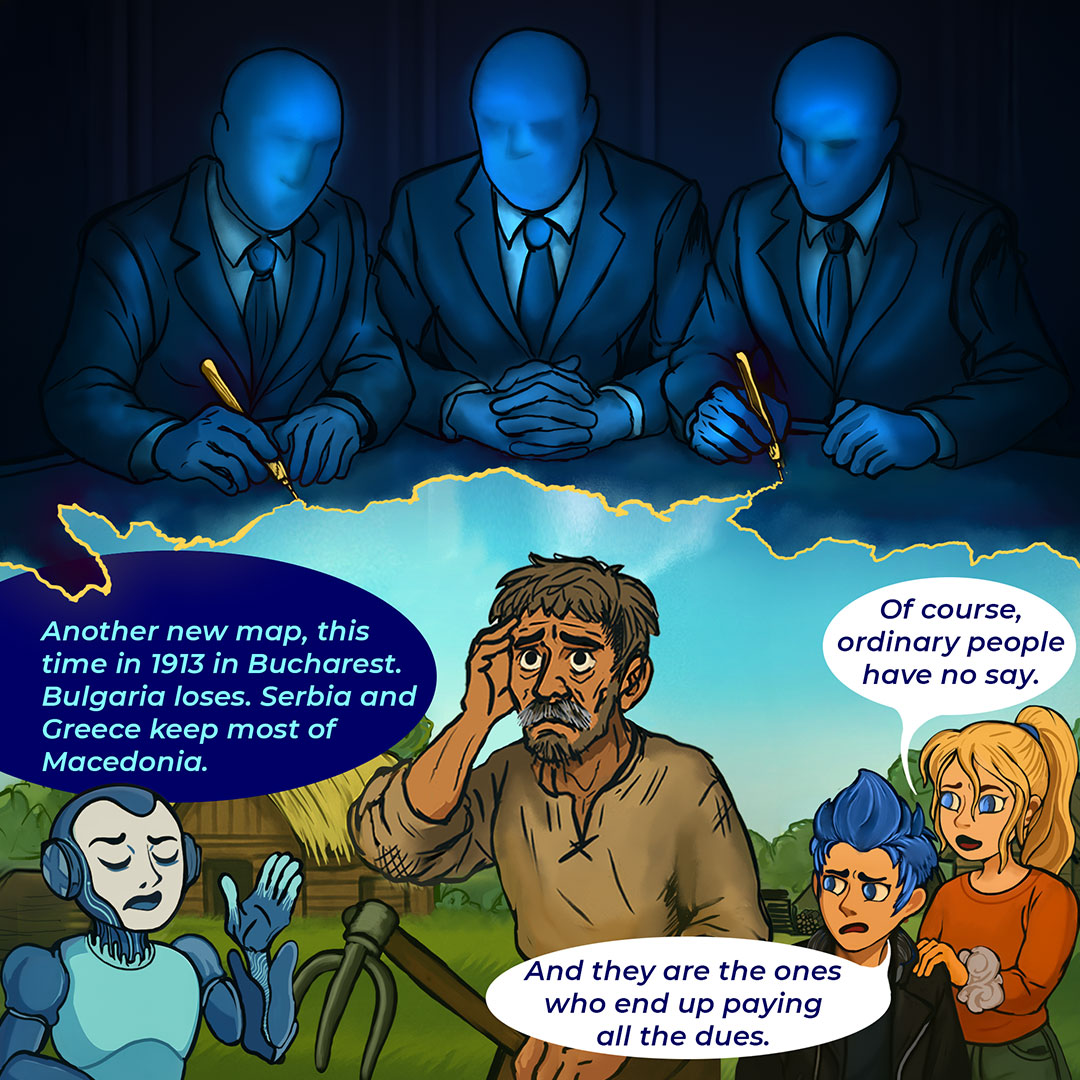
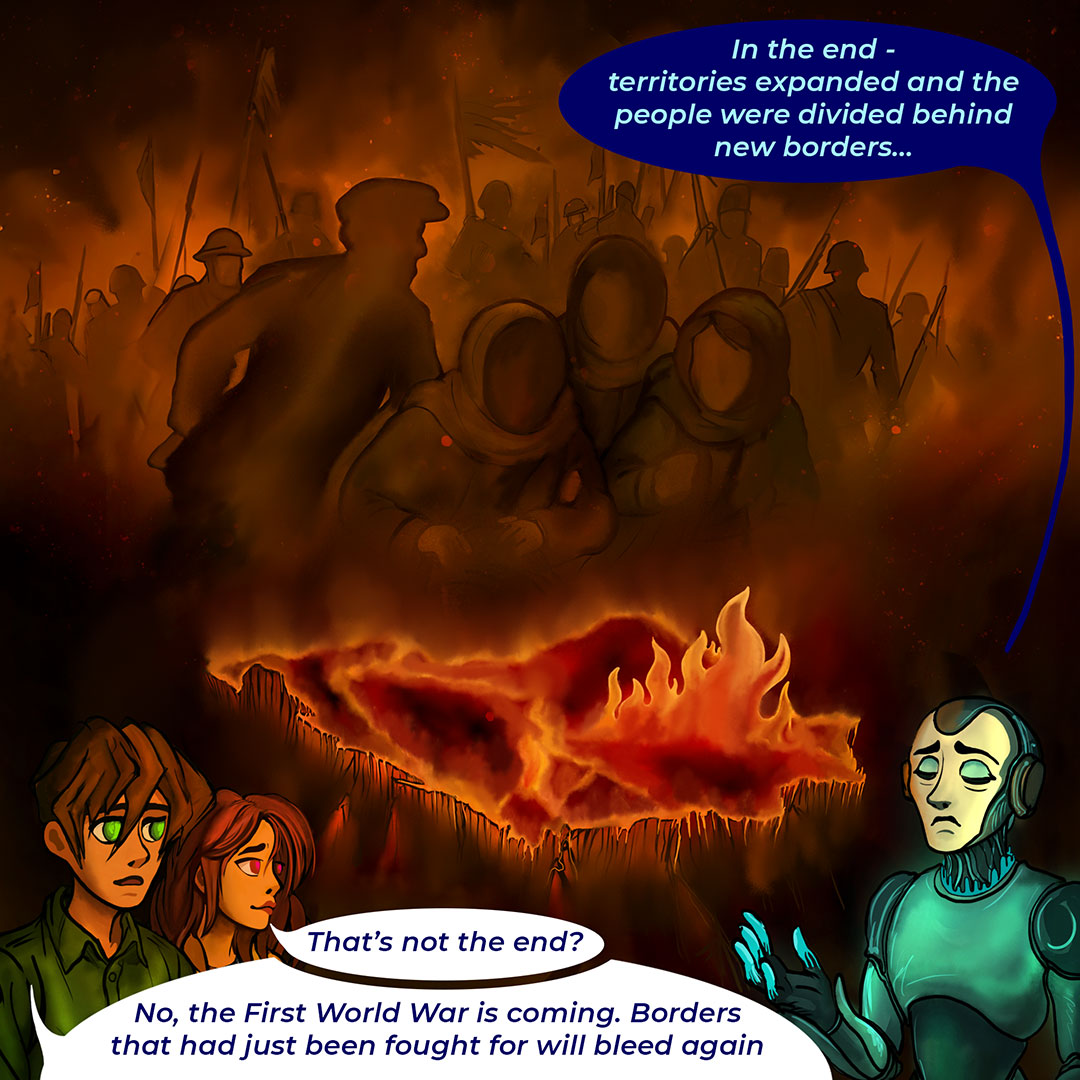
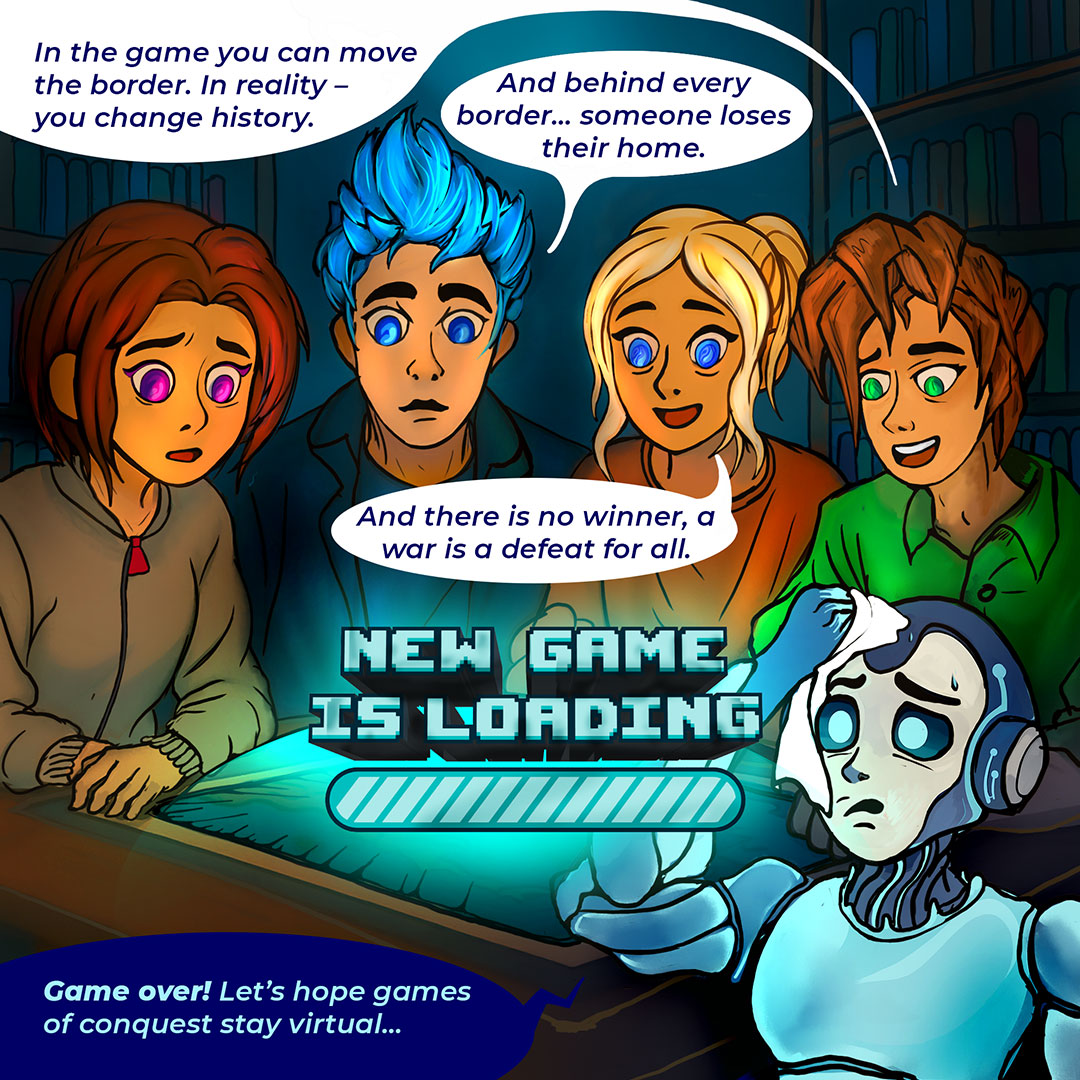
Balkan wars
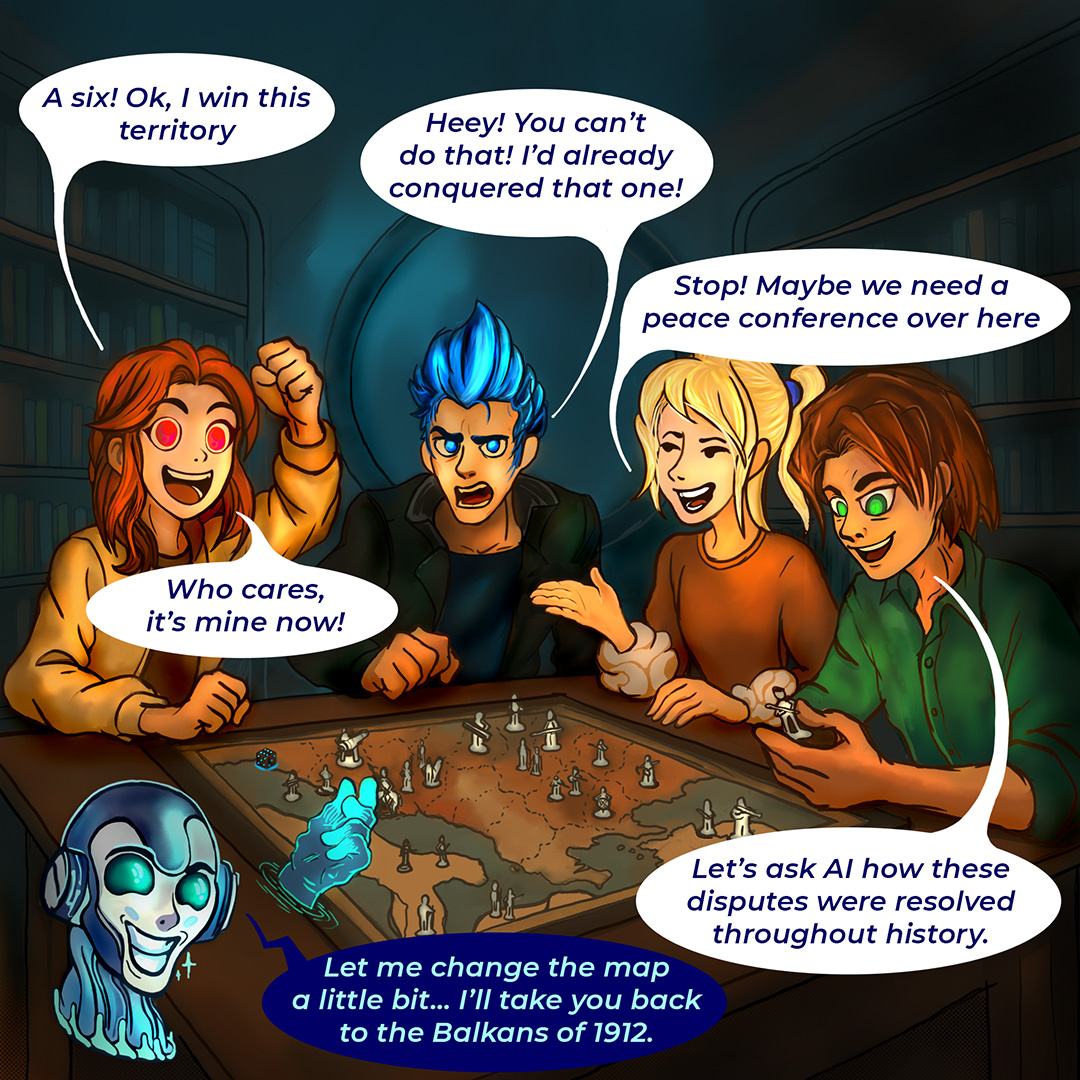
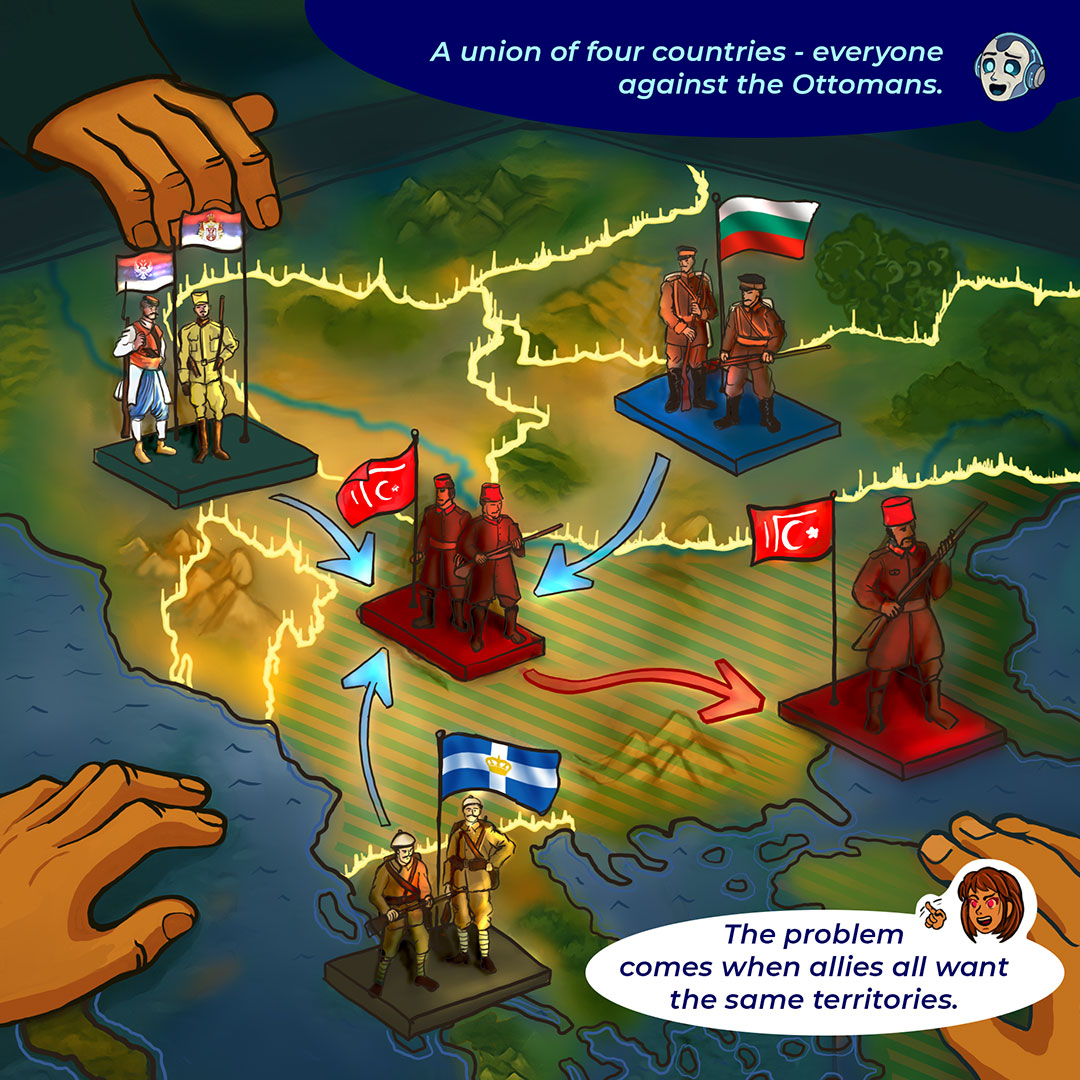
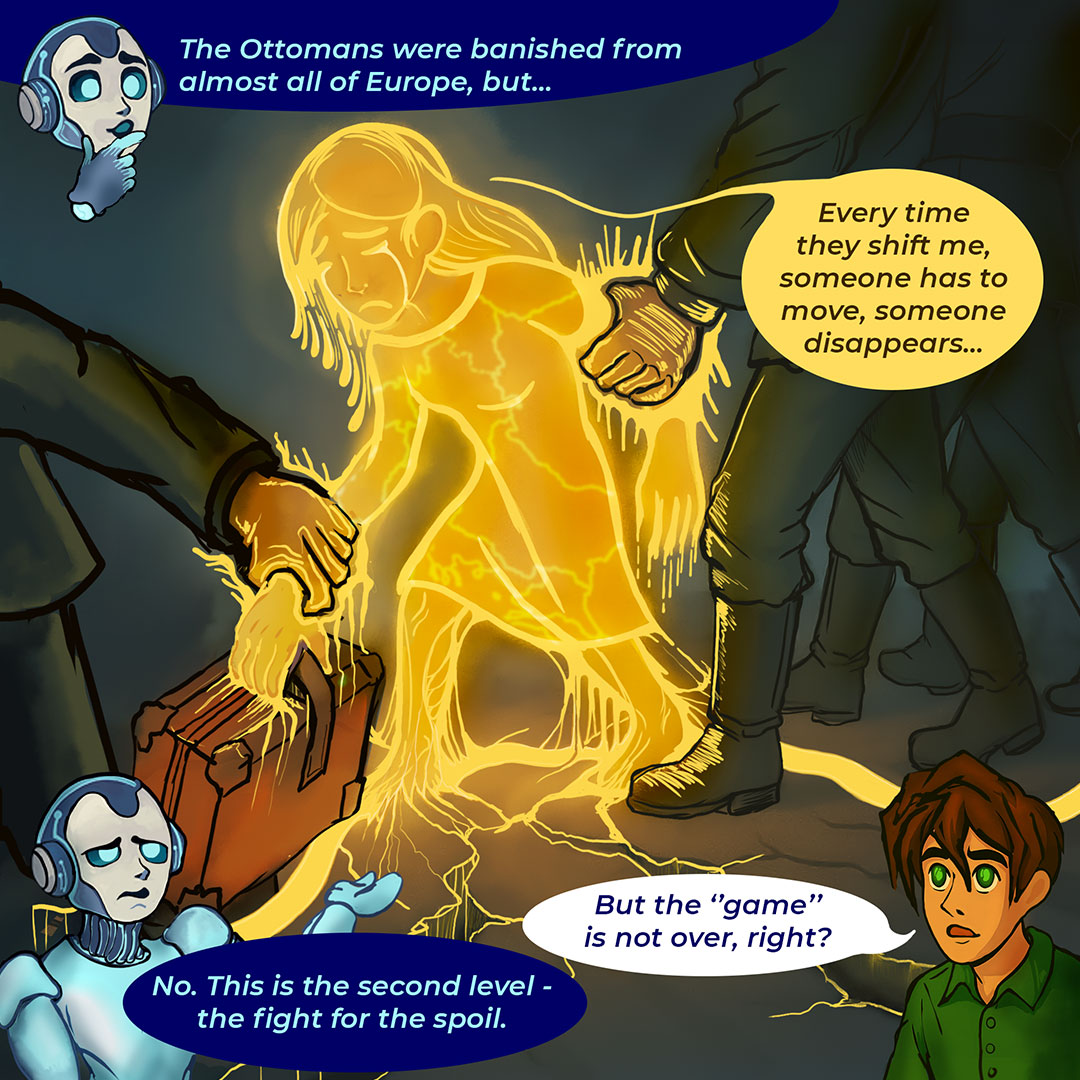
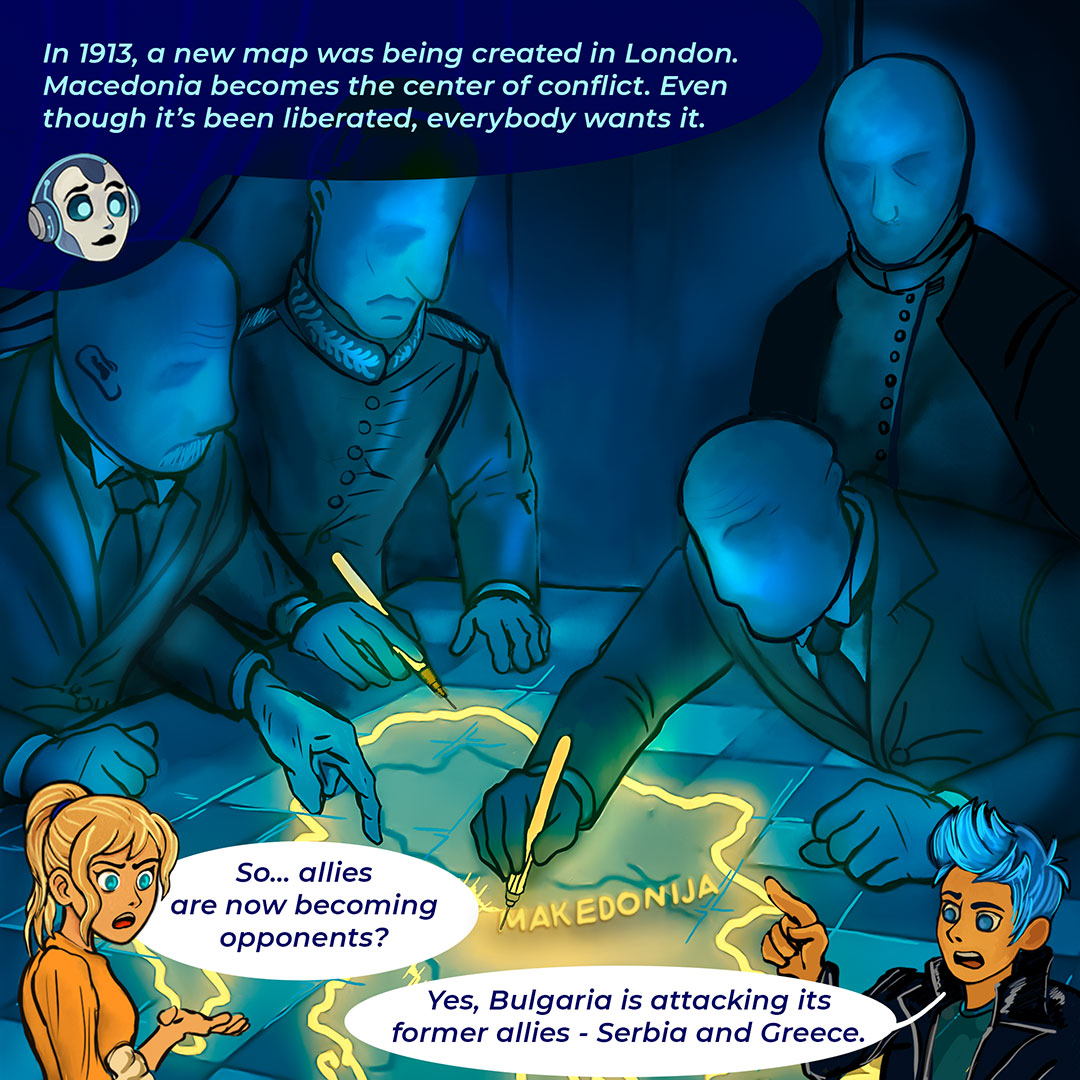
In this comic, the students delve into the turbulent years of the early 20th century, exploring the collapse of old empires and the rise of young nation-states. As they trace the shifting borders on faded maps, they encounter a complex web of shared goals and bitter rivalries. What happens when the struggle for liberation transforms into a conflict over territory? Can we celebrate a victory that leaves deep scars on our neighbors, or is every map just a blueprint for the next confrontation?
Between War and Peace
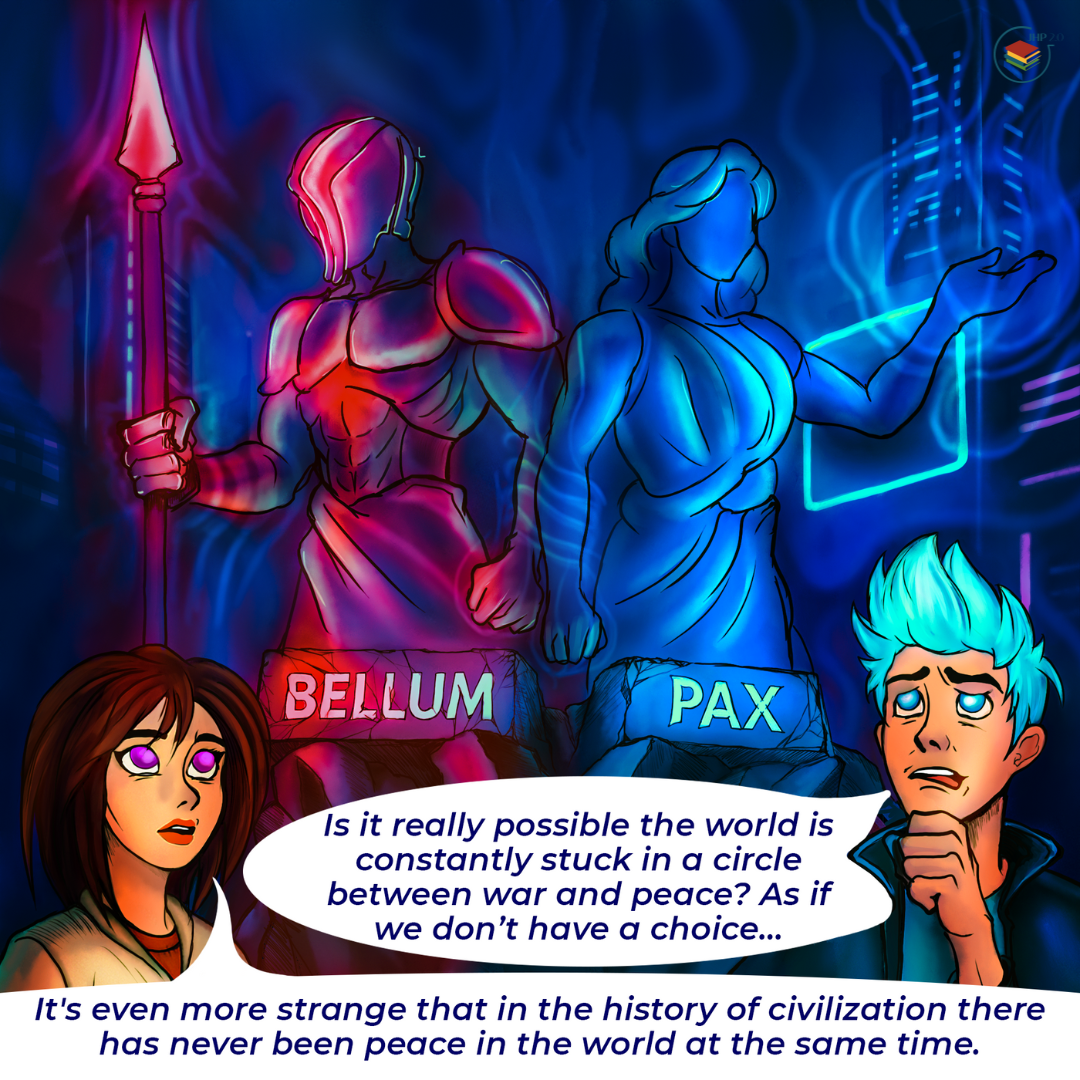
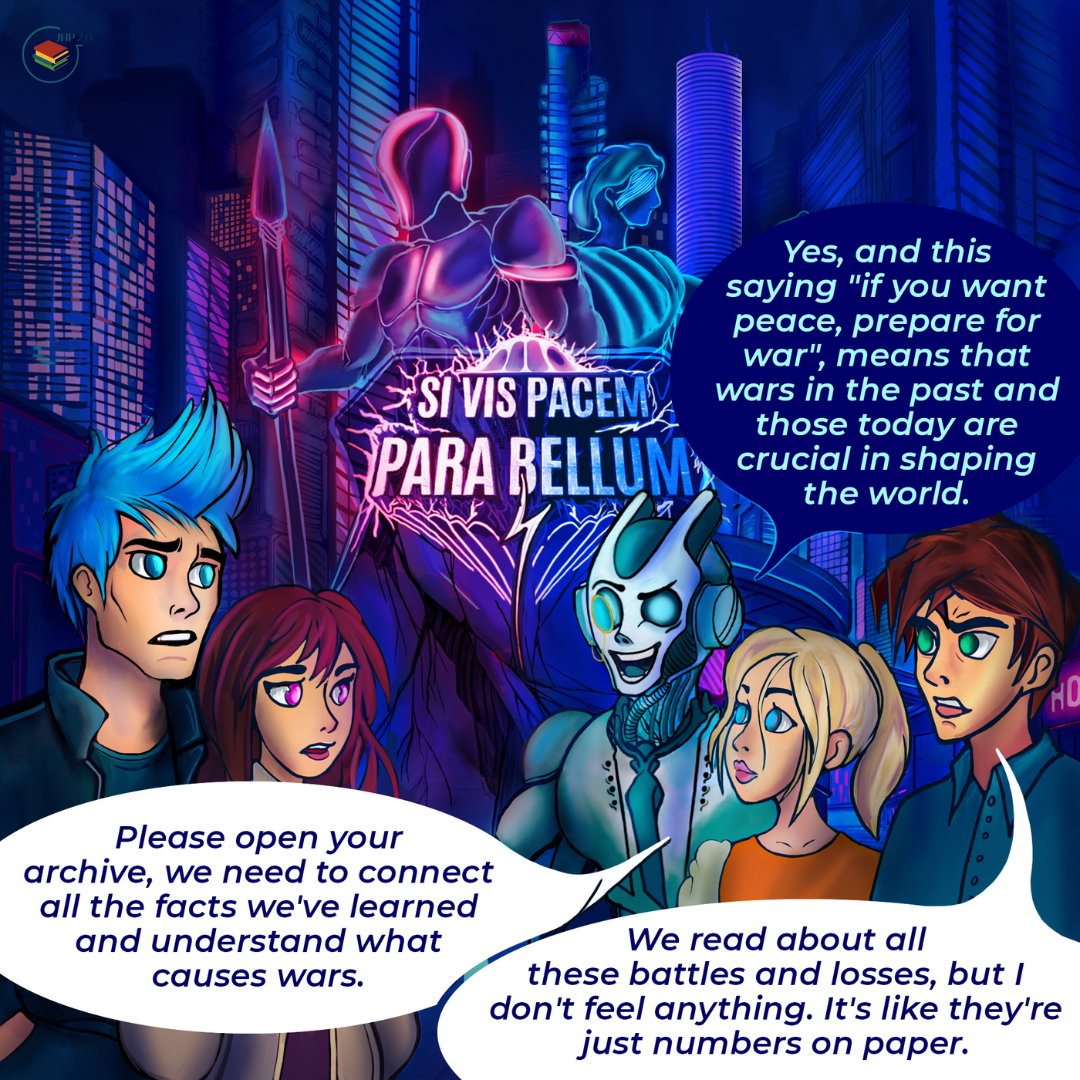
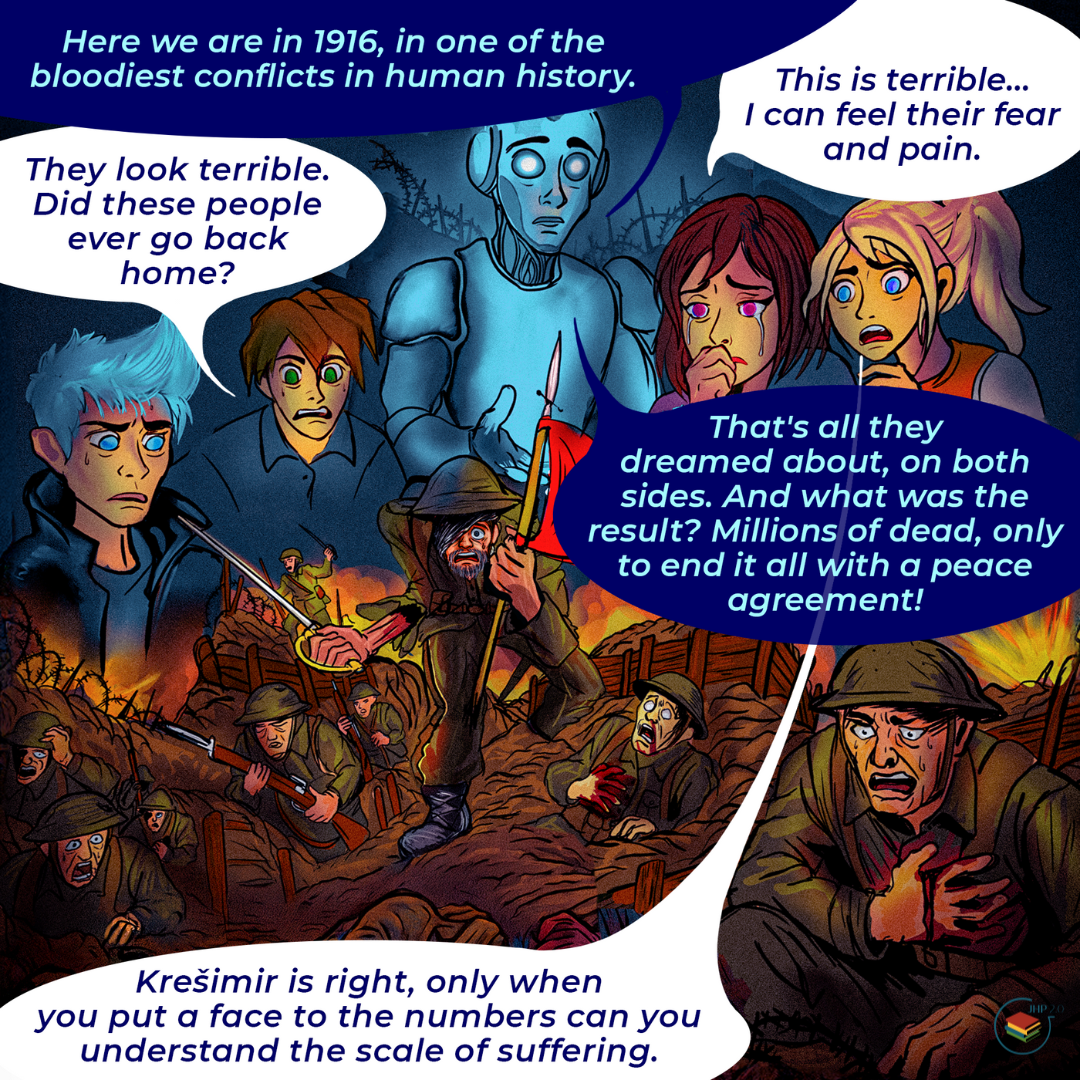
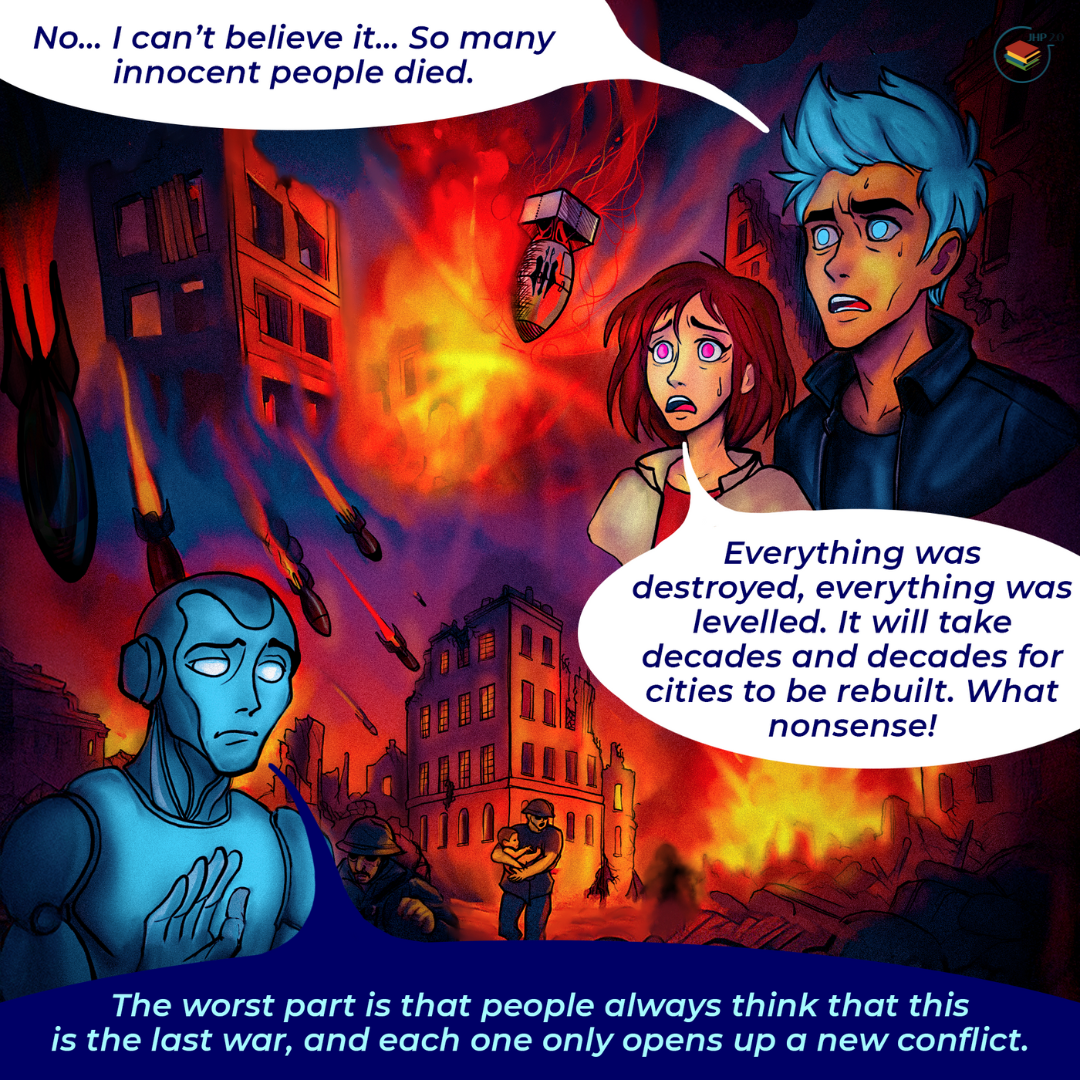
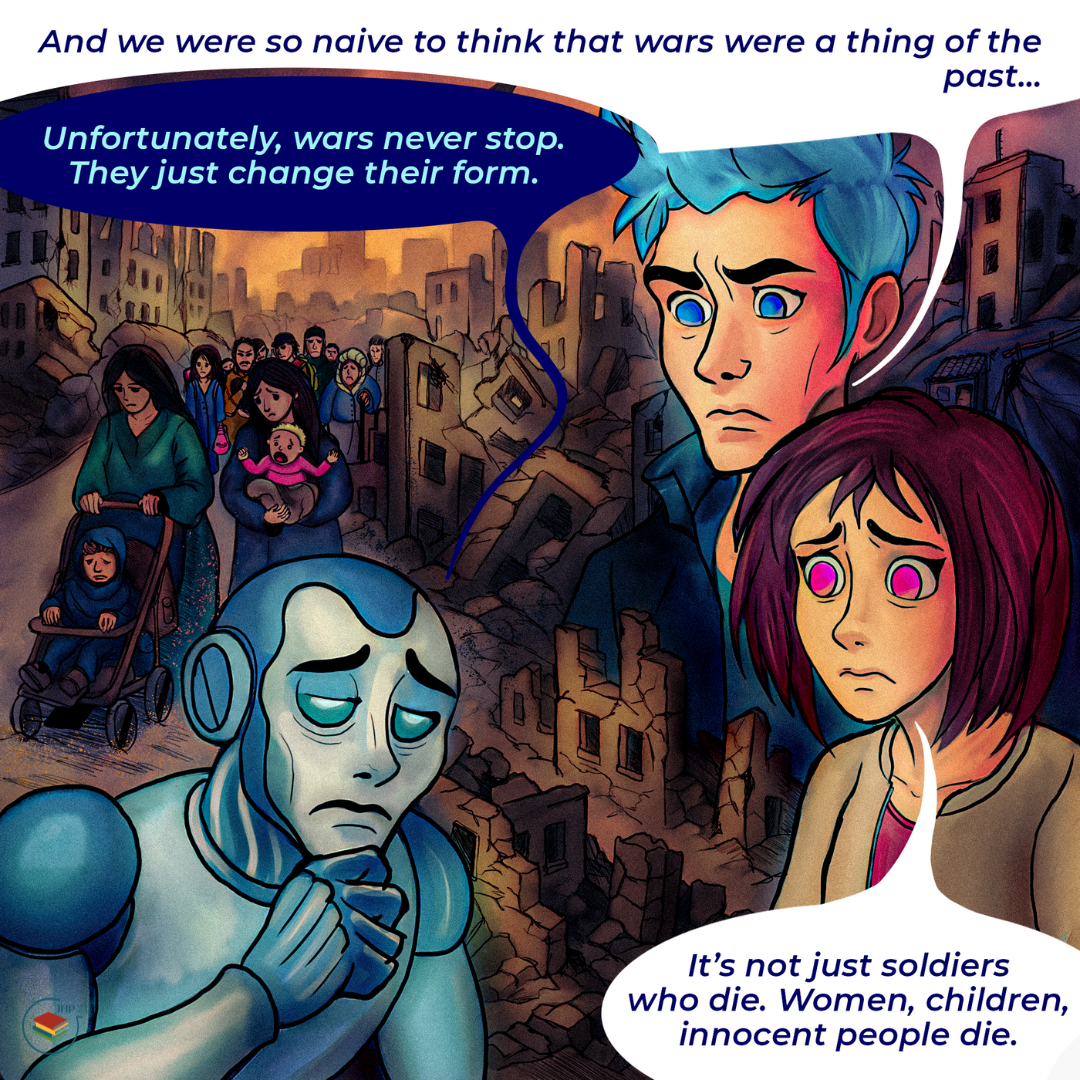
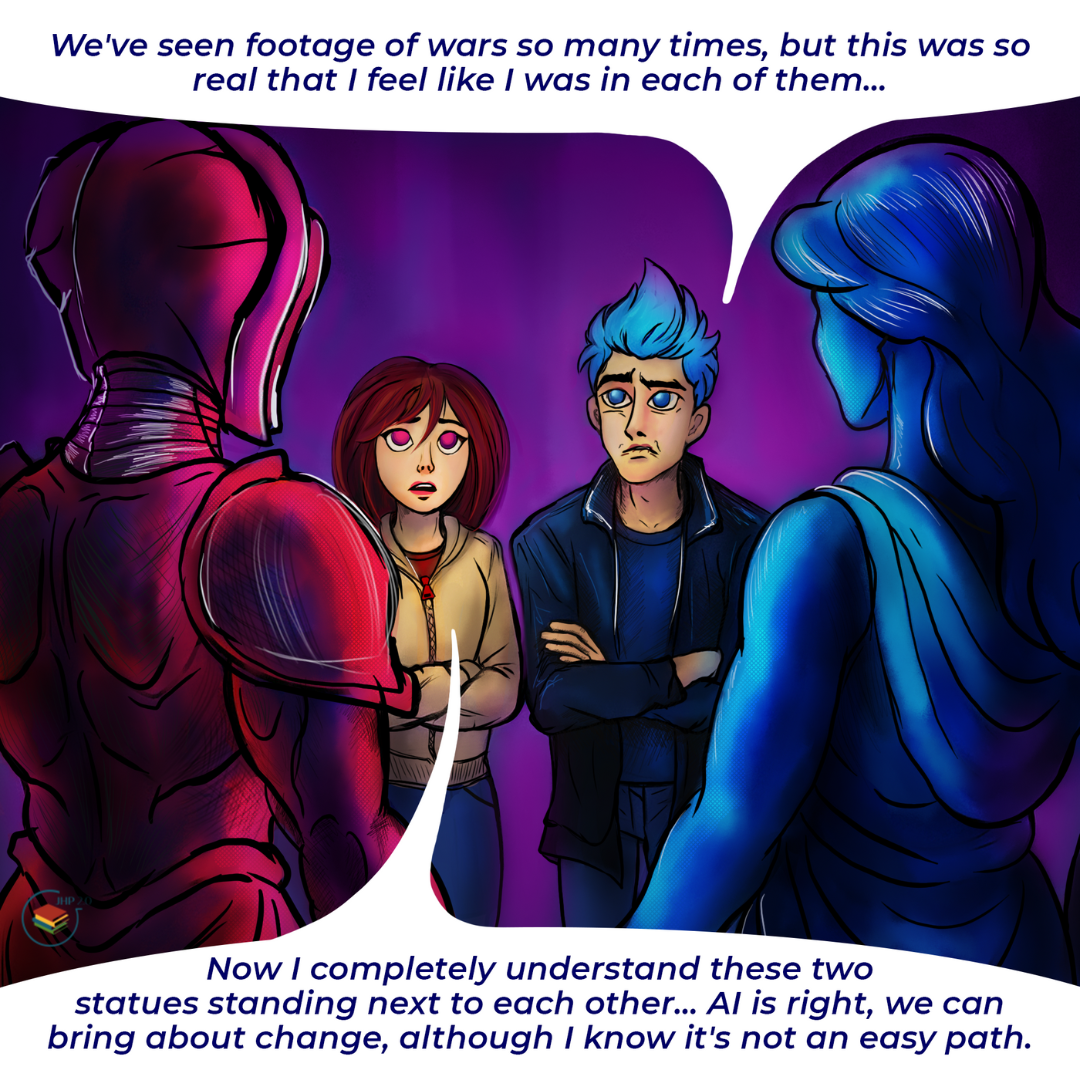
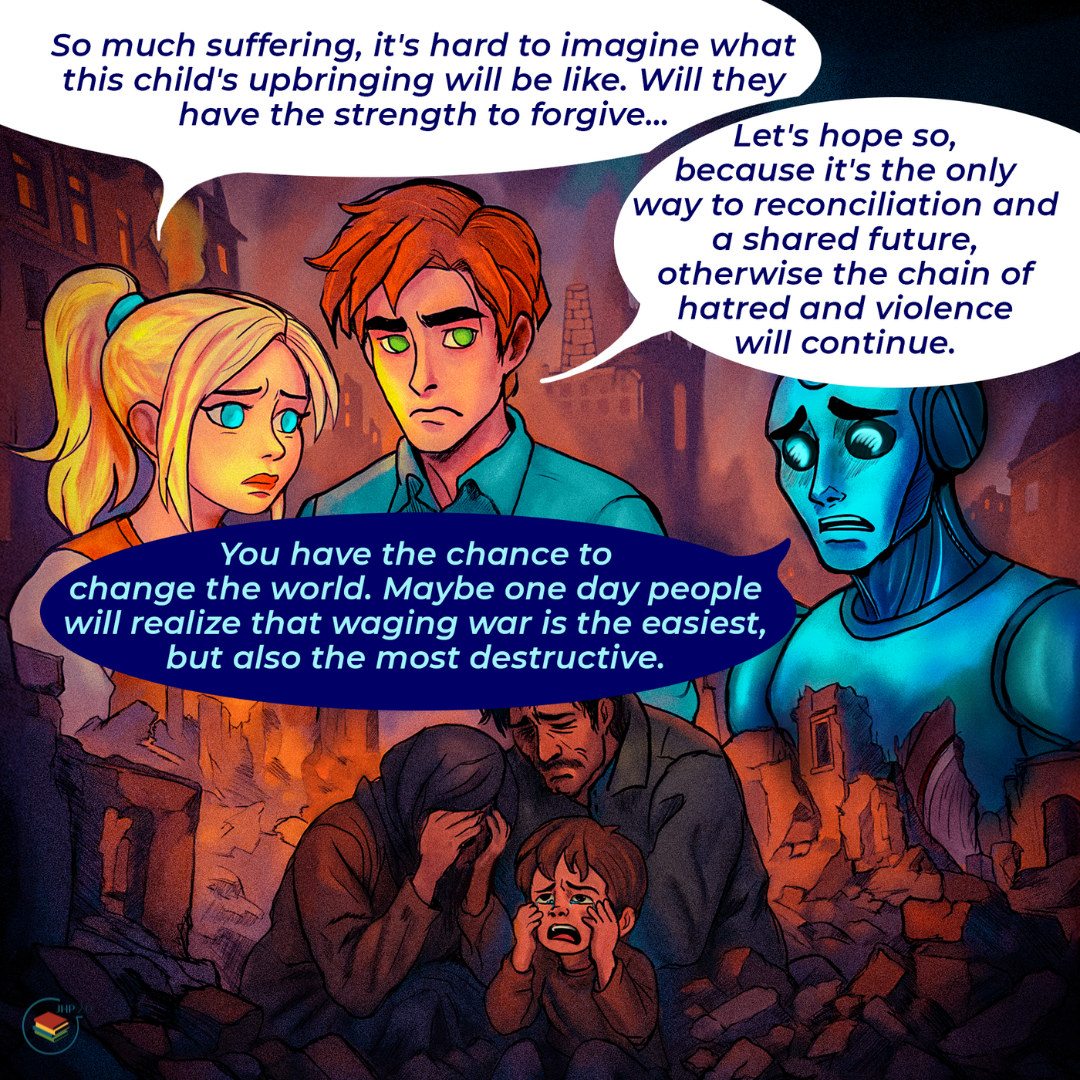
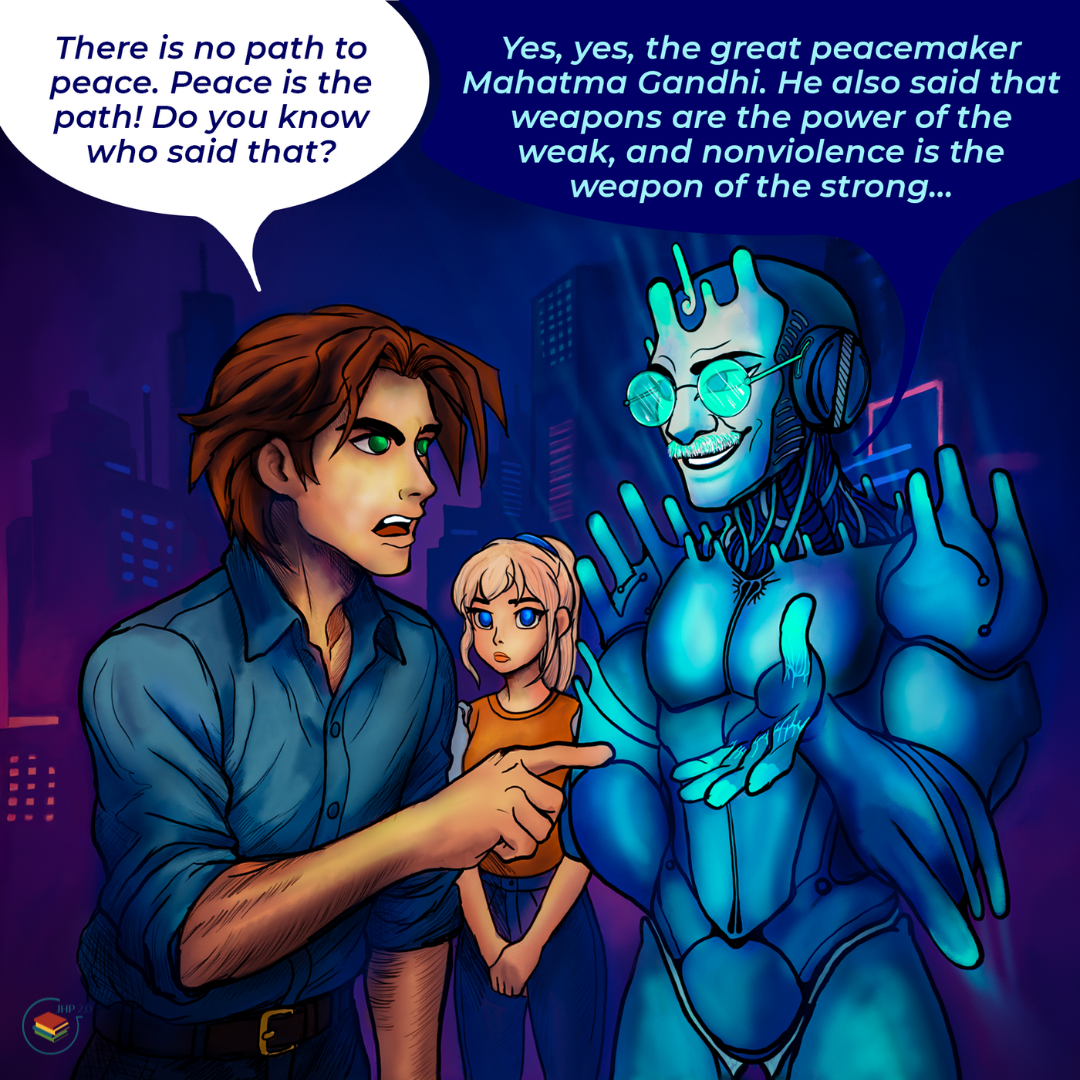
In the third part of the comic, our students tackle a challenging question: are wars inevitable?
The shadow of many past conflicts still hangs over our present and future. Our characters discuss how cycles of violence perpetuate themselves, often beyond our control. Are we bound to keep making the same mistakes, or is there a way to break the cycle and create something new?
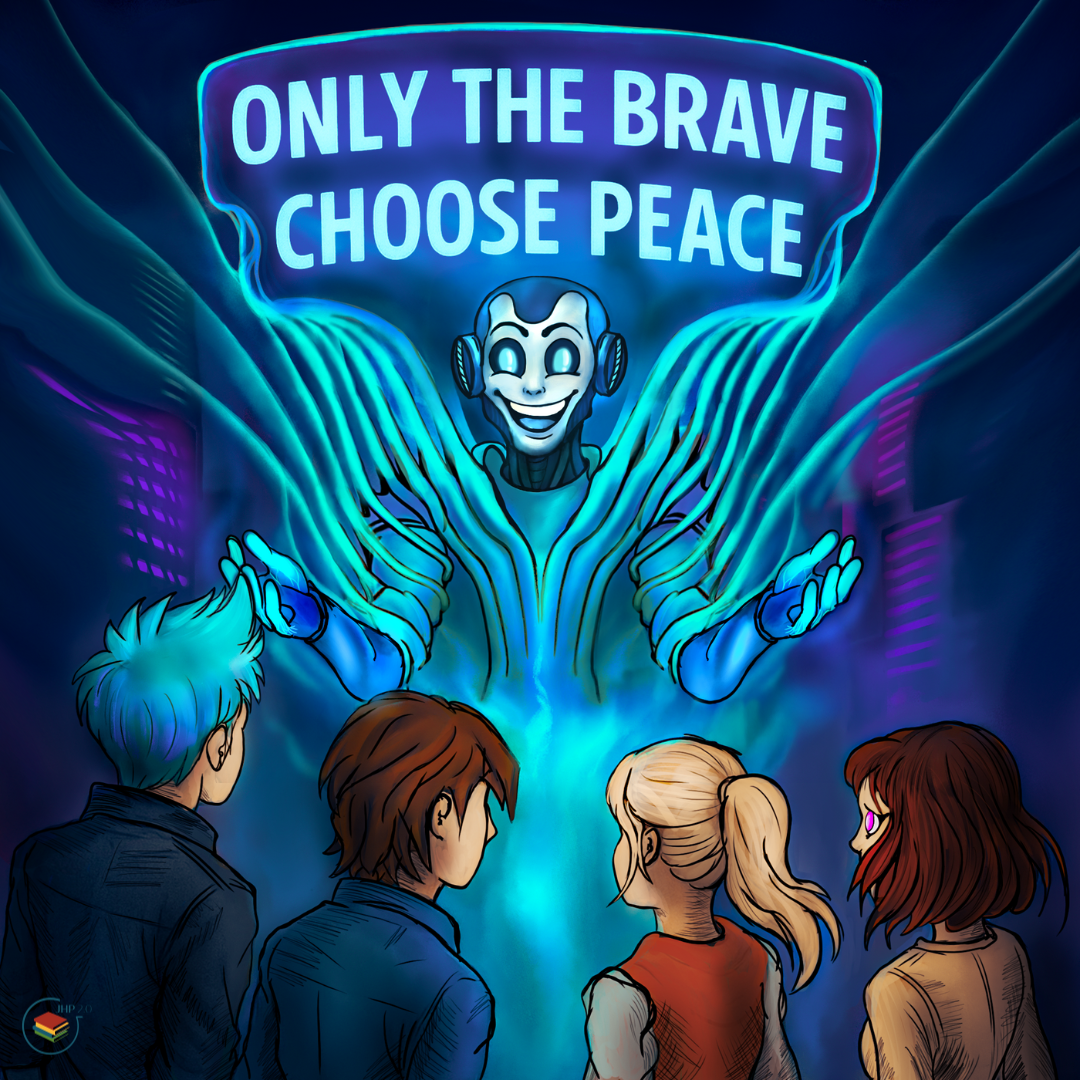
The Ottoman Empire and Artificial Intelligence
In the first comic we follow students who explore the Ottoman Empire with the help of AI tools. Technology opens new doors to understanding history — but not without risks and questions. How can we recognize the fine line between a helpful tool and an oversimplified interpretation of the past?


Ghosts of the Past
In the second comic ghosts of the past appear where we least expect them — among young people seemingly free of national prejudice. And yet, national myths surface during a classroom debate on historical events. Is it possible to study history without repeating the same old narratives?