
Dear representatives of CESPIC and the Balkans Caucasus Transeuropa Observatory,
Dear representatives of the Our Lady of Good Counsel Foundation,
Dear members of the jury, distinguished guests, colleagues and friends,
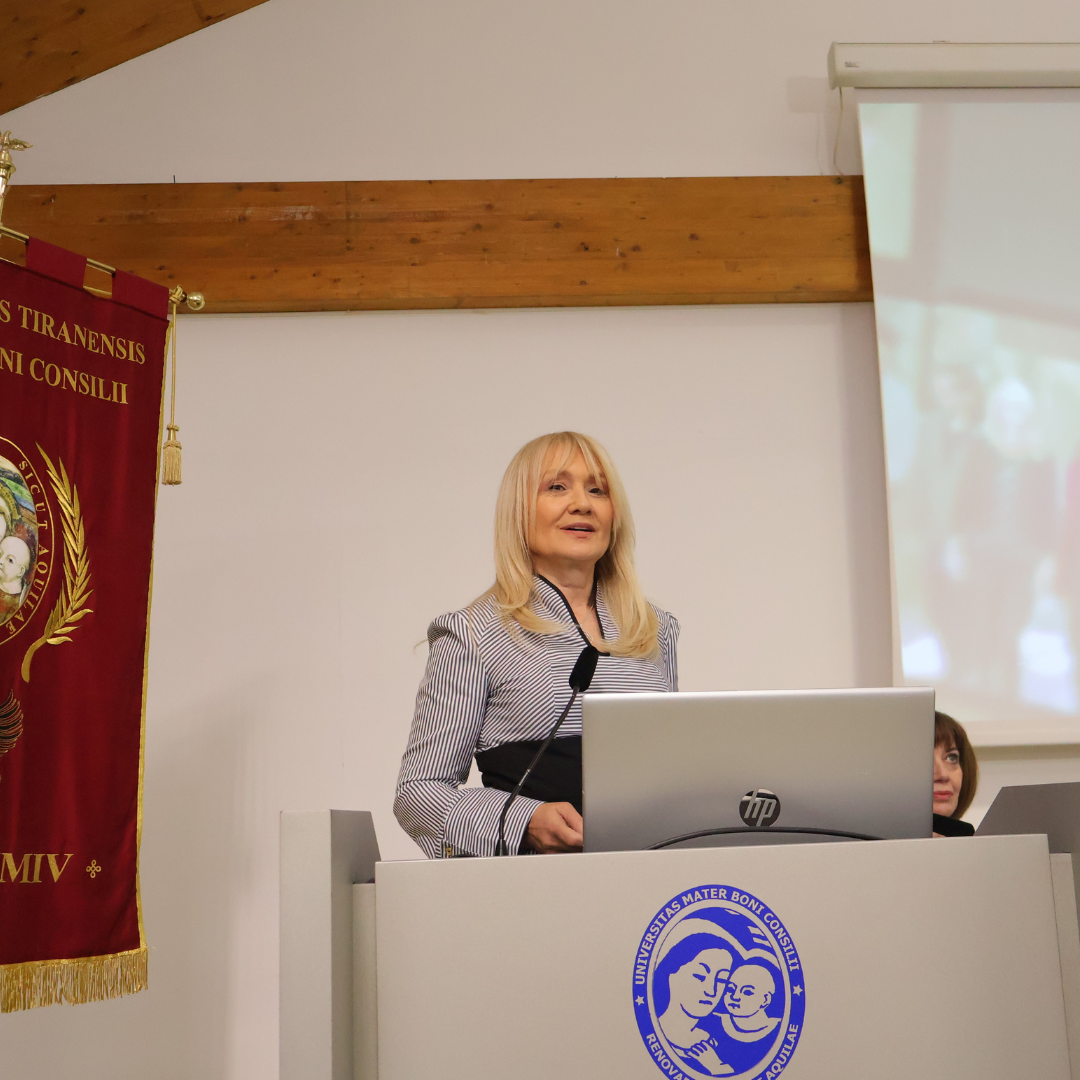
It is a great honour to receive the CESPIC Peace Prize on behalf of the Joint History Project team.
For us, this award is important not because we needed confirmation that our work matters; we have always believed deeply in the value of what we do. Rather, this award matters because it shows that our work is being heard about and that the community of friends and partners who can share, recommend and build upon this work continues to grow.
We are also very aware that the competition for a peace prize is always large, and that there are many organisations, individuals, groups and even mass movements who deserve recognition for their work. That is why we are particularly grateful that this prize recognizes the importance of education as a path toward peace.
Peace cannot be sustained without education. Only educated, open-minded individuals — people who are curious, who are willing to question, to listen to different perspectives and to critically reflect on the past — can become true guarantors of peace.
This belief lies at the heart of the Joint History Project.
Our journey began almost three decades ago, at a time when the wars of the 1990s in Yugoslavia were still unfolding. In those difficult years, the idea that historians from different countries of Southeast Europe could come together, examine the past from multiple perspectives, and create shared educational materials seemed almost impossible.
But it was precisely then that the vision of the Joint History Project emerged.
This vision was championed by the father of the project, Costas Carras, whose belief in dialogue, knowledge and reconciliation inspired generations of scholars and educators. The project was also shaped and supported by remarkable individuals including former presidents of the Board of Directors such as Erhard Busek, one of the founders of the initiative, Matthew Nimetz and many other women and men who invested their time, energy and often funds for the benefit of the Project.
The first creators of the Joint History Project found a worthy heir in Mr Ditmir Bushati, former foreign minister of Albania, who now heads the Board of the Project. Today, he is abroad, so that he cannot take part in this ceremony.
Professor Christina Koulouri led since the beginning the scholarly work of this initiative and coordinated the huge number of historians from the region who created the six volumes of the Joint History books. She will soon tell us more about it.
Equally important was the dedication of the project´s staff, led for many years by my predecessor as Executive Director, Nenad Šebek.
These books represent something rare and precious: an attempt to teach history not as a single national story, but as a multiperspective effort of equals.
The books encourage students to ask questions, to compare sources, to understand that the past is complex and that different societies may remember it differently.
For many years, our goal was to bring these materials directly into schools. We worked intensively with ministries of education across the region, organized teacher trainings and developed certified programs to support educators in using these resources in the classroom.
And just when we were approaching the moment when the books could finally enter schools more widely, circumstances took an unexpected turn.
CDRSEE had to close its operations in 2019, and the project was suddenly left in limbo. For many of us who had worked on it for years, it was difficult to accept that such a meaningful initiative might simply stop — that the books would remain somewhere on shelves, collecting dust, while we would merely say that once, long ago, we managed to achieve something that had seemed impossible.
Thanks to the determination of a small group that refused to accept that outcome, and especially thanks to a former member of the Board, Dušan Reljić, and a dedicated team gathered around the Joint History Project, we managed to revive the initiative. With the financial support of the German Federal Foreign Office, and with the European Fund for the Balkans, based in Belgrade, hosting and implementing the project, we began a new chapter in 2023. Aleksandra Tomanić, the former director of EFB, showed a deep understanding of the project and energetically supported JHP. Our cooperation with the new EFB director, Veton Zekolli, has started on a most promising note and we are looking forward for new further expanding it.
In this new phase, we adapted the project to the realities of our time.
A significant part of the material has been transferred online, making it accessible to a much wider audience. Through our website and social media platforms, we now share a large amount of educational material, historical sources and teaching resources.
We run schools and workshops for young people from across the region, where participants learn about multiperspectivity, critical thinking and how to recognize manipulation of historical facts — whether it appears in education systems, media narratives or political discourse.
We have also introduced a psychological dimension into our work. Many young generations in the Western Balkans, even those born after the wars, still carry the legacy of unresolved trauma. Understanding how historical narratives shape identities, emotions and perceptions is therefore essential for building a more resilient and peaceful future.
Every year the JHP organizes a flagship scientific regional conference. In 2025, in Podgorica we dealt with the history and future of borders in southeast Europe. In the autumn of this year, in Athens, we will discuss how memories of violence are represented in the public discourse and in history teaching and whether being aware of bad historical experiences can help avoid politically motivated violence in the future.
Our goal is simple but ambitious: to help young people understand that history should not be used as a weapon — but as a tool for dialogue, learning and empathy.
Peace is often taken for granted until it is lost. But peace is fragile. It requires constant care, courage and imagination. It requires societies that are willing to look honestly at their past, to accept complexity, and to teach new generations that coexistence is not weakness but strength.
That is why this recognition means so much to us.
Before concluding, I would also like to congratulate the other recipient of the CESPIC Peace Prize, Mr. Nihad Suljić, whose humanitarian engagement and commitment to community peace are truly inspiring.