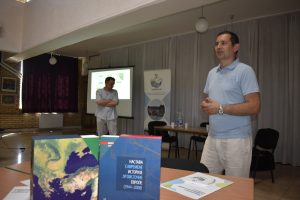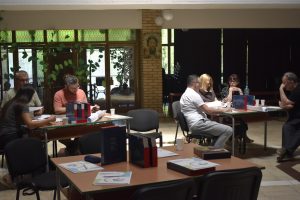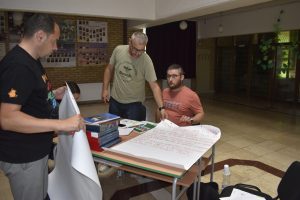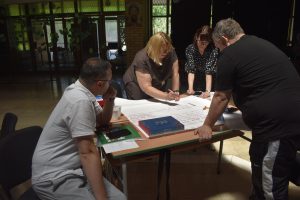
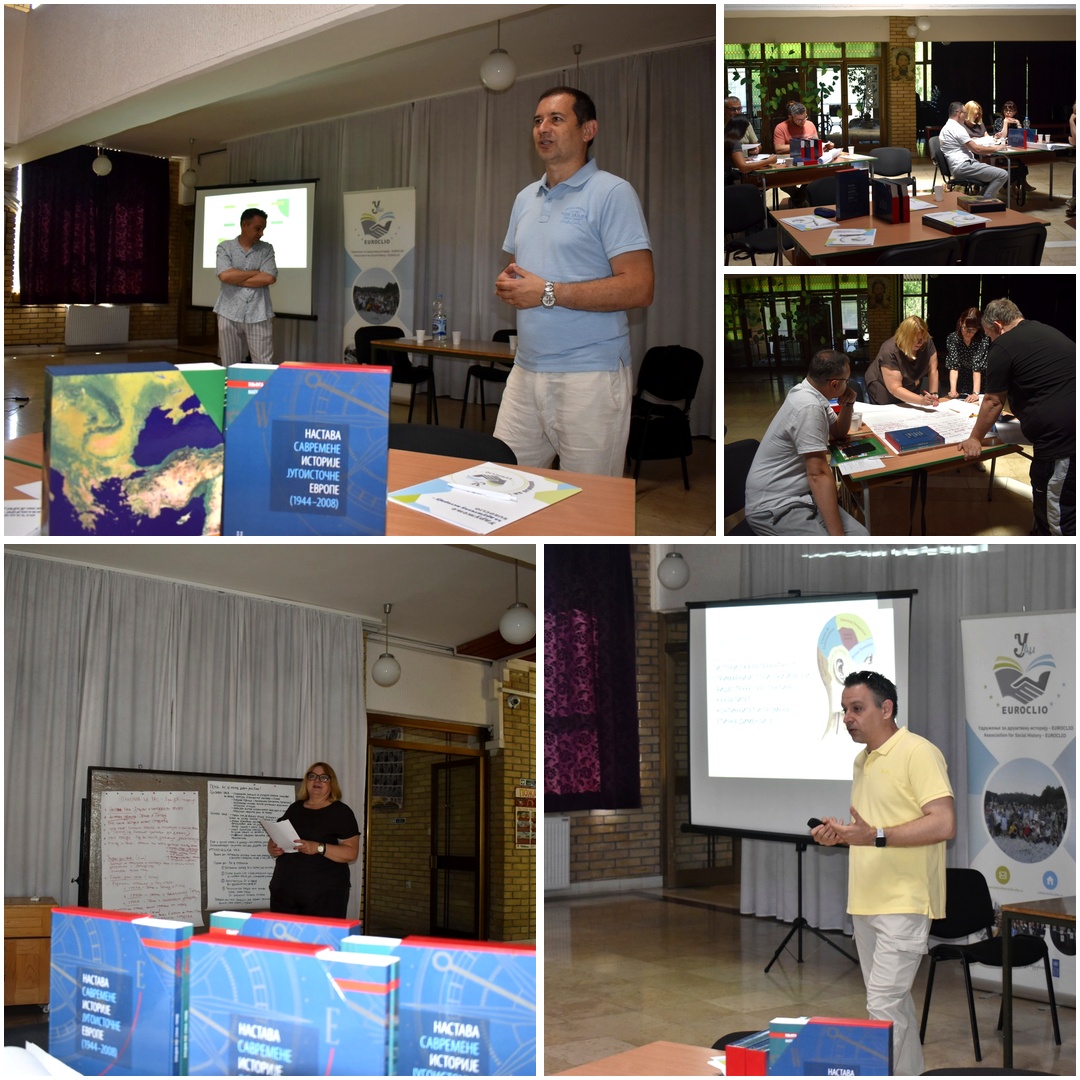
The Joint History Project (JHP) has launched a new cycle of certified professional training for history teachers in Serbia. Accredited by the Serbian Ministry of Education as part of the official professional development programme, the first two-day seminar was held on 20–21 June 2026 in Odžaci, bringing together history teachers from Sombor and the surrounding region.
Organised in partnership with EuroClio Serbia, the seminar focused on strengthening teachers’ competences in teaching the modern history of Southeastern Europe through a multiperspective approach.
During the two-day programme, participants explored innovative teaching methods and worked with the JHP History Workbooks, analysing historical sources covering topics such as the Ottoman Empire, nation-building, the Balkan Wars, the World Wars, the Cold War, migration, and the challenges of teaching sensitive and controversial issues.
Special emphasis was placed on applying multiperspectivity in the classroom, developing critical thinking, and equipping teachers with practical tools for source-based, inclusive and student-centred history teaching.
Upon successful completion of the programme, participants received certificates recognized by the Serbian Ministry of Education.
The seminar in Odžaci marks the beginning of a broader series of certified training sessions that JHP is implementing in partnership with EuroClio within their project “EU Support to Confidence Building in the Western Balkans” . Following Serbia, similar programmes are planned in Montenegro, with the ambition to expand them to other countries across Southeast Europe.