
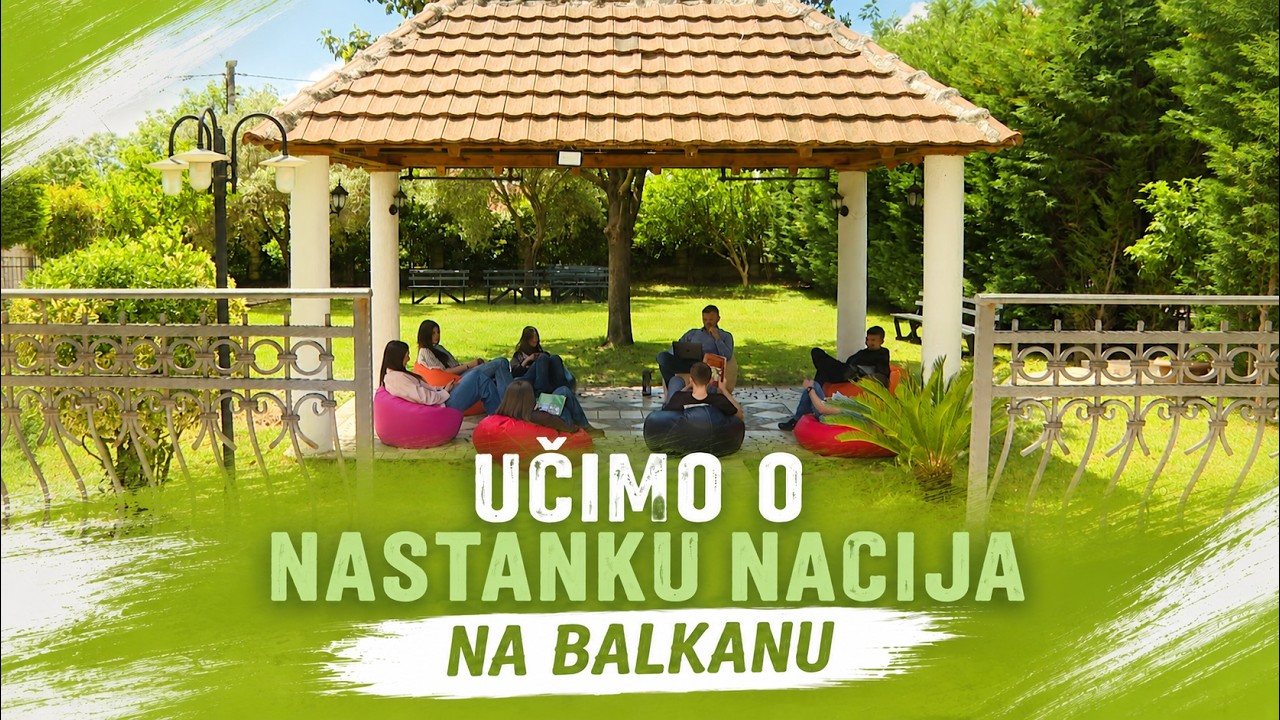
As part of our ongoing conversations with young people within the Joint History Project, this lesson is dedicated to the birth of nations in the Balkans. Are nations eternal and have they existed since time immemorial, or are they the product of conscious efforts by elites—monks, writers, teachers, and politicians? The birth of nations in our region did not follow a single model: while some united around language, others recognized themselves through history, religion, or political programs.
In this video, high school students analyze historical sources—from the writings of Paisius of Hilandar in 1762, to Serbian textbooks from 1870, to the verses of Pashko Vasa on Albanian identity. Through these examples, we explore how national identities were formed, why narratives about „who we are“ are so different, and how these differences continue to shape our perceptions today. Join our students in critically reflecting on what truly makes a nation, and whether nations—if they are born—can also disappear.
Multiperspectivity in History Teaching In history teaching, there is rarely only one side to the story.
That is why through this video, as well as through all of our work, we promote multiperspectivity—a methodology that teaches us to view historical events from different angles, critically examine sources, and understand the complexity of the past without bias.