
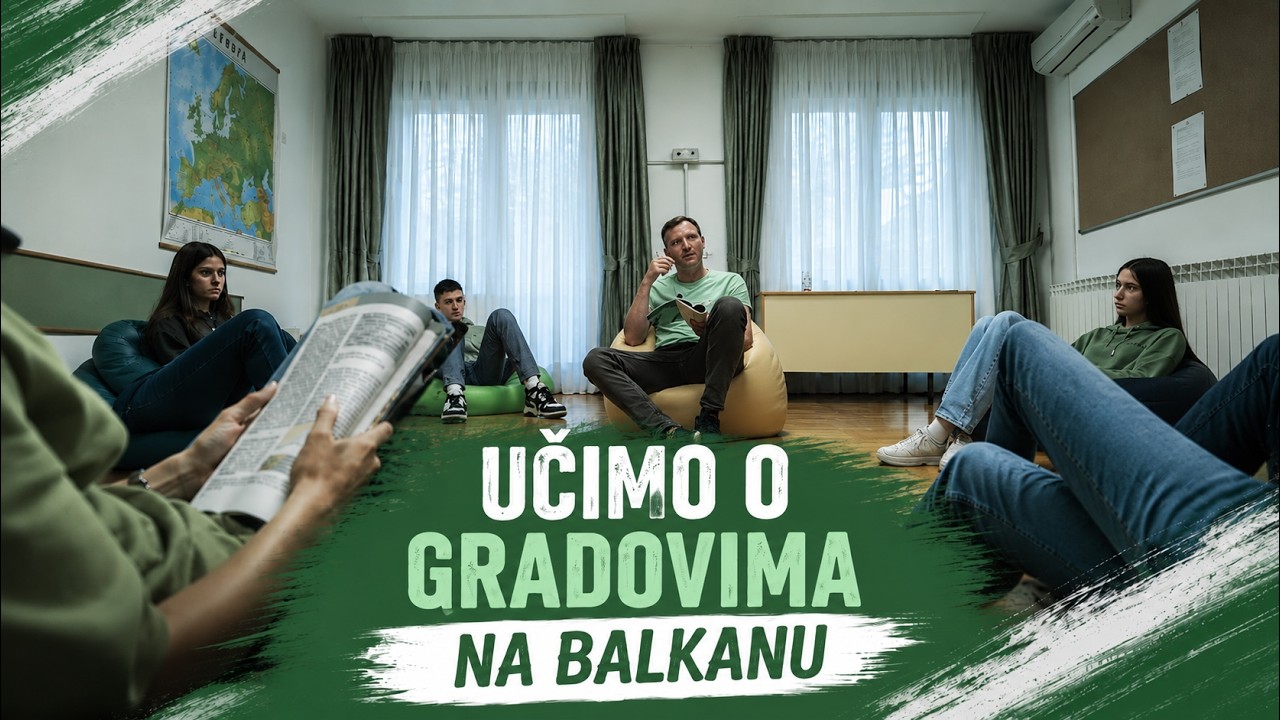
In the continuation of our conversations with youth within the Joint History Project, we dedicate this lesson to cities in the Balkans throughout history. For centuries, cities in the region have been points of encounter and exchange – of goods, people, languages, and ideas – rather than isolated places with a single culture. In this video, high school students analyze historical sources about Belgrade in the mid-17th century, the reconstruction of Skopje after the 1963 earthquake, and urbanization across the region in the second half of the 20th century, seeking an answer to a crucial question: What makes a city a city – its boundaries, or the people and ideas that pass through it? Join our students in critically reflecting on urban development, cooperation, and the shared history of cities in the region.
Multiperspectivity in History Education In history education, there is rarely just one side to the story.
That is why through this video, as well as through our entire work, we promote multiperspectivity – a methodology that teaches us to view historical events from different angles, critically examine sources, and understand the complexity of the past without prejudice. About the Joint History Project (JHP) For decades, the Joint History Project has been working to transform history education in Southeast Europe. Our history workbooks and teaching materials offer an innovative approach, bringing alternative sources and diverse narratives about our shared past, with the aim of building lasting peace and reconciliation.