
The Joint History Project (JHP) was a civil society initiative dictated by the historical context of the 1990s, the fall of communist regimes, and the bitter experience of the wars in Yugoslavia. Launched by an NGO, the Centre for Democracy and Reconciliation in Southeast Europe (CDRSEE), the JHP aimed at investigating the possibility of writing and teaching a common history for all Southeast European countries, from Slovenia to Cyprus (at that time there were eleven countries, now there are thirteen).
The project comprised the following phases:
-
1999–2002: Analysis of history textbooks and curricula, as well as teaching practices in Southeast Europe (Clio in the Balkans: The Politics of History Education, 2002).
-
2005: Four source books (Workbooks) for the teaching of Modern Southeast European History were published. The topics of the four books belong to modern and contemporary history ($15^{th}–20^{th}$ centuries).
-
2006–2010: The Workbooks were translated into Southeast European languages (nine languages in total).
-
2006–2013: Local workshops were organized in different countries aimed at training teachers in the use of this educational material.
-
2016: Two new volumes were published on Teaching Contemporary Southeast European History.
-
And since 2024, we are back with JHP 2.0.
This multidimensional task has been carried out by a group of more than 100 historians representing all the countries in the region, mainly academic historians who are experts in contemporary history and history didactics. The outcome depends on a remarkable teamwork which managed to overcome bitter memories and conflict by speaking the language of historical discipline. We believe that only high-quality professional historical research can be used as a shield to protect societies from stereotyping the ‘others’ and from developing blind nationalism. Blind nationalism is not patriotism; on the contrary, it can be harmful to national interests, as our recent history has shown.
Why is it important to create educational material for the teaching of the history of Southeast Europe (mainly the dramatic 90s)? Why is it politically relevant?
The answer to the first question should be connected to a major project of peace education in the Balkans. Many scholars have analyzed the macro-historical reasons of interethnic violence and the role played by history’s heavy shadow in the conflicts. History textbooks have been identified as one of the potential causes for intolerance between nations and, consequently, as a reason for conflict. In this respect, the reform of history education would function as a long-term policy of conflict prevention.
As a matter of fact, we have to take into account that school can play two different roles:
-
On the one hand, it can contribute to the reproduction of conflict if it hushes up the ‘dark’ sides of the past (especially those connected to atrocities committed by one’s nation) or if it propagates a one-sided teaching of controversial events.
-
On the other hand, the school might be used as a tool for healing traumas, for overcoming painful memories, and for reconciliation between former enemies.
Our project is about the second role played by school, especially in post-conflict societies. We are aware of the pitfalls and the challenges of such an enterprise. However, as historians but also as representatives of the generation who lived through the recent wars and political transitions in the Balkans, we are convinced that we have to dare and undertake the responsibility to suggest how to teach these events. As John Roth argued, ‘ethical reasons are the most important ones for studying the dark chapters in history’. We need to teach new generations how to deal with our “dark” past: this is not just a history lesson; it is also part of citizenship and of human rights education.
We claim that it is possible to teach about war in order to secure peace.
Therefore, our first choice in these workbooks was to keep a distance from both heroization and victimization, and to try to make students familiar with war experience as a complex phenomenon and, mainly, as a common human experience. Teaching about War should not emphasize just the negative but also the positive aspects of historical experience, even during war—those found in human moments of friendship, solidarity, and fun.
At this point, I would like to conclude by thanking my friends and colleagues from all the countries of the region with whom we accomplished a mission that seemed impossible. I would like also to thank the members of the CDRSEE board who since 1999 have honored us with their confidence. Many thanks to the Center’s executive director, Zvezdana Kovac, who has helped us to overcome small or big crises, and of course the Center’s staff. Once again, we are back to continue a noble enterprise. We have been on the same boat because we share the same values and because we believe that school should raise citizens of democratic states who would live together peacefully, and not potential soldiers of rival nations.
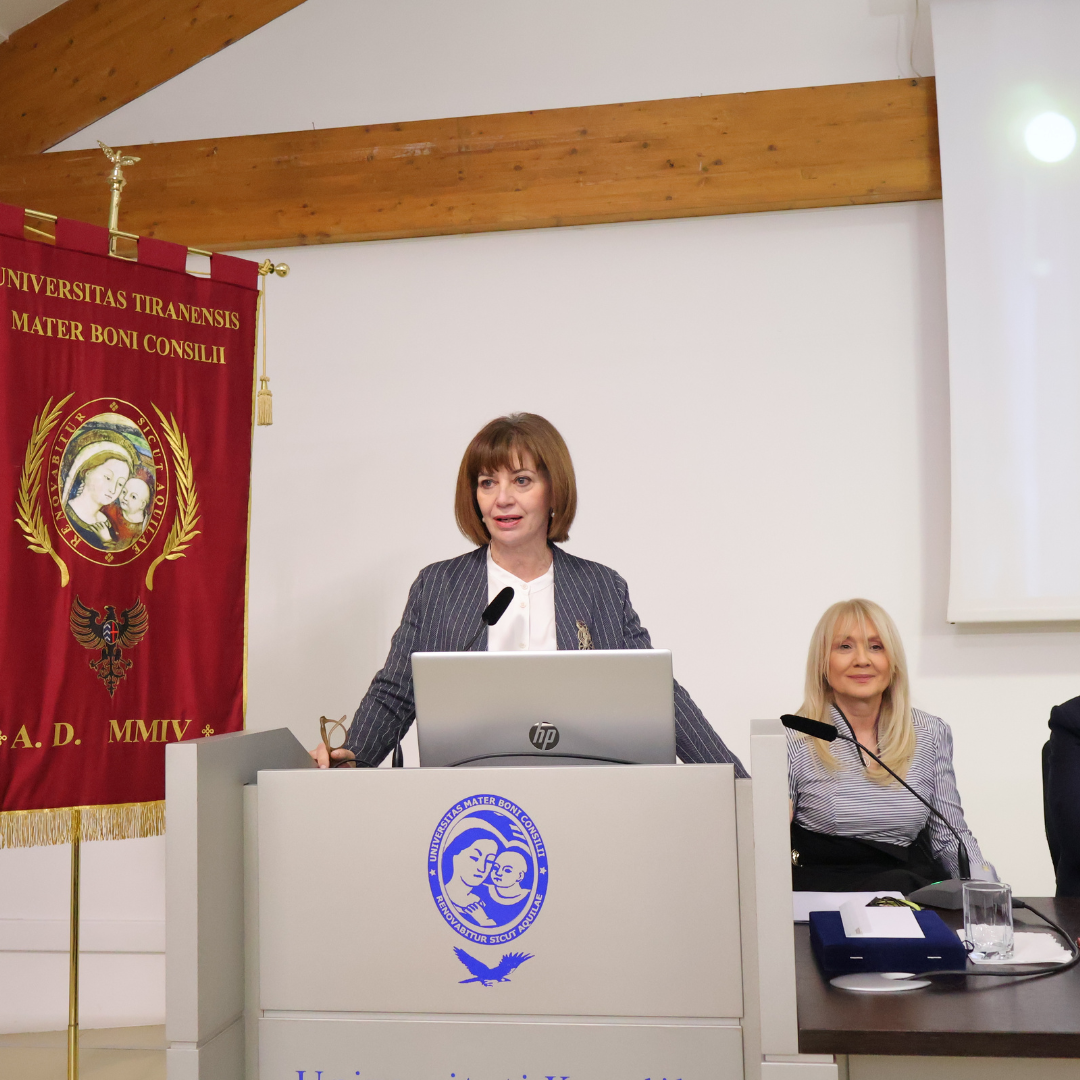
Finally, on behalf of all the historians who have been working on this project, I express our deepest gratitude to CESPIC for the peace award. I dedicate it to all the teachers who fight against nationalism and ethnic hatred in the classrooms of the Balkan region.
CHRISTINA KOULOURI